Major Airports in Iceland
- Akureyri International Airport (AEY) - 00:02:43
- Keflavik International Airport (KEF) - 00:02:43
Daylight saving time in Iceland
Iceland has 1 listed IANA time zones. None of them observe daylight saving time in 2026. The UTC offset remains stable throughout the year.
Best Time to Call Iceland
Business hours in Iceland (9 AM–5 PM local time) fall at these local times elsewhere:
- Beijing: 5:00 PM – 1:00 AM (next day) ( Partial overlap)
- Paris: 11:00 AM – 7:00 PM ( Convenient)
- Toronto: 5:00 AM – 1:00 PM ( Outside normal hours)
- Seoul: 6:00 PM – 2:00 AM (next day) ( Partial overlap)
- Mexico City: 3:00 AM – 11:00 AM ( Outside normal hours)
- Cairo: 12:00 PM – 8:00 PM ( Partial overlap)
- Bangkok: 4:00 PM – 12:00 AM (next day) ( Partial overlap)
Times shown reflect current UTC offsets and may shift by up to an hour around daylight saving transitions.
Time Difference from Iceland
Compare time in Iceland with other countries.
Countries in the Same Time Zone as Iceland
Most Popular Cities in Iceland
Holidays in Iceland
Official national public holidays. Regional and religious observances may vary by area.
About Time in Iceland
Ninety Minutes Ahead of the Sun
Reykjavik sits at roughly 22 degrees west of Greenwich, a longitude that by the ordinary logic of time zones should place the city close to UTC−1 or even UTC−2. Instead, the entire country keeps Greenwich Mean Time, UTC+0, all year round, with no seasonal clock change at all. The country actually ran on UTC−1 for decades before switching: on 5 April 1968 the Althing passed a law moving Iceland's legal time to UTC+0 effective two days later, reasoning that closer alignment with Western Europe would ease trade and telephone calls while the country's extreme seasonal daylight swings made the usual argument for daylight saving largely irrelevant, since in midsummer there is already far more light than anyone needs and in midwinter no clock adjustment can conjure light that is not there.
The consequence is a genuine mismatch between clock and sun. Solar noon in Reykjavik falls close to half past one in the afternoon rather than twelve, and in the depths of December the sun does not clear the horizon until nearly mid-morning by the clock. Since 1994, members of the Althing have periodically proposed reintroducing seasonal daylight saving to bring the clock closer to solar time in summer; every proposal so far has been rejected, and Iceland remains, alone among its Nordic neighbours, permanently on the meridian time of a city more than 1,600 kilometres to its east.
A Year With Only Two Seasons
Long before Iceland adopted the Gregorian calendar, its settlers kept a calendar unlike almost any other in medieval Europe: a week-based solar system, divided not into four seasons but two, summer and winter, each lasting exactly six months. Known as misseristal, it counted twelve months of thirty days each, added four extra days at midsummer to reach 364, and periodically inserted a full leap week, the sumarauki, to keep pace with the true solar year. Early Norse settlers elsewhere had tracked the moon, but Iceland's near-continuous summer daylight made lunar phases hard to observe reliably, so tenth-century Icelanders counted whole weeks instead, ensuring that every month always began on the same weekday.
The calendar itself faded from official use by the early nineteenth century, but one of its key dates never disappeared from daily life. Sumardagurinn fyrsti, the First Day of Summer, marking the start of the month of Harpa, is still a public holiday today, always falling on the first Thursday after 18 April. It was not formally written into law until 24 December 1971, despite having been celebrated informally for centuries beforehand, and Iceland remains, as far as records show, the only country in the world that marks the first day of summer as an official holiday, an odd distinction for a nation where April can still bring snow.
The Law Recited in Thirds
Iceland's parliament, the Althing, was founded in 930 at Þingvellir, a rift valley chosen because it offered enough water and grazing to support the crowds who travelled there, and it is generally reckoned the oldest surviving parliament in the world. For roughly two weeks every June, chieftains and their followers gathered at the site, living in temporary turf-walled booths, to settle disputes and pass law, a rhythm that continued, with interruptions during Danish and Norwegian rule, until the assembly's final session there in 1798.
Before Icelanders began writing their laws down in 1117, the entire legal code existed only in memory, entrusted to an elected official called the lögsögumaður, the Lawspeaker, who served a three-year term and was obliged to recite one third of the law aloud from the Law Rock at each annual gathering, so that a complete recitation of the code took his full term to complete. The written law that eventually replaced this system, known as Grágás, still carries the rhythmic, alliterative phrasing that had made the original oral version possible to memorise and recite correctly, year after year, on a fixed midsummer schedule, for nearly two centuries.
The Circle That Is Slowly Leaving
Only one scrap of Icelandic territory lies within the Arctic Circle: Grímsey, a small island roughly forty kilometres off the north coast, home to around a hundred people and vastly more seabirds. Because the circle passes directly through it, Grímsey is the sole place in the country where the sun genuinely never sets on the summer solstice, producing a full twenty-four hours of continuous daylight rather than the merely very long, twilight-dimmed nights experienced on the mainland.
The circle itself is not fixed. Because of long-term oscillation in the tilt of the Earth's axis, the Arctic Circle drifts northward by roughly fifteen metres every year, and islanders mark this by physically relocating a sculpture, a set of large concrete spheres known as Orbis et Globus, to the circle's new position each summer solstice. At the current rate of drift, astronomers expect the boundary to move north of Grímsey entirely by around 2050, after which no part of Iceland will lie within the Arctic Circle at all, quietly ending, without any ceremony or vote, a geographic distinction the island has held since long before anyone thought to measure it.
Frequently Asked Questions
How many time zones does Iceland have?
One. The whole of Iceland follows Atlantic/Reykjavik, so every city shows the same local time as the capital, Reykjavík.
Is Iceland ahead of or behind GMT?
Neither. Iceland currently keeps the same time as GMT (UTC+0).
Does Iceland use summer time?
No. Iceland does not observe daylight saving time, so its clocks stay at UTC+0 all year. Its time difference with countries that do change their clocks still shifts by an hour in spring and autumn.
How many public holidays does Iceland have in 2026?
Iceland has 14 national public holidays in 2026, when banks and government offices are usually closed. Some regions may also have their own local holidays.
How do I dial a phone number in Iceland from abroad?
From a mobile phone, type +354 and then the full local number exactly as it is written, because numbers in Iceland have no domestic prefix to drop. From a landline, replace the plus sign with your exit code: 011 from the US and Canada, or 00 from most of Europe, for example 00 354 followed by the number.
What language is spoken in Iceland?
The main languages of Iceland are Icelandic, English and German.
Beyond the Clock

Why the Earliest Sunset Comes Before the Winter Solstice
In New York, the Sun sets earliest on Monday, December 7, 2026, at about 4:28 PM. The shortest day comes two weeks later. The solstice falls at 20:50 UTC on December 21 (3:50 PM EST), and on that day New York gets roughly 9 hours

Total Solar Eclipse on August 2, 2027: Where, When, and Why It Lasts So Long
On Monday, August 2, 2027, the Moon's shadow will cross southern Spain, North Africa and the Arabian Peninsula, producing the second-longest total solar eclipse of the 21st century. At its maximum, in southern Egypt near Luxor, the Sun will be completely covered for about 6
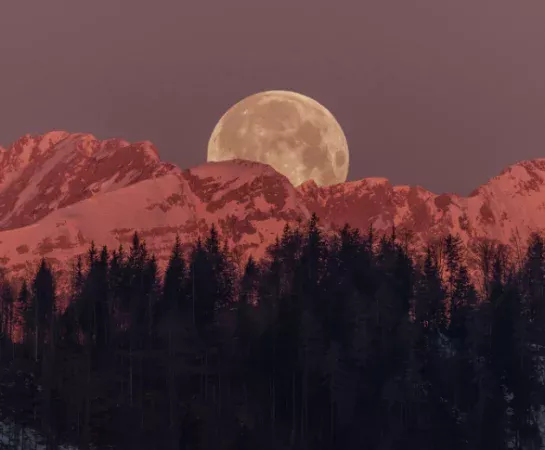
What Is a Supermoon and When Is the Next One
Every time a supermoon rises, the same statistic gets repeated: 14% bigger, 30% brighter. It's in almost every news segment and nearly every listicle, and it's also a comparison almost nobody in the audience will ever actually witness, because it measures the single closest possible
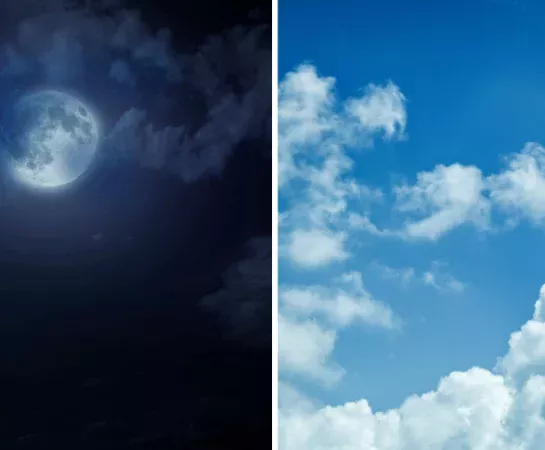
Why the Sky Is Blue During the Day and Black at Night
Sunlight is white. Air is, as far as anyone can tell by looking through a window, colorless. And yet every clear afternoon the same 400,000-kilometer column of gas above your head reads as a specific, saturated blue, then goes black within an hour of sunset.

Working Hours by Country: How Long Is the Workday and the Work Year Around the World
The average worker in Mexico puts in about 2,200 hours a year. The average worker in Germany puts in about 1,340. The gap of roughly 860 hours equals more than 21 standard 40-hour weeks, close to five extra months of full-time work. Most "who works

Why the 40-Hour Work Week Exists: From 10-Hour Days to Ford’s 1926 Experiment
The 40-hour week looks like a natural unit of work, but the number was never derived from a measurement of how much work is best. It is the product of two separate fights: one over the length of the day, which ended at eight hours,

How Americans Spend Their 24 Hours: What the Time Use Survey Shows
The average American age 15 and over logs about 9 hours of sleep a day, spends just over 5 hours on leisure and works 3 hours. That last number looks wrong until you see how it is built, and nearly every headline figure from the

Pomodoro Technique: Why 25 Minutes and When a Different Interval Works Better
The most famous number in time management started as a workaround. In the late 1980s Francesco Cirillo, a university student who could not make himself study, used a tomato-shaped kitchen timer to test a small question: could he work for two minutes without interruption? Twenty-five
Time Tools
Quick access to timers, stopwatch, world clock and time zone tools.
Time Guides
Read useful guides about time zones, calendars, finance and astronomy.


