Major Airports in Guyana
- Cheddi Jagan International Airport (GEO) - 18:39:37
Daylight saving time in Guyana
Guyana has 1 listed IANA time zones. None of them observe daylight saving time in 2026. The UTC offset remains stable throughout the year.
Best Time to Call Guyana
Business hours in Guyana (9 AM–5 PM local time) fall at these local times elsewhere:
- Beijing: 9:00 PM – 5:00 AM (next day) ( Partial overlap)
- Paris: 3:00 PM – 11:00 PM ( Partial overlap)
- Toronto: 9:00 AM – 5:00 PM ( Convenient)
- Seoul: 10:00 PM – 6:00 AM (next day) ( Outside normal hours)
- Mexico City: 7:00 AM – 3:00 PM ( Partial overlap)
- Cairo: 4:00 PM – 12:00 AM (next day) ( Partial overlap)
- Bangkok: 8:00 PM – 4:00 AM (next day) ( Partial overlap)
Times shown reflect current UTC offsets and may shift by up to an hour around daylight saving transitions.
Time Difference from Guyana
Compare time in Guyana with other countries.
Countries in the Same Time Zone as Guyana
Most Popular Cities in Guyana
Holidays in Guyana
Official national public holidays. Regional and religious observances may vary by area.
About Time in Guyana
At High Tide, Georgetown's Gravity Drainage Can Simply Stop
Much of Guyana's coastal population lives on land so low that getting rainwater out to sea is governed by the tide. The drainage network contains canals, pumps and hundreds of sluice gates known locally as kokers. A koker can discharge water by gravity only while the sea or river outside is low enough for inland water to flow outward.
That turns the astronomical tide into part of the operating schedule of towns and farms. During high tide, opening a gravity sluice can allow water to move in the wrong direction. Operators therefore close the gates, wait for the external water level to fall and reopen them during the usable low-tide window.
The window can be surprisingly short. During flooding on the East Bank Demerara in December 2022, officials reported that persistent high tides had made several sluices temporarily unusable and that the neap-tide conditions were providing only about three hours of drainage time. Pumps could continue removing water outside that window, but gravity drainage had to wait.
Guyana's Low Carbon Development Strategy identifies more than 150 sluice gates along the coastal drainage system and notes that rising sea level is reducing the opportunities during which some can discharge safely. New government investment announced in 2025 and 2026 aims to upgrade hundreds of kokers and pumps partly because relying only on the tide is becoming increasingly restrictive.
The January 2005 flood showed what happens when several clocks align badly. Serious flooding began around 15 January and peaked near 17 January, when a spring tide coincided with exceptional rainfall. Between 14 and 22 January, the coastal plains received about 1,108.2 millimetres of rain, almost six times the thirty-year average for that interval and the highest such rainfall recorded since 1888.
The old drainage system had been designed around far smaller rainfall loads. World Bank analysis noted that some infrastructure had historically been sized to remove about 38.1 millimetres, or 1.5 inches, of rainfall in twenty-four hours. During the 2005 event, rainfall was arriving faster than saturated soils, canals and tide-controlled outlets could remove it.
Coastal drainage in Guyana is therefore a timing problem before it is an engineering abstraction. Rain may fall at any hour, but gravity drainage has to wait for the sea. When intense rain arrives during the wrong part of the tidal cycle, hours can determine whether canals empty or neighborhoods flood.
A Six-Day Legal Deadline Can Stop Counting on Public Holidays
Guyana's Interpretation and General Clauses Act creates a separate legal arithmetic for time. Section 32 defines how periods in written laws are to be counted, so a statutory deadline cannot always be calculated by simply counting dates on an ordinary calendar.
The starting day is excluded. If a law allows a number of days from the occurrence of an event, the day on which that event happened does not count as the first day.
The treatment of public holidays depends on the length of the deadline. For periods not exceeding six days, public holidays are not counted at all. If a period is longer than six days, holidays cannot be excluded in a way that reduces the deadline to fewer than six non-holiday days.
The final day has another rule. If it falls on a public holiday, the period continues to the next day that is not a public holiday. An act required on a particular date is similarly treated as timely when completed on the next available non-holiday day if the original date was a public holiday.
The Act even addresses situations in which legislation orders something to be done but gives no deadline. In that case, the requirement is that it be done with all convenient speed and repeated whenever the prescribed occasion arises.
This produces a clock that behaves differently from physical time. Twenty-four hours still pass between one noon and the next, but a legal period can pause for a holiday, exclude its first date and extend beyond its nominal endpoint. The law therefore defines not only what must happen, but which days legally exist inside the countdown.
Guyana Kept a 45-Minute Time Zone for Sixty Years
Guyana's present UTC-4 clock hides one of the more unusual time-zone histories in the Americas. During much of the twentieth century, civil time was not offset from Greenwich by a whole number of hours. It was three hours and forty-five minutes behind.
Historical reconstruction places the adoption of GMT-4 on 1 August 1911. Only a few years later, on 1 March 1915, the standard changed to GMT-3:45. That quarter-hour offset then remained the legal reference for decades.
The arrangement survived into independent Guyana. Parliamentary debate in July 1975 explicitly stated that the existing law defined standard time as three hours and forty-five minutes behind Greenwich and proposed replacing that with exactly three hours.
The change took effect on 1 August 1975. Civil clocks moved forward by forty-five minutes, and Guyana began using GMT-3. The reform was written directly into the Interpretation and General Clauses legislation, showing that standard time was treated as a legal definition rather than merely a technical convention.
That system lasted less than seventeen years. The Interpretation and General Clauses Amendment Act of 1992 changed the number again. From 29 March 1992, standard time became four hours behind Greenwich.
The practical jump in 1992 was therefore one full hour backward, from UTC-3 to UTC-4. Unlike daylight saving, this was not scheduled to reverse a few months later. The new standard remained in place.
The sequence is unusually compact: UTC-4, then UTC-3:45 for about sixty years, then UTC-3 from 1975, then UTC-4 again from 1992. Guyana's modern clock looks simple only after three separate twentieth-century definitions of standard time are removed from view.
For Part of the Rainy Season, the Rupununi Can Open a Water Route Between Two Great River Basins
In southwestern Guyana, seasonal flooding can temporarily connect aquatic systems that normally drain toward completely different parts of South America. The Rupununi River belongs to the Essequibo basin, while the nearby Takutu ultimately joins the Branco and the Amazon system.
During the rainy season, water spreads across the low Rupununi savannas. Flooded grasslands, creeks and shallow channels can create a temporary hydrological connection between the Rupununi and Takutu systems. Researchers refer to this seasonal corridor as the Rupununi Portal.
The connection exists because the landscape between the basins is exceptionally low and flat. The main rainy period generally begins around May, and rivers can rise dramatically as rainfall accumulates. Modern ecological research reports rises of up to about 15 metres in major rivers during peak wet-season conditions in the region.
Fish respond rapidly to the expanding water. Earlier surveys describe May through July as a period of rising water when many species leave dry-season refuges, move upstream through creeks and disperse onto newly flooded savannas. Floodplain habitat reaches its greatest extent later in the wet cycle before contracting again.
The connection has consequences on a much longer evolutionary scale. Because the temporary flooded corridor can allow aquatic organisms to move between the Essequibo and Amazon drainage systems, researchers have proposed it as one explanation for similarities in fish fauna on opposite sides of the watershed divide.
The portal is therefore not a permanent river marked clearly on every map. Its existence depends on seasonal water level. During low water, the two drainage systems again become much more distinct. During high water, a biological route can appear across land that is dry for another part of the year.
This is a different way of understanding a watershed boundary. On a conventional map, the divide is fixed. In the Rupununi, the ecological meaning of that line can change with the month.
Freshly Cut Sugar Cane Starts Losing Value Before It Reaches the Factory
Sugar production in Guyana has always contained a race against time between harvesting and grinding. Once cane is cut, the sucrose inside it begins to deteriorate. Delays caused by rain, transport problems or factory interruption can therefore reduce how much recoverable sugar reaches the final product.
A GuySuCo annual report from 1982 documented the problem unusually clearly. Heavy rainfall during the first crop disrupted the movement of cane to factories. For 47 percent of the cane ground, the interval between burning and grinding exceeded two days. For 21 percent, the delay exceeded three days.
The corporation linked those long intervals directly with poorer juice quality. The issue was not simply that the factories produced less during wet weather. Cane had already been harvested and its chemical quality was changing while it waited.
That makes sugar manufacturing different from storing a durable raw material. A pile of cut cane contains a declining opportunity. The factory, field crews and transport system have to operate as one timed chain because a delay at any stage changes the material entering the mill.
The industry also has a larger annual clock. GuySuCo has traditionally organized production into two crops separated by an out-of-crop maintenance period. In a 2016 operational notice, the corporation described May through July as the period when factories underwent major overhaul before the larger second crop began around late July or early August.
Maintenance is therefore deliberately concentrated when mills are not expected to grind continuously. Bearings, rollers, boilers and other equipment have to be repaired before the next stream of ripe cane begins arriving.
The timing remains important in current production. Ministry of Agriculture reporting in 2026 emphasized rapid transportation of harvested cane to factories specifically so that fresher cane could be processed and more juice extracted.
The sugar year is thus governed by two very different deadlines. Over months, mills must be ready before the next crop. Once individual cane stalks are cut, the useful interval contracts from months to days.
Rainfall Was Being Recorded Decades Before Guyana Had a National Weather Service
Guyana's modern Hydrometeorological Service was formally established on 5 October 1965, but the country's instrumental climate record began much earlier. The Service traces rainfall observations back into the nineteenth century, when measurements were being collected by different government departments and sugar estates rather than by one centralized meteorological institution.
That fragmented origin explains why long climate records often depend on stations established for practical reasons. Plantations needed rainfall information because drainage, irrigation and crop timing depended on it. Public works authorities needed river and rainfall observations for canals, conservancies and coastal protection.
Centralization in 1965 changed the purpose of the archive. Instead of separate records maintained for individual estates or departments, weather and hydrological observations could be coordinated nationally and used for forecasting, aviation, agriculture, engineering and flood management.
The value of the older observations became obvious during extreme events. The January 2005 rainfall could be described as the highest recorded since 1888 only because more than a century of observations existed against which the event could be compared.
Long records also reveal that an apparently ordinary number can change meaning over time. A drainage system designed around historical rainfall intensities may work adequately for decades, then become insufficient as extreme rainfall frequency, urban runoff and sea level change.
Meteorological time is therefore cumulative. A single gauge reading describes one moment. A century of readings establishes what counts as unusual. In Guyana, nineteenth-century observations still help engineers and hydrologists interpret twenty-first-century floods.
Frequently Asked Questions
How many time zones does Guyana have?
One. The whole of Guyana follows America/Guyana, so every city shows the same local time as the capital, Georgetown.
Is Guyana ahead of or behind GMT?
Guyana is currently 4 hours behind GMT (UTC-4).
Does Guyana use summer time?
No. Guyana does not observe daylight saving time, so its clocks stay at UTC-4 all year. Its time difference with countries that do change their clocks still shifts by an hour in spring and autumn.
How many public holidays does Guyana have in 2026?
Guyana has 17 national public holidays in 2026, when banks and government offices are usually closed. Some regions may also have their own local holidays.
How do I dial a phone number in Guyana from abroad?
From a mobile phone, type +592 and then the local number without the leading 0 used for domestic calls, if it has one. From a landline, replace the plus sign with your exit code: 011 from the US and Canada, or 00 from most of Europe, for example 00 592 followed by the number.
What language is spoken in Guyana?
The main language of Guyana is English.
Beyond the Clock

When Does a Day Actually Begin? Midnight, Sunrise, and Sunset Across Cultures
Hebcal, the widely used Jewish calendar service, lists Saturday, December 5, 2026 as 25 Kislev 5787, the first day of Hanukkah. The first Hanukkah candle is lit the evening before, on Friday, December 4. This is not an error. The Hebrew date changes at sunset,

The Hour That Happens Twice: What Actually Occurs at 1:30 AM When Clocks Fall Back
At 1:59:59 a.m. on Sunday, November 1, 2026, clocks in New York will not tick over to 2:00. They will jump back to 1:00:00 a.m., and the next 60 minutes will replay. Every time from 1:00 to 1:59 happens twice that night, once on Eastern
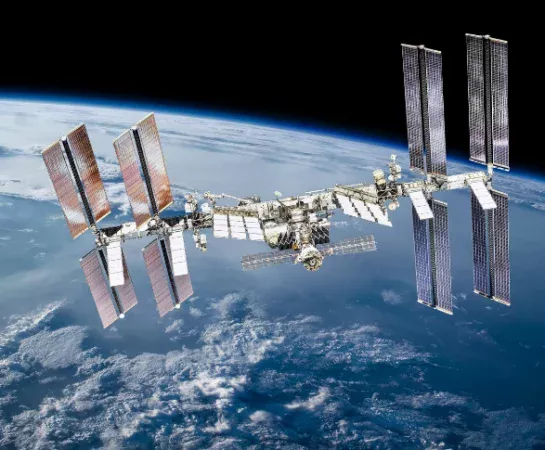
Why the International Space Station Runs on UTC Instead of Local Time
Astronauts aboard the International Space Station see the sun rise and set 16 times in a 24-hour period, once every 90 to 93 minutes, as the station circles Earth at roughly 28,000 kilometers per hour. No conventional time zone survives contact with that kind of
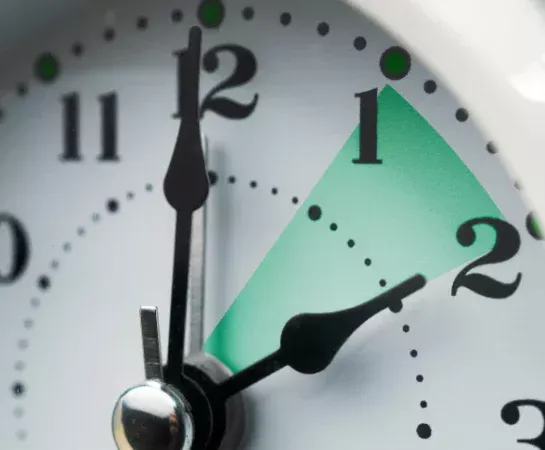
Standard Time vs Daylight Time: What’s the Actual Difference
Most people assume "Standard Time" is the normal, default setting and "Daylight Time" is some separate seasonal overlay that temporarily replaces it. That mental model is backwards in a way that federal law makes explicit, and once you see the actual legal language, the whole

Why the Year Starts on January 1
Nothing happens in the sky on January 1. The winter solstice comes about ten days earlier, Earth's closest approach to the Sun a few days later, and no lunar phase is tied to the date. January 1 is not an astronomical boundary. It is an

Friday the 13th: How Often It Happens and Why It Falls on a Friday Most Often
November 13, 2026 is the third Friday the 13th of the year, after February 13 and March 13. That won't happen again until 2037. The next one after November comes on August 13, 2027, and then the calendar produces the longest possible drought: 14 months

When Is Eid al-Fitr and How Its Date Depends on Ramadan’s Final Moon Sighting
Eid al-Fitr never sits on a fixed date, and it isn't confirmed until the night before it happens. Unlike Christmas or New Year's Day, locked to the Gregorian calendar months in advance, the first day of Shawwal depends on whether a sliver of crescent moon

What Is Nowruz and Why It Always Falls on the Spring Equinox
Nowruz is the Persian New Year, celebrated by more than 300 million people across Iran, Afghanistan, Central Asia, the Caucasus, and Kurdish communities, and it begins at the exact astronomical instant of the March equinox rather than on a fixed date on any calendar grid.
Time Tools
Quick access to timers, stopwatch, world clock and time zone tools.
Time Guides
Read useful guides about time zones, calendars, finance and astronomy.


