Major Airports in Guadeloupe
- Maryse Condé International Airport (PTP) - 19:22:08
Daylight saving time in Guadeloupe
Guadeloupe has 1 listed IANA time zones. None of them observe daylight saving time in 2026. The UTC offset remains stable throughout the year.
Best Time to Call Guadeloupe
Business hours in Guadeloupe (9 AM–5 PM local time) fall at these local times elsewhere:
- Beijing: 9:00 PM – 5:00 AM (next day) ( Partial overlap)
- Paris: 3:00 PM – 11:00 PM ( Partial overlap)
- Toronto: 9:00 AM – 5:00 PM ( Convenient)
- Seoul: 10:00 PM – 6:00 AM (next day) ( Outside normal hours)
- Mexico City: 7:00 AM – 3:00 PM ( Partial overlap)
- Cairo: 4:00 PM – 12:00 AM (next day) ( Partial overlap)
- Bangkok: 8:00 PM – 4:00 AM (next day) ( Partial overlap)
Times shown reflect current UTC offsets and may shift by up to an hour around daylight saving transitions.
Time Difference from Guadeloupe
Compare time in Guadeloupe with other countries.
Countries in the Same Time Zone as Guadeloupe
Most Popular Cities in Guadeloupe
Holidays in Guadeloupe
Official national public holidays. Regional and religious observances may vary by area.
About Time in Guadeloupe
Eight Nights After the Full Moon, Several Coral Species Released Their Gametes Together
One of Guadeloupe's most precise natural clocks operates underwater. In August 2008, researchers watching a fringing reef at night found that several reef-building corals did not reproduce randomly through the season. Their spawning was synchronized to a narrow interval measured from the full Moon.
Observations were made between 21:30 and 23:00 on the sixth, seventh and eighth nights after the August full moon. Nothing resembling mass spawning was seen on the sixth night. On the seventh, colonies of the massive star coral then known as Montastraea faveolata began releasing bundles of eggs and sperm.
The following night produced a broader event. Eight days after the full moon, several coral species spawned during the same observation period, including Montastraea faveolata, Montastraea cavernosa and Diploria strigosa. Researchers also saw reproductive activity associated with Eusmilia fastigiata and swarms of marine worms producing flashes of green bioluminescence at the water surface.
The narrow timing solves a reproductive problem. Coral colonies are fixed to the reef and cannot move toward a mate. Releasing gametes within the same short nighttime window dramatically increases the probability that eggs and sperm from different colonies meet in the water.
The Moon does not act as a simple eight-day countdown on its own. Coral reproduction is also influenced by seasonal temperature, sunset, local light conditions and the internal developmental state of the colonies. The lunar cycle provides one layer of synchronization inside a wider annual biological schedule.
This is why the 2008 observations are more useful than a generic statement that corals spawn after a full moon. Researchers watched consecutive nights and documented the transition from no observed spawning, to activity in one major species, to a multi-species event. A biological process invisible during most of the year became concentrated into a few hours that could be predicted from the sky.
At 14:15 on 12 September 1928, the Barometer Reached Its Minimum
The hurricane of 12 September 1928 can be reconstructed in Guadeloupe almost hour by hour. Historical meteorological records and contemporary accounts preserve a rapidly accelerating sequence in which falling pressure warned of danger before instruments, buildings and entire neighborhoods were overwhelmed.
On 11 September, the barometer was near 760 millimeters of mercury shortly after midday. By 16:00 it had fallen to about 758, by 20:00 to 756 and around midnight to 754. Early on the morning of the 12th, pressure continued downward: about 752 at 05:00, 750 at 07:00 and 745 by 10:00.
The deterioration then became much faster. Historical reconstruction based on archival reports places winds of roughly 40 kilometers per hour around 08:00. By 11:00 winds were strengthening sharply, roofs were beginning to fail, and around noon violent rain was entering buildings already opened by the wind.
At approximately 14:15, pressure reached its minimum as the eye crossed Guadeloupe. One reconstruction gives about 937 hPa at that moment, while NOAA's later hurricane reanalysis identifies several measurements around 940 hPa between approximately 17:30 and 18:30 UTC. The difference reflects the surviving observational record and later reanalysis rather than two separate storms.
The eye produced a short and deceptive calm. Contemporary descriptions record the rain and wind suddenly stopping before the second half of the hurricane arrived. Around 15:00, storm surge pushed water into Pointe-à-Pitre, carrying boats inland and destroying port infrastructure.
NOAA's reanalysis classifies the cyclone as a Category 4 impact in Guadeloupe, with reconstructed intensity around 120 knots near the island. Historical damage studies record more than 6,000 houses completely destroyed and more than a thousand deaths in Pointe-à-Pitre and surrounding areas.
The value of the surviving chronology is that it shows a disaster accelerating rather than simply arriving. Pressure fell for more than a day, the morning brought increasingly obvious danger, the eye produced minutes of calm, and destructive winds continued into the night. The hurricane crossed the island in hours, but those hours later became a reference point for rebuilding, urban planning and cyclone risk across Guadeloupe.
Thirty-Seven Days Separated the First Mass Evacuation from the Largest One at La Soufrière
La Soufrière's 1976 crisis did not unfold as one eruption followed by one evacuation. It developed through months of seismic unrest, explosions, scientific disagreement and repeated changes in how authorities interpreted the danger.
IPGP records describe a major phreatic eruption sequence during 1976 and 1977. On 8 July 1976, after escalating activity, roughly 25,000 people left the threatened region in what the observatory describes as a spontaneous evacuation.
The crisis did not resolve. Explosive activity, seismicity and uncertainty continued through the following weeks. On 15 August, authorities ordered a much larger evacuation affecting the southern part of Basse-Terre. IPGP records 73,422 people in that second movement.
The interval between 8 July and 15 August was only thirty-seven days, but it contained a profound change in risk management. The first evacuation reflected immediate public reaction to escalating volcanic activity. The later order involved a much larger territory and formal administrative action while scientists were still debating the likelihood of a major magmatic eruption.
The feared large magmatic eruption did not occur. Activity remained predominantly phreatic, driven by heated groundwater and steam. That outcome later became central to discussion of how societies should make decisions when monitoring data indicate danger but cannot reveal with certainty how an active volcano will evolve.
The crisis also changed the infrastructure of observation. During the evacuation of the Saint-Claude and Basse-Terre region, the observatory temporarily moved into the Grande Poudrière at Fort St-Charles. Monitoring networks remained there for seventeen years. A new observatory was later built at Houëlmont, about nine kilometers southwest of La Soufrière, with a location chosen partly to reduce exposure while maintaining direct radio communication with monitoring equipment.
The important time story is therefore not simply that an eruption happened in 1976. A few weeks transformed local movement, scientific practice and volcanic surveillance. Fifty years later, the event remains a reference case in discussions of how much warning is enough, how long an evacuation can be sustained and how decisions should be made when the volcano does not provide a definite timetable.
On 27 May 1848, Freedom Was Proclaimed Before the Abolition Decree Had Arrived
Guadeloupe's abolition of slavery contains an unusual gap between the date a law was adopted and the date freedom was actually proclaimed on the island. The general abolition decree was adopted on 27 April 1848, but the Atlantic still separated the territory from the document that was supposed to govern it.
The decree provided for abolition in the colonies, but communication still moved at the speed of ships. Weeks could pass between a decision being made and official papers arriving in the Caribbean. During that interval, events on the islands continued independently of the paperwork travelling toward them.
Guadeloupe did not wait. Departmental Archives record that Governor Jean-François Layrle proclaimed immediate abolition on 27 May 1848, before the official abolition decree had reached the island. The decision was taken amid growing tension and concern that unrest could spread.
The result produced an exact one-month symmetry in the calendar: the general decree dated 27 April, and the local proclamation dated 27 May. The similarity of the dates can hide the communication problem behind them. They belonged to different stages of the process, separated by both geography and the time required to transmit information.
Abolition also created a new administrative chronology. Registers specifically recording formerly enslaved people as free citizens were opened in Guadeloupe's communes. These records included identifying information and the surnames assigned during registration. More than 87,000 new citizens eventually appear in the surviving registration system.
Registration was not completed on one day. Guadeloupe's archives note that in some communes the process continued for ten or fifteen years. A legal status changed immediately in May 1848, while the documentary conversion of tens of thousands of individual lives into new civil records extended far beyond the proclamation itself.
The sequence illustrates two radically different speeds of historical change. Freedom could be declared in a sentence on one date. Rebuilding civil identity, names and records for an entire population required years.
Banana Harvest Can Be Scheduled by Accumulated Heat Instead of Counting Days
Bananas grow throughout the year in Guadeloupe, which makes a conventional harvest season less useful than it is for many temperate crops. Export growers instead face another timing problem: deciding exactly when a bunch has developed enough to cut while still remaining green long enough to survive transport.
Research by CIRAD in Guadeloupe and the wider French Caribbean has shown that ordinary calendar age is an imperfect measure. A bunch developing during warmer weather accumulates biological development more quickly than one experiencing cooler conditions. Two bunches of exactly the same age in days can therefore be at different physiological stages.
The alternative is thermal time, commonly expressed as degree-days. Researchers calculate how much useful heat has accumulated since inflorescence emergence. Experiments found a much stronger relationship between accumulated degree-days and the fruit's remaining green life after harvest than between green life and simple age in calendar days.
This is commercially important because bananas exported from the Caribbean may spend roughly ten to twenty days in transport before reaching European markets. They must arrive before the climacteric rise that begins rapid ripening. Harvesting too late increases the risk that fruit ripens in transit; cutting too early reduces size and quality.
One Guadeloupe-Martinique production rule studied by CIRAD centered harvest around approximately 900 degree-days after bunch emergence, with adjustment between roughly 810 and 990 degree-days depending on fruit diameter. The last hand reaching about 32 millimeters in diameter provided an additional physical indicator.
The system means that the crop has its own clock. A farmer can count ordinary days, but the plant is effectively integrating temperature hour after hour. Warm conditions accelerate the accumulation of thermal time; cooler periods slow it.
This also explains why climate and altitude complicate fixed schedules. A bunch at one plantation can reach the same thermal stage earlier than an identical bunch elsewhere. For export agriculture, the useful question is not simply how many days have passed since flowering, but how much biological development those days contained.
In 1911, Pointe-à-Pitre's Reconstructed Clock Jumped Forward by 6 Minutes 8 Seconds
Guadeloupe now keeps UTC-4 throughout the year without seasonal clock changes. Its historical time-zone reconstruction contains one small but revealing transition from local astronomical time to standardized civil time.
Older IANA time-zone data reconstruct Pointe-à-Pitre local mean time as UTC-4:06:08. That offset came from longitude: local noon was tied to the Sun's position over the local meridian rather than to a round international time zone.
The same reconstruction places the adoption of UTC-4 on 8 June 1911. The difference between the two offsets was six minutes and eight seconds, meaning a standardized clock would effectively move forward by that amount when the old local system was abandoned.
The change is tiny compared with a modern one-hour daylight-saving transition, but its purpose was more fundamental. Local mean time works naturally when a town mostly needs to coordinate with itself. Telegraphs, shipping, administration and regional transport reward clocks that match beyond one local meridian.
The historical precision requires caution. IANA's primary mission is reliable civil-time data from 1970 onward, and its maintainers have repeatedly warned that many Caribbean pre-1970 transitions come from incomplete historical reconstruction. The exact 1911 entry should therefore be understood as database history rather than treated as equivalent to a modern digital government record.
What is certain in practical terms is the long stability that followed. Modern Guadeloupe remains on UTC-4 all year. The interesting part of the time-zone story is not repeated clock changing, but the earlier moment when a solar clock specific to Pointe-à-Pitre gave way to a shared regional standard.
Frequently Asked Questions
How many time zones does Guadeloupe have?
One. The whole of Guadeloupe follows America/Guadeloupe, so every city shows the same local time as the capital, Basse-Terre.
Is Guadeloupe ahead of or behind GMT?
Guadeloupe is currently 4 hours behind GMT (UTC-4).
Does Guadeloupe use summer time?
No. Guadeloupe does not observe daylight saving time, so its clocks stay at UTC-4 all year. Its time difference with countries that do change their clocks still shifts by an hour in spring and autumn.
How many public holidays does Guadeloupe have in 2026?
Guadeloupe has 15 national public holidays in 2026, when banks and government offices are usually closed. Some regions may also have their own local holidays.
How do I dial a phone number in Guadeloupe from abroad?
From a mobile phone, type +590 and then the local number without the leading 0 used for domestic calls, if it has one. From a landline, replace the plus sign with your exit code: 011 from the US and Canada, or 00 from most of Europe, for example 00 590 followed by the number.
What language is spoken in Guadeloupe?
The main language of Guadeloupe is French.
Beyond the Clock

Why the Earliest Sunset Comes Before the Winter Solstice
In New York, the Sun sets earliest on Monday, December 7, 2026, at about 4:28 PM. The shortest day comes two weeks later. The solstice falls at 20:50 UTC on December 21 (3:50 PM EST), and on that day New York gets roughly 9 hours

When Does Winter Start: Meteorological vs Astronomical Seasons
Winter 2026 starts twice in the Northern Hemisphere. Meteorological winter begins on Tuesday, December 1, 2026. Astronomical winter begins at the December solstice, on Monday, December 21, 2026 at 20:50 UTC, which is 3:50 p.m. Eastern and 12:50 p.m. Pacific. Both answers are correct. They
What Is a Supermoon and When Is the Next One
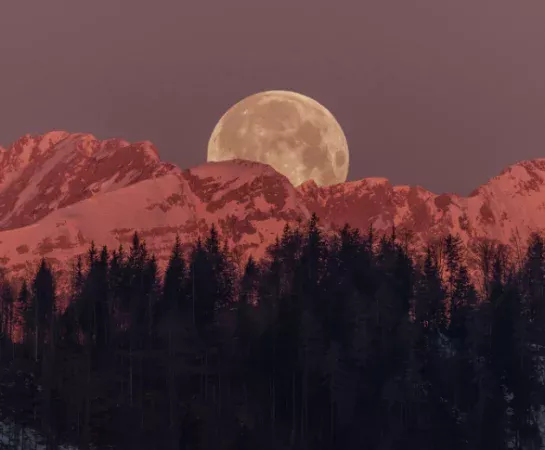
Every time a supermoon rises, the same statistic gets repeated: 14% bigger, 30% brighter. It's in almost every news segment and nearly every listicle, and it's also a comparison almost nobody in the audience will ever actually witness, because it measures the single closest possible
Why the Sky Is Blue During the Day and Black at Night
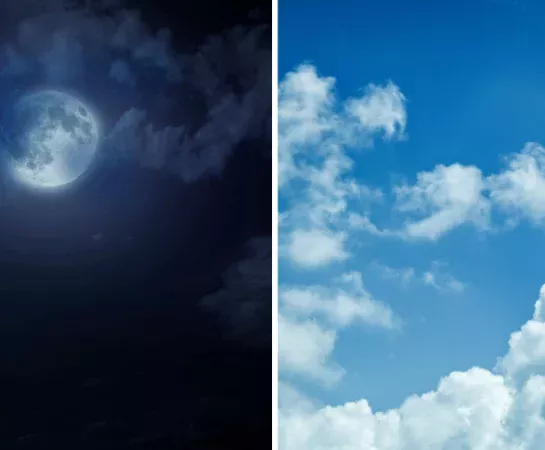
Sunlight is white. Air is, as far as anyone can tell by looking through a window, colorless. And yet every clear afternoon the same 400,000-kilometer column of gas above your head reads as a specific, saturated blue, then goes black within an hour of sunset.

Three Kings Day: Why Epiphany Falls on January 6
On the morning of Wednesday, January 6, 2027, children across Spain will open what are traditionally the main presents of the holiday season. In Spain the gifts come not from Santa Claus but from the Three Kings. In Puerto Rico, children leave grass in shoeboxes

Why Orthodox Christmas Falls on January 7, Not December 25
Millions of Orthodox Christians open presents and attend Christmas liturgy on January 7. They aren't celebrating a different holiday, and they aren't twelve days behind on purpose. They're marking December 25 on a calendar that stopped syncing with the seasons centuries ago and was never

Why April Fools’ Day Falls on April 1
Ask almost anyone why April Fools' Day exists and the answer comes back the same way: France switched calendars in the 1500s, some people kept celebrating New Year's on the old date, and everyone else mocked them for it. It's a tidy story, repeated by

What Is Lent and Why Does It Last Exactly 40 Days
Count the days on a calendar from Ash Wednesday to Easter Sunday and the number that comes out is 46, not 40. That's not a mistake in how most people describe the season, and it's not a modern miscount either. The gap between the number
Time Tools
Quick access to timers, stopwatch, world clock and time zone tools.
Time Guides
Read useful guides about time zones, calendars, finance and astronomy.


