Major Airports in Grenada
- Maurice Bishop International Airport (GND) - 10:51:31
Daylight saving time in Grenada
Grenada has 1 listed IANA time zones. None of them observe daylight saving time in 2026. The UTC offset remains stable throughout the year.
Best Time to Call Grenada
Business hours in Grenada (9 AM–5 PM local time) fall at these local times elsewhere:
- Beijing: 9:00 PM – 5:00 AM (next day) ( Partial overlap)
- Paris: 3:00 PM – 11:00 PM ( Partial overlap)
- Toronto: 9:00 AM – 5:00 PM ( Convenient)
- Seoul: 10:00 PM – 6:00 AM (next day) ( Outside normal hours)
- Mexico City: 7:00 AM – 3:00 PM ( Partial overlap)
- Cairo: 4:00 PM – 12:00 AM (next day) ( Partial overlap)
- Bangkok: 8:00 PM – 4:00 AM (next day) ( Partial overlap)
Times shown reflect current UTC offsets and may shift by up to an hour around daylight saving transitions.
Time Difference from Grenada
Compare time in Grenada with other countries.
Countries in the Same Time Zone as Grenada
Most Popular Cities in Grenada
Holidays in Grenada
Official national public holidays. Regional and religious observances may vary by area.
About Time in Grenada
Since 1939, an Invisible Volcano Has Announced Itself Through the Sea
About eight kilometers north of Grenada lies a volcano that cannot normally be seen from the island. Kick-'em-Jenny rises roughly 1,300 meters from the seafloor, yet its summit remains almost 200 meters below the surface. Its modern history is therefore a history of detecting events that happen out of sight.
The volcano entered the written record dramatically on 24 July 1939. Residents in northern Grenada felt earthquakes, and witnesses reported an explosive eruption breaking the sea surface and sending an ash-laden column hundreds of meters into the air. The event revealed the presence of an active submarine volcano whose earlier eruptions had left no comparable historical description.
Since then, Kick-'em-Jenny has become the most frequently active volcano in the Eastern Caribbean. The University of the West Indies Seismic Research Centre records at least fourteen eruptions since 1939, with the most recent confirmed eruption in April 2017. Many were far less visible than the first. Some were detected primarily through instruments rather than through dramatic activity at the sea surface.
That changes the meaning of an eruption timestamp. A volcano on land can sometimes be observed directly as ash, lava or steam appears. At Kick-'em-Jenny, scientists often rely on seismic and hydroacoustic signals. Submarine explosions and earthquakes generate low-frequency acoustic waves known as T-phases that propagate efficiently through seawater and can be recorded by monitoring stations around the region.
The 2015 eruption demonstrates how this works. During 23 and 24 July, instruments detected two submarine explosive events. Increased seismic activity allowed scientists to recognize that the volcano had entered a new active episode even though most people could not watch the eruption itself.
The monitoring network now combines seismometers, hydrophones, tide gauges, GPS receivers and instruments that detect deformation. Signals from sites around northern Grenada and nearby islands are transmitted continuously for analysis. The objective is not simply to record that an eruption happened, but to identify changes in activity early enough for shipping and coastal authorities to react.
Kick-'em-Jenny therefore runs on a clock built from signals rather than sight. Earthquakes may provide the first warning, hydroacoustic waves mark activity beneath the sea, and only sufficiently energetic eruptions become visible above the surface. In Grenada, one of the most closely watched geological timelines is unfolding underwater.
A Nutmeg Can Fall Overnight, Dry for Eight Weeks and Wait Years for a Tree to Recover
Grenada's nutmeg industry has its own layered calendar. The tree can produce through much of the year, but FAO documentation identifies two principal production peaks, January through March and June through August. During those periods, many farmers collect fallen nutmegs every day.
Ripeness is easy to recognize. The yellow fruit splits while still on the tree, exposing the bright red aril that becomes mace around the dark seed. A mature fruit may fall within about two days of opening. Farmers then separate the components and begin a much slower post-harvest sequence.
Fresh nutmegs delivered to processing stations are spread on large trays only a few centimeters deep. They are turned daily and shade-dried in warm circulating air at approximately 29 to 32 degrees Celsius. The process normally takes six to eight weeks.
The endpoint is not determined by a timer alone. Workers inspect samples, listen for the kernel rattling inside the shell, cut seeds to examine moisture and judge oiliness and aroma. A nut harvested on one date therefore does not automatically become ready on another fixed date. Air movement, humidity and position inside the drying building all affect the rate.
Mace follows a different sequence. After being separated from the seed and dried, it may spend months curing before export. One fruit thus produces two commercial spices whose processing clocks diverge almost immediately after harvest.
On 7 September 2004, Hurricane Ivan disrupted that entire system in a few hours. The Category 3 hurricane passed just south of Grenada, placing the island beneath its destructive northern eyewall. NOAA's post-season analysis reported more than 14,000 homes damaged or destroyed and at least 80 percent of the island's nutmeg trees destroyed.
The agricultural consequence lasted much longer than the hurricane. Nutmeg is a perennial tree, not an annual crop that can be replanted and harvested the next season. Seed-grown trees generally require several years before bearing significant fruit and may take roughly fifteen to twenty years to reach full production. Destroying a mature orchard therefore removes not only the current harvest but years of accumulated biological growth.
Grenada had experienced that kind of reset before, particularly after Hurricane Janet in 1955. Agricultural records describe extensive propagation and replanting during the following decades. Ivan repeated the problem on another generation of orchards.
The contrast is extreme. A farmer may collect a ripe nutmeg in a day, the processing station may spend two months drying it, and the tree that produced it may represent more than a decade of growth. A hurricane can interrupt all three timescales in one afternoon.
Every Thirty Minutes Through the Night, Levera Beach Is Checked for Leatherbacks
Between March and August, Levera Beach in northern Grenada changes after sunset. Researchers and conservation teams patrol the beach because female leatherback turtles, among the largest living reptiles, emerge from the Atlantic to nest primarily at night.
A detailed study covering the 2015-2019 nesting seasons used a remarkably regular observation schedule. Patrols were conducted every thirty minutes from 19:30 until 06:00. The purpose was to detect females as they arrived, record individual turtles and document exactly where new nests were laid.
This turns the beach into a nightly time series. During daylight, there may be little visible evidence of the activity that occurred hours earlier. At night, a single female can emerge, search for a suitable location, excavate a deep chamber, lay dozens of eggs, cover the nest and return to sea.
The nest then begins a second clock underground. Researchers relocate marked nests after hatchlings emerge or, if no emergence is observed, after enough time has passed to inspect the clutch. The process links a short event lasting part of one night with embryonic development extending across many weeks.
The numbers also change sharply between years. Researchers recorded 967 confirmed nests at Levera in 2015 and 915 in 2016. The total fell to 412 in 2017, rose to 609 in 2018 and declined again to 435 in 2019. Such variation is one reason a single nesting season cannot describe the condition of the population.
Adult females operate on an even longer interval. Leatherbacks do not necessarily return to Grenada every year. Tagged individuals can disappear into the Atlantic for multiple years before another reproductive migration brings them back to a nesting beach.
Tracking studies show that females nesting at Levera can move substantial distances between successive nesting attempts during the same season and then undertake long oceanic migrations after reproduction ends. A turtle observed at 02:00 on one April night is therefore participating in a schedule that includes minutes on the beach, weeks between nests, months of migration and years between breeding seasons.
The half-hour patrol interval captures only the smallest unit of that cycle. Its value comes from repeating it night after night and year after year until individual events become a population history.
On Carriacou, the Last Three Months of the Dry Season Can Exhaust Almost an Entire Water Reserve
Grenada's three principal islands do not share the same water calendar. The mountainous main island receives abundant rainfall in its interior and relies heavily on rivers, surface catchments and groundwater. Carriacou and Petite Martinique are much drier and have historically depended far more heavily on rainfall captured directly from roofs and other surfaces.
Government planning documents describe the difference clearly. Carriacou and Petite Martinique have extremely limited natural freshwater capture and depend heavily on private and community cisterns. More recent national assessments report that about 91 percent of households on the sister islands have cisterns as their main form of water storage.
Storage turns rainfall into a timing problem. A heavy shower may last an hour, but the captured water has to support households for weeks afterward. What matters is therefore not merely annual rainfall but the interval between significant replenishment events.
A historical water-sector assessment quantified the vulnerability on Carriacou. Existing demand was estimated at about 60,000 gallons per day, roughly half for human consumption and half for livestock. Total storage capacity was estimated near three million gallons.
During the final three months of the dry season, the report warned, there might be virtually no significant rainfall. The available storage was described as only just sufficient to satisfy human consumption through that interval. Livestock and other uses created additional pressure.
This makes a cistern a seasonal clock. At the beginning of the dry period, the relevant number is how much water is stored. Each rainless day subtracts from that reserve. By the end of the season, the decisive question becomes how many days remain before either useful rain returns or another source of water has to be found.
The contrast with mainland Grenada is substantial. National assessments estimate average annual rainfall around 2,350 millimeters, with some high interior areas receiving roughly 4,000 millimeters. Carriacou and Petite Martinique receive closer to about 1,000 millimeters annually.
Modern desalination has added another source on Carriacou, but the inherited infrastructure still reflects generations of adaptation to irregular rainfall. Roof catchments, communal storage and household cisterns convert short rain events into water that may have to last through months of atmospheric silence.
In July 1911, St. George's Reconstructed Clock Jumped Forward by Seven Minutes
Grenada now uses UTC-4 throughout the year and does not observe seasonal daylight saving. Its most interesting civil-time transition lies much earlier, when St. George's moved away from a clock defined by local longitude.
Historical IANA time-zone data reconstruct St. George's local mean time as UTC-4:07. Under that system, noon was tied approximately to the Sun crossing the local meridian. A town several degrees farther east or west could therefore keep a slightly different civil time.
In July 1911, the reconstruction switches Grenada to UTC-4. The difference was seven minutes. A clock following the old local system effectively had to move forward by that amount to match the new standardized offset.
The size of the adjustment was modest. Its meaning was not. Local mean time works naturally when a community mostly coordinates within itself. Shipping, telegraphy and administration create pressure for wider regions to agree on the same clock even when their solar noons occur at slightly different moments.
The transition also demonstrates why historical time-zone databases require caution. IANA explicitly focuses on accurate civil-time data from 1970 onward, and its maintainers warn that many earlier Caribbean entries are reconstructed from incomplete evidence. A value such as UTC-4:07 can look more certain on a computer screen than the surviving historical documentation justifies.
The broader transition, however, is clear: Grenada abandoned longitude-based local time and settled on the four-hour western offset that remains in use today. Unlike countries with repeated daylight-saving experiments, Grenada's modern clock has been notably stable. The unusual part is the small seven-minute step that preceded more than a century of that stability.
Frequently Asked Questions
How many time zones does Grenada have?
One. The whole of Grenada follows America/Grenada, so every city shows the same local time as the capital, Saint George's.
Is Grenada ahead of or behind GMT?
Grenada is currently 4 hours behind GMT (UTC-4).
Does Grenada use summer time?
No. Grenada does not observe daylight saving time, so its clocks stay at UTC-4 all year. Its time difference with countries that do change their clocks still shifts by an hour in spring and autumn.
How many public holidays does Grenada have in 2026?
Grenada has 15 national public holidays in 2026, when banks and government offices are usually closed. Some regions may also have their own local holidays.
How do I dial a phone number in Grenada from abroad?
From a mobile phone, type +1-473 and then the 10-digit number, without the 1 that is dialed first for long-distance calls inside the country. From a landline in the US or Canada, dial 1 and the 10-digit number; from most of Europe, dial 00 1-473 followed by the number.
What language is spoken in Grenada?
The main language of Grenada is English.
Beyond the Clock

Why Morocco Changed Its Clocks for Ramadan, and Why It Stopped in 2026
For eight years, Morocco ran one of the strangest clock systems in the world. The country kept GMT+1 all year as its working time, then set its clocks back to GMT for roughly a month around Ramadan, and moved them forward again after Eid al-Fitr.

IST, CST, BST: Why the Same Time Zone Abbreviation Means Different Things
A meeting invite that says "10:00 IST" looks precise. It isn't. IST is India Standard Time (UTC+05:30), Irish Standard Time (UTC+01:00) and Israel Standard Time (UTC+02:00). In July, the first two are four and a half hours apart. CST can mean Chicago or Shanghai, 14
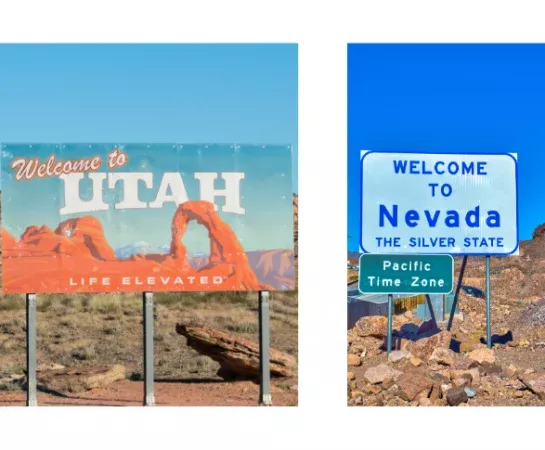
Why Nevada and Utah Sit in Different Time Zones Despite Sharing a Border
Nevada runs on Pacific Time. Utah runs on Mountain Time. The two states share a long, mostly straight desert border, yet anyone driving east from Ely, Nevada, toward Delta, Utah, loses an hour the moment they cross the line. This is not an accident of

Why Brazil Has Four Time Zones Despite Its Massive Size
Brazil covers 8,514,877 square kilometers, the fifth largest country on Earth, and its territory stretches 4,319 kilometers from its Atlantic tip near João Pessoa to the Peruvian border, a span of roughly 39 degrees of longitude. Despite that scale, Brazil runs on only four time

Full Moon Names by Month: Where Beaver Moon and Cold Moon Come From
The November 2026 full moon, the Beaver Moon, peaks at 9:53 AM Eastern Time on Tuesday, November 24. The December full moon, the Cold Moon, follows at 8:28 PM Eastern on Wednesday, December 23. In UTC that moment already falls on December 24, so in
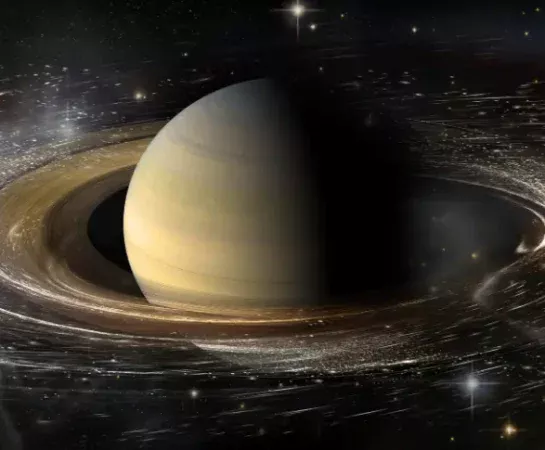
Why Saturn’s Rings Are Disappearing From View in 2025 and 2026
Saturn's rings turned edge-on to Earth on March 23, 2025, at 12:04 p.m. EDT, and for weeks the planet looked like a plain yellow ball through backyard telescopes. This is not decay or destruction. It is a geometric alignment called a ring plane crossing, and
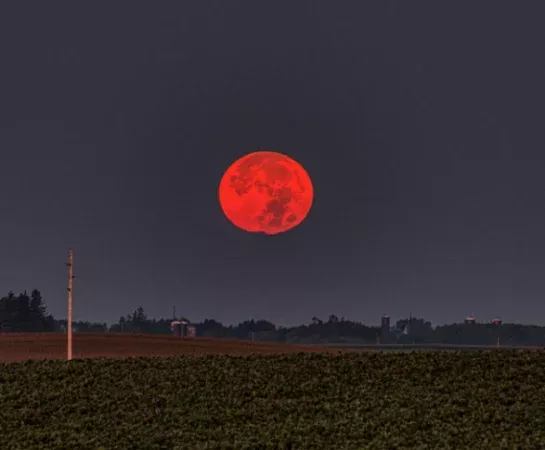
What Is a Blood Moon and Why Does the Moon Turn Red
On the night of August 27, 2026, the Moon came within a hair of disappearing entirely. Earth's shadow covered 96.2% of its surface, a partial eclipse so deep that skywatchers across the Americas, Europe, and Africa watched it turn a rusty, almost total red without
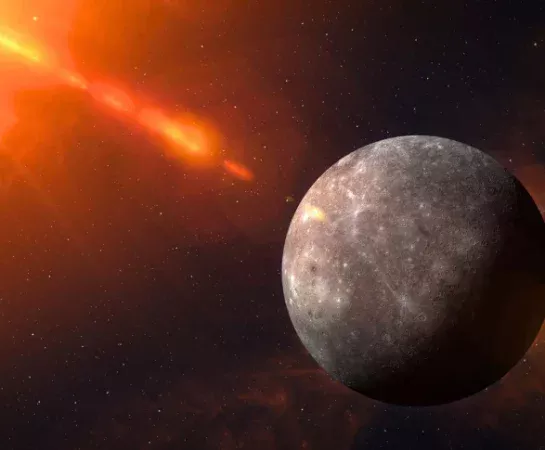
Mercury Retrograde: What’s Astronomically Real vs Astrological Myth
Mercury retrograde generates millions of searches every time it happens, and almost none of that content stops to explain what's actually occurring in space. The phenomenon itself is completely real, observable, and predictable centuries in advance. What isn't real is nearly everything attached to it
Time Tools
Quick access to timers, stopwatch, world clock and time zone tools.
Time Guides
Read useful guides about time zones, calendars, finance and astronomy.


