Major Airports in Dominica
- Canefield Airport (DCF) - 18:53:13
- Douglas-Charles Airport (DOM) - 18:53:13
Daylight saving time in Dominica
Dominica has 1 listed IANA time zones. None of them observe daylight saving time in 2026. The UTC offset remains stable throughout the year.
Best Time to Call Dominica
Business hours in Dominica (9 AM–5 PM local time) fall at these local times elsewhere:
- Beijing: 9:00 PM – 5:00 AM (next day) ( Partial overlap)
- Paris: 3:00 PM – 11:00 PM ( Partial overlap)
- Toronto: 9:00 AM – 5:00 PM ( Convenient)
- Seoul: 10:00 PM – 6:00 AM (next day) ( Outside normal hours)
- Mexico City: 7:00 AM – 3:00 PM ( Partial overlap)
- Cairo: 4:00 PM – 12:00 AM (next day) ( Partial overlap)
- Bangkok: 8:00 PM – 4:00 AM (next day) ( Partial overlap)
Times shown reflect current UTC offsets and may shift by up to an hour around daylight saving transitions.
Time Difference from Dominica
Compare time in Dominica with other countries.
Countries in the Same Time Zone as Dominica
Most Popular Cities in Dominica
Holidays in Dominica
Official national public holidays. Regional and religious observances may vary by area.
About Time in Dominica
The Name Dominica Records a Sunday in 1493
The European name of Dominica preserves a day of the week. Historian Lennox Honychurch records that Christopher Columbus passed the island's east coast on Sunday, 3 November 1493. He was unable to land and never set foot on the island during that voyage, but named it Dominica after the Sunday on which it was sighted. Long before that naming, the Kalinago knew the island as Waitukubuli.
The same calendar date acquired another meaning exactly 485 years later. British constitutional instruments terminated Dominica's status of association with the United Kingdom and brought the constitution of the new sovereign state into effect on 3 November 1978. A United States diplomatic telegram sent three days later recorded the transition even more precisely: independence took effect at the stroke of midnight on 3 November.
The coincidence gives 3 November an unusual density in the island's chronology. The date attached to the European naming in 1493 became the date of sovereign independence in 1978. These are separate historical events, and the legal documents establishing independence do not by themselves explain the choice through the Columbus episode, but both are securely attached to the same day in the historical record.
The Kalinago Read Seasons, Fishing and Planting in the Night Sky
Douglas Taylor's 1946 study of Kalinago star knowledge in Dominica preserves a system of practical astronomical observation that was already disappearing when he documented it. Taylor was careful not to describe it as a formal calendar comparable with a written European calendar. Instead, celestial observations helped people recognize seasons, anticipate weather and connect particular periods with fishing, hunting and cultivation.
The Moon retained especially strong practical importance. Taylor recorded that particular lunar phases were regarded as appropriate for planting, hunting, fishing specific species, cutting trees for canoes or timber, and carrying out certain ritual activities. His informants did not agree on every detail, but he reported a widespread idea that important work should be undertaken on a suitable lunar day. One example from his fieldwork treated the fifth day after the new moon as favorable for planting maize and for offshore fishing.
The stars supplied a different layer of seasonal information. Taylor found that celestial appearances were associated with changing winds, rainfall and the seasonal availability of fish and game. The Pleiades were particularly prominent. He reproduced an older claim that their reappearance had been used to count the passing of years, while explicitly noting that an earlier seventeenth-century source did not confirm that interpretation. That caveat is important: the evidence supports sophisticated seasonal star knowledge, but not every later reconstruction of a fixed Kalinago calendar.
Taylor also recorded how astronomical knowledge was changing in his own lifetime. By the 1940s, printed almanacs had become commonplace and people no longer needed stars simply to identify the month, while lunar timing remained important in practical decisions. Official cultural documentation in Dominica still records a Moon Dance associated with lunar phases and an Eclipse Dance associated with ceremonial responses to eclipses. These surviving cultural forms should not be treated as an unchanged copy of seventeenth-century practice, but they preserve the importance of celestial cycles within Kalinago heritage.
Roseau Timed the 1880 Eruption in Minutes
On Sunday, 4 January 1880, observers produced an unusually detailed chronology of a phreatic eruption in the Grande Soufrière district. Physician and naturalist H. A. Alford Nicholls, writing from Dominica for Nature, placed the beginning shortly after 11 in the morning. Heavy rain, thunder and lightning were followed by sudden darkness, a strong sulphurous smell and a series of unusual explosive sounds.
Nicholls estimated that the darkness began to lift after about five minutes. Only then did observers in Roseau realize that the rain was carrying volcanic ash. He timed the ash fall at approximately nine minutes and reported a deposit around a quarter of an inch thick in the capital. The Roseau River subsequently became a destructive flood carrying pale, sediment-laden water from the volcanic district.
A second account was written in Roseau only five days after the event by L. Bert and later communicated to the Société de Géographie in Paris. Bert independently dated the disturbance to 11:00 on 4 January. He described deep rumbling recurring at intervals of roughly two minutes and an atmosphere that became dark enough to resemble a solar eclipse. Some of his interpretation of the volcanic landscape differs from later volcanology, but his timing provides valuable contemporary corroboration of the event.
Modern geological research identifies the 1880 event as a steam-driven phreatic eruption in the Valley of Desolation and confirms ash fall extending westward to Roseau. Smithsonian records likewise list the 1880 explosion as one of the island's few historical eruptions. The contemporary observations are therefore more than colorful eyewitness accounts: their minutes, intervals and sequence can be compared with deposits studied more than a century later.
Boiling Lake Spent Four Months Draining, Refilling and Cooling
The Boiling Lake has its own history of abrupt changes in time. UWI Seismic Research Centre records at least eight episodes of unusual water-level behavior since 1876. The best documented twentieth-first-century crisis began in December 2004 and continued into April 2005, producing repeated changes that were tracked by forestry officers and scientists rather than inferred only from later recollections.
On 25 December 2004 visitors found the lake effectively empty. Measurements on 28 December placed the water surface roughly 10 to 12 meters below its usual level. The lake began refilling during January, but the recovery was not steady. By 14 February it had filled again without returning to normal boiling conditions. A large aftershock occurred that day, and the water level subsequently dropped again. On 7 March the lake was once more nearly empty; by 13 April it was close to its normal level, and by late April normal boiling had returned.
The episode followed the magnitude 6.3 Les Saintes earthquake of 21 November 2004, which produced damaging shaking in northern Dominica and a long aftershock sequence. Research published in the Journal of Geophysical Research calculated that earthquake-related stress changes near the Boiling Lake were compatible with the opening of fractures and changes in its hydrothermal plumbing. The authors treated that mechanism as plausible rather than proven because the underground geometry cannot be reconstructed in enough detail to isolate a single cause.
UWI maintains the same distinction today. Its Seismic Research Centre states that no conclusive general link has been established between earthquakes and Boiling Lake fluctuations, although research suggests that the December 2004 episode was related to stress changes from the Les Saintes earthquake. Water-level drops also occurred long before 2004, and they are not automatically evidence that a volcanic eruption is imminent. The lake can change dramatically because the balance between groundwater, steam, fractures and vents has been disturbed.
Maria Added About 70 Knots of Wind in Twenty-Four Hours
The approach of Hurricane Maria in September 2017 compressed an extreme amount of meteorological change into a single day. Peer-reviewed analysis of National Hurricane Center data shows that Maria intensified from about 75 knots at 00:00 UTC on 18 September to about 145 knots at 00:00 UTC on 19 September. An increase of roughly 70 knots in twenty-four hours placed the storm far beyond the standard threshold used to define rapid intensification.
The forecasts had to follow a storm whose structure was changing by the hour. At 11:00 AST on 18 September, a Hurricane Hunter aircraft found a small eye only about ten nautical miles across and the National Hurricane Center raised Maria to a major Category 3 hurricane with 120 mph winds. By 19:45 AST, aircraft measurements showed Category 5 intensity with winds estimated at 160 mph. The confirmation that Maria had reached Category 5 therefore came only about ninety minutes before the center reached Dominica.
At approximately 21:15 AST, the National Hurricane Center reported the center making landfall with estimated sustained winds of 160 mph and a central pressure of 924 millibars. Maria became the first Category 5 hurricane known to have made landfall on the island. Its compact inner core then crossed Dominica's mountainous terrain, weakened only slightly, and returned to Category 5 strength over the Caribbean Sea a few hours later.
The official post-disaster assessment described Maria as one of the most rapidly intensifying storms in recent history and noted that the country was exposed to extraordinary winds for more than three hours. The chronology is especially important when reconstructing the event: forecasts issued only hours apart described materially different hurricanes because the physical storm was intensifying at an exceptional rate between those observations.
One Tsunami Took Hours to Cross the Atlantic; Portsmouth Now Plans for Four Minutes
The Lisbon earthquake of 1 November 1755 generated a tsunami that crossed the Atlantic and reached the Lesser Antilles. Historical tsunami catalogues used in modern scientific studies assign Portsmouth a run-up estimate of about 3.7 meters. The figure comes from historical reconstruction rather than an instrumental tide gauge, so it carries the uncertainty inherent in eighteenth-century observations, but independent tsunami studies reproduce the same value.
The source was thousands of kilometers away, and published modeling places the Atlantic crossing on the scale of roughly seven hours. Dominica is also exposed to much closer tsunami sources, where the useful warning interval can collapse from hours to minutes. That difference is central to the modern hazard planning carried out for Portsmouth.
A national tsunami assessment used for the UNESCO-IOC Tsunami Ready program found scenarios in which waves could reach Portsmouth in as little as four minutes. The town was selected for intensive preparedness partly because of that short travel time and the potential for significant inundation. Four minutes leaves little room for a warning system that depends on a long sequence of decisions after an event has already occurred.
On 26 September 2024, Portsmouth became the first community in Dominica formally recognized as Tsunami Ready by UNESCO's Intergovernmental Oceanographic Commission. The process included hazard assessment, evacuation mapping, signs, public education, drills, an emergency operations plan and procedures for receiving and disseminating warnings. The modern system is built around a fact revealed by the hazard models: depending on where a tsunami originates, the decisive unit of time may not be hours, but minutes.
Frequently Asked Questions
How many time zones does Dominica have?
One. The whole of Dominica follows America/Dominica, so every city shows the same local time as the capital, Roseau.
Is Dominica ahead of or behind GMT?
Dominica is currently 4 hours behind GMT (UTC-4).
Does Dominica use summer time?
No. Dominica does not observe daylight saving time, so its clocks stay at UTC-4 all year. Its time difference with countries that do change their clocks still shifts by an hour in spring and autumn.
How many public holidays does Dominica have in 2026?
Dominica has 12 national public holidays in 2026, when banks and government offices are usually closed. Some regions may also have their own local holidays.
How do I dial a phone number in Dominica from abroad?
From a mobile phone, type +1-767 and then the 10-digit number, without the 1 that is dialed first for long-distance calls inside the country. From a landline in the US or Canada, dial 1 and the 10-digit number; from most of Europe, dial 00 1-767 followed by the number.
What language is spoken in Dominica?
The main language of Dominica is English.
Beyond the Clock

When Does a Day Actually Begin? Midnight, Sunrise, and Sunset Across Cultures
Hebcal, the widely used Jewish calendar service, lists Saturday, December 5, 2026 as 25 Kislev 5787, the first day of Hanukkah. The first Hanukkah candle is lit the evening before, on Friday, December 4. This is not an error. The Hebrew date changes at sunset,

The Hour That Happens Twice: What Actually Occurs at 1:30 AM When Clocks Fall Back
At 1:59:59 a.m. on Sunday, November 1, 2026, clocks in New York will not tick over to 2:00. They will jump back to 1:00:00 a.m., and the next 60 minutes will replay. Every time from 1:00 to 1:59 happens twice that night, once on Eastern
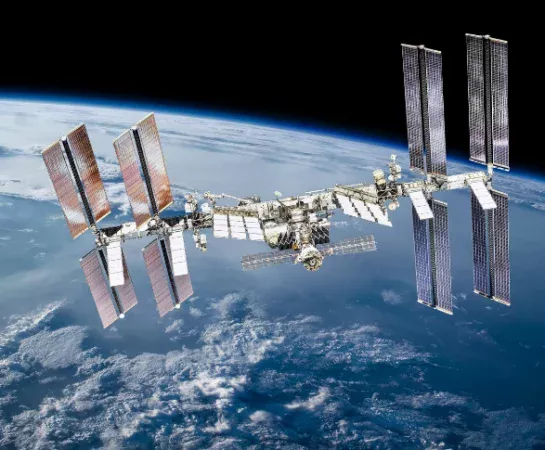
Why the International Space Station Runs on UTC Instead of Local Time
Astronauts aboard the International Space Station see the sun rise and set 16 times in a 24-hour period, once every 90 to 93 minutes, as the station circles Earth at roughly 28,000 kilometers per hour. No conventional time zone survives contact with that kind of

Standard Time vs Daylight Time: What’s the Actual Difference
Most people assume "Standard Time" is the normal, default setting and "Daylight Time" is some separate seasonal overlay that temporarily replaces it. That mental model is backwards in a way that federal law makes explicit, and once you see the actual legal language, the whole

Stock Market Early Close Days: When Trading Ends at 1 PM
Twice in the last stretch of 2026, the NYSE and Nasdaq will stop trading three hours ahead of schedule. The bell rings at 1:00 PM Eastern instead of 4:00 PM, and a session that normally runs 6.5 hours gets squeezed into 3.5. Anyone with a

Dividend Ex-Date Timing: Why the Date Matters More Than the Payment Date
The ex-dividend date, not the payment date, decides whether you actually receive a company's next dividend. Buy a stock on or after its ex-date and the payment goes to the person who sold it to you, no matter how soon the cash is scheduled to
Circuit Breakers: How Long Does the Market Pause When It Crashes
On April 7, 2025, the S&P 500 swung 8.5% in a single session, one of the widest intraday ranges since March 2020. It closed down just 0.2%. No circuit breaker fired. Five years earlier, in March 2020, the same index tripped the exact same 7%

IPO First Trading Day: What Time Does a New Stock Start Trading
Every IPO photo looks the same: executives on a balcony, a giant chrome button, the 9:30 AM bell. What that photo doesn't show is that the stock almost never starts trading at 9:30. Facebook was supposed to open at 11:00 in 2012 and didn't trade
Time Tools
Quick access to timers, stopwatch, world clock and time zone tools.
Time Guides
Read useful guides about time zones, calendars, finance and astronomy.


