Major Airports in Bermuda
- L.F. Wade International Airport (BDA) - 19:22:33
Daylight saving time changes in Bermuda
Bermuda has 1 listed IANA time zones. 1 of them observe daylight saving time changes in 2026.
Next change: November 1, 2026
Clock moves back from 02:00 to 01:00 local time.
Best Time to Call Bermuda
Business hours in Bermuda (9 AM–5 PM local time) fall at these local times elsewhere:
- Beijing: 8:00 PM – 4:00 AM (next day) ( Partial overlap)
- Paris: 2:00 PM – 10:00 PM ( Partial overlap)
- Toronto: 8:00 AM – 4:00 PM ( Convenient)
- Seoul: 9:00 PM – 5:00 AM (next day) ( Partial overlap)
- Mexico City: 6:00 AM – 2:00 PM ( Partial overlap)
- Cairo: 3:00 PM – 11:00 PM ( Partial overlap)
- Bangkok: 7:00 PM – 3:00 AM (next day) ( Partial overlap)
Times shown reflect current UTC offsets and may shift by up to an hour around daylight saving transitions.
Time Difference from Bermuda
Compare time in Bermuda with other countries.
Countries in the Same Time Zone as Bermuda
Most Popular Cities in Bermuda
Holidays in Bermuda
Official national public holidays. Regional and religious observances may vary by area.
About Time in Bermuda
Three Days at the Pumps Ended on Bermuda's Reef
The event that permanently connected Bermuda with English Atlantic history began as a race against time. In July 1609 the Sea Venture, flagship of a Virginia Company supply fleet bound for Jamestown, was caught in a hurricane. William Strachey, who survived the voyage, later described a ship whose seams opened so badly that passengers and crew worked continuously to keep it afloat.
Contemporary accounts place the crisis from Tuesday until Friday, 28 July 1609. For roughly three days, men rotated through the pumps while others bailed water by hand. The situation became so desperate that possessions and cargo were thrown overboard in an attempt to lighten the ship. When land appeared, Admiral Sir George Somers deliberately drove the Sea Venture between reefs off Bermuda rather than allow it to founder in deep water.
Everyone aboard reached the islands alive. The castaways then spent about ten months on Bermuda, during which they constructed two smaller vessels, Deliverance and Patience, from local cedar and salvaged material. They finally departed for Virginia in May 1610. The delay proved historically consequential: when they reached Jamestown, the colony had been devastated by the Starving Time and was close to abandonment.
The wreck later became part of Bermuda's official calendar. For a period, Somers Day commemorated the Sea Venture story, although the public holiday eventually became intertwined with another tradition, Cup Match. Parliamentary debate over the holiday explicitly returned to the date of the wreck, showing how an event measured originally in hours of pumping and survival continued to influence the island's calendar more than three centuries later.
Cup Match Turned Emancipation Into a Two-Day National Rhythm
Bermuda's most distinctive holiday is not organized around a fixed numbered date. Cup Match occupies two consecutive days, traditionally the Thursday and Friday before the first Monday in August. The first is Emancipation Day and the second is Mary Prince Day. The dates therefore move from year to year while remaining tied to the same weekly pattern.
The origins lie in the period after emancipation. Slavery ended in Bermuda in 1834, and Black Friendly Societies developed annual gatherings to commemorate freedom. Cricket matches between lodges in the eastern and western parts of the island became part of those celebrations. The first formal Cup Match between St. George's and Somerset was played in 1902, transforming an emancipation commemoration into one of Bermuda's defining sporting traditions.
When legislators debated the Public Holidays Act in 1947, they faced a calendar problem. Cup Match had become socially important, but the existing Somers Day commemorated the Sea Venture wreck on 28 July. Parliamentary discussion recorded competing views over whether that historical date should move to accommodate the cricket holiday. The eventual arrangement placed the public holidays around Cup Match rather than fixing both observances permanently to 28 July.
The meaning of the second day changed again in 2020, when Somers Day was renamed Mary Prince Day. Prince, born enslaved in Bermuda, published her life narrative in London in 1831, giving British readers a first-person account of slavery in the Caribbean. The modern two-day holiday consequently links emancipation, Black mutual-aid societies, cricket and abolitionist memory within a single recurring block of the Bermudian year.
A Clock in Somerset Struck the Half-Hour When No Other Public Clock Did
Manchester Unity Hall in Somerset contains an unusual surviving monument to the way public time entered community life. The building belonged to the Independent Order of Odd Fellows, one of the Friendly Society organizations that played an important role in Black Bermudian social life after emancipation.
Its tower was completed in June 1924. Later that year, on 14 December, lodge members and residents gathered for the dedication of an illuminated turret clock purchased from J. W. Benson of London and assembled locally by Somerset engineer Henry Thomas Cann.
The National Museum of Bermuda records a distinctive feature: it was the only public clock on the island that struck on the half-hour. The clock therefore supplied something more precise than a visual indication of the hour. People within hearing distance received an audible division of the day every thirty minutes, whether or not they owned a watch.
Its illumination was less dependable. Electricity and maintenance were expensive enough that the clock could not remain continuously lit. The contrast is revealing. Mechanical public time could be installed as a civic symbol, but maintaining twenty-four-hour visibility required an infrastructure and budget that a community institution had to sustain.
Three Clocks at Cooper's Island Counted Down to the Moon
During the Space Race, Bermuda became part of a timing system operating on an entirely different scale. NASA completed its Cooper's Island tracking station in 1961. The National Museum of Bermuda describes it as one of NASA's first international outposts and, at the time, the agency's second most sophisticated tracking installation after Cape Canaveral.
The control room made time impossible to ignore. Above the radar plotting boards were three large digital clocks. One displayed Greenwich Mean Time, another local Bermuda time, and the third mission countdown or elapsed time. The clocks were traceable to the United States National Bureau of Standards because the timing of radar observations, telemetry and flight decisions had to be synchronized with the rest of NASA's network.
During a launch, Cooper's Island acquired the spacecraft only minutes after liftoff. Former station personnel recalled the sequence of acquisition of signal, radar tracking, maximum elevation and loss of signal unfolding in less than fifteen minutes. Within that short interval the Bermuda team helped determine whether a trajectory was safe. The station made 118 critical Go or No-Go decisions over its operating history.
Its role reached a peak during the Apollo program. For Apollo 11, the station electronically acquired the launch vehicle soon after departure and tracked it during the crucial ascent period. Bermuda personnel had access to the range-safety system during the phase when a seriously malfunctioning booster could have required destruction after procedures to protect the crew.
The station also supported Apollo 8, Gemini and Mercury missions and later tracked unmanned satellites. It closed as a permanently staffed NASA facility in the late 1990s, but tracking activity returned in a smaller form in 2012. A place once associated with maritime navigation had become a point in a global network where fractions of seconds, synchronized clocks and trajectory measurements helped decide whether spacecraft continued toward orbit.
Fabian's Eyewall Held Bermuda for Hours
Hurricane Fabian on 5 September 2003 left one of the best documented short-duration weather chronologies in modern Bermudian history. Bermuda Weather Service records show that forecasts on 2 and 3 September progressively shifted the expected track closer to the island. A hurricane watch was issued early on 4 September and upgraded to a hurricane warning around midday.
Tropical-storm-force winds arrived on the morning of 5 September. By early afternoon the island was experiencing hurricane-force conditions. The National Hurricane Center reported at 17:00 Atlantic Standard Time that Fabian's eyewall was moving across Bermuda and that the airport had recently measured an estimated sustained wind of 90 knots with gusts to 115 knots.
One of the most dramatic measurements came from Bermuda Harbour Radio. Its instrument recorded a gust of 143 knots before the 250-foot mast carrying the equipment collapsed. Bermuda Weather Service later summarized the strongest winds as lasting approximately three to four hours while much of the island remained within the eyewall.
The storm caused four deaths, extensive coastal and structural damage, and widespread power failures. The Causeway linking the airport area to the rest of the island was severely damaged. The World Meteorological Organization subsequently retired the name Fabian from the Atlantic hurricane list.
The value of the surviving chronology is that the disaster can be reconstructed almost hour by hour: changing forecasts, the watch, the warning, the arrival of tropical-storm winds, the onset of hurricane conditions, individual instrument readings and the collapse of monitoring equipment. On a small island exposed directly to Atlantic hurricanes, the timing between forecast, warning and impact is itself part of the hazard.
Bermuda Day Has Been Rewritten More Than Once
Bermuda Day shows how a public calendar can evolve without abandoning the tradition attached to it. The holiday was long associated with 24 May, historically observed as the Queen's Birthday and later reshaped into Bermuda Day. The first Bermuda Day Parade was held in 1979, adding a major cultural procession to an already established date in the annual calendar.
The modern rule is different. Bermuda Day is now celebrated on the fourth Friday in May. That means the holiday can fall on different Gregorian dates while retaining a predictable position within the week. In 2024 it happened to return to the traditional date of 24 May; in 2026 it fell on 22 May.
The Half Marathon Derby follows the holiday and carries an even longer sporting chronology. In 2024 the government marked the 115th anniversary of the race, placing its origins in 1909. The event has therefore survived changes in the name and scheduling of the holiday around it.
This combination of moving date and persistent tradition is characteristic of Bermuda's civic calendar. Cup Match moves according to a weekday pattern, Bermuda Day follows the fourth Friday in May, and weekend public holidays can be transferred to a following weekday under the Public Holidays Act. The calendar is not simply a list of anniversaries. It is a set of legal rules determining when historical memory, sport and public life actually interrupt the working week.
Frequently Asked Questions
How many time zones does Bermuda have?
One. The whole of Bermuda follows Atlantic/Bermuda, so every city shows the same local time as the capital, Hamilton.
Is Bermuda ahead of or behind GMT?
Bermuda is currently 3 hours behind GMT (UTC-3).
Does Bermuda use summer time?
Yes. Hamilton uses UTC-4 (AST) in standard time and UTC-3 (ADT) during daylight saving time, and is currently on summer time.
How many public holidays does Bermuda have in 2026?
Bermuda has 11 national public holidays in 2026, when banks and government offices are usually closed. Some regions may also have their own local holidays.
How do I dial a phone number in Bermuda from abroad?
From a mobile phone, type +1-441 and then the 10-digit number, without the 1 that is dialed first for long-distance calls inside the country. From a landline in the US or Canada, dial 1 and the 10-digit number; from most of Europe, dial 00 1-441 followed by the number.
What language is spoken in Bermuda?
The main languages of Bermuda are English and Portuguese.
Beyond the Clock

The Hour That Happens Twice: What Actually Occurs at 1:30 AM When Clocks Fall Back
At 1:59:59 a.m. on Sunday, November 1, 2026, clocks in New York will not tick over to 2:00. They will jump back to 1:00:00 a.m., and the next 60 minutes will replay. Every time from 1:00 to 1:59 happens twice that night, once on Eastern
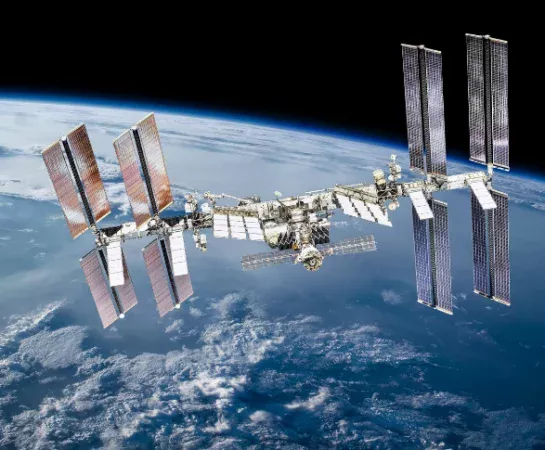
Why the International Space Station Runs on UTC Instead of Local Time
Astronauts aboard the International Space Station see the sun rise and set 16 times in a 24-hour period, once every 90 to 93 minutes, as the station circles Earth at roughly 28,000 kilometers per hour. No conventional time zone survives contact with that kind of
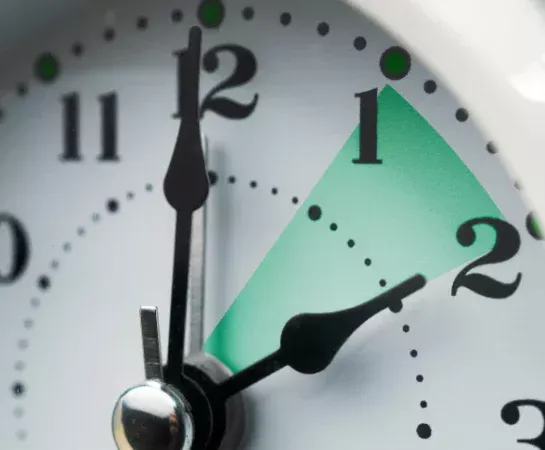
Standard Time vs Daylight Time: What’s the Actual Difference
Most people assume "Standard Time" is the normal, default setting and "Daylight Time" is some separate seasonal overlay that temporarily replaces it. That mental model is backwards in a way that federal law makes explicit, and once you see the actual legal language, the whole

Why the Hour Was Originally a Different Length in Summer and Winter
For most of recorded history, an hour was not a fixed amount of time. It was a fraction, one twelfth of however long daylight happened to last that day. In June that fraction stretched past 80 modern minutes. In December it shrank to barely 40.

Why the Moon’s Phases Don’t Actually Change Its Size
A thin crescent looks small enough to disappear. A full moon looks like it's swelling on the horizon. Neither impression is true. The Moon's diameter is 3,474 kilometers on every night of the month, whether it's a sliver or a full disc, and nothing in
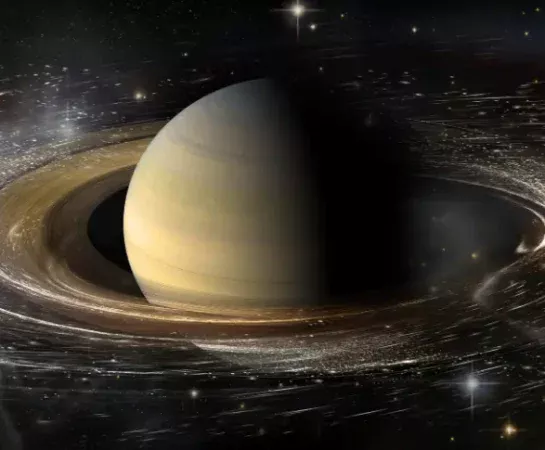
Why Saturn’s Rings Are Disappearing From View in 2025 and 2026
Saturn's rings turned edge-on to Earth on March 23, 2025, at 12:04 p.m. EDT, and for weeks the planet looked like a plain yellow ball through backyard telescopes. This is not decay or destruction. It is a geometric alignment called a ring plane crossing, and
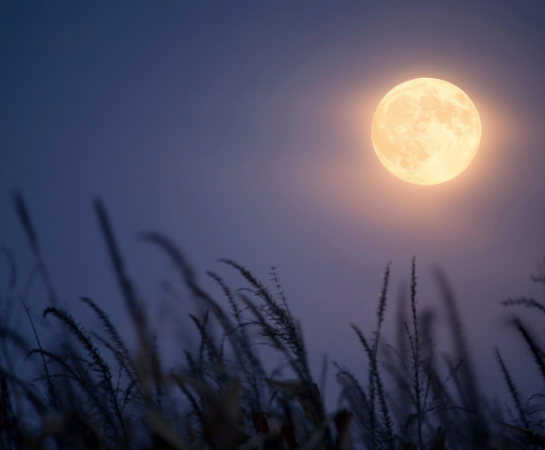
What Is a Harvest Moon and Why It Rises at Almost the Same Time Several Nights Running
On most nights of the year, the Moon rises roughly 50 minutes later than it did the night before. Around the Harvest Moon, that gap collapses to as little as 10 minutes in parts of the UK and Canada, and rarely more than 30 minutes
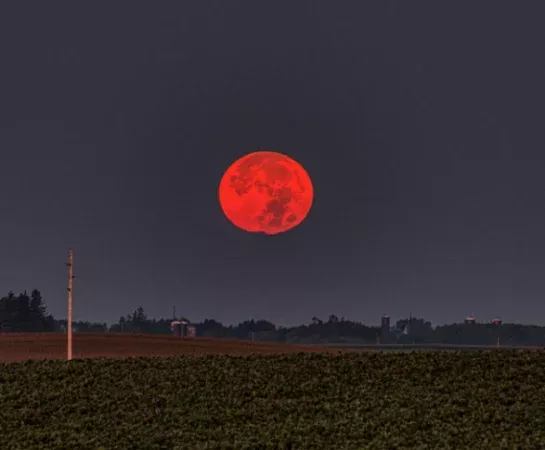
What Is a Blood Moon and Why Does the Moon Turn Red
On the night of August 27, 2026, the Moon came within a hair of disappearing entirely. Earth's shadow covered 96.2% of its surface, a partial eclipse so deep that skywatchers across the Americas, Europe, and Africa watched it turn a rusty, almost total red without
Time Tools
Quick access to timers, stopwatch, world clock and time zone tools.
Time Guides
Read useful guides about time zones, calendars, finance and astronomy.


