Major Airports in Aruba
- Queen Beatrix International Airport (AUA) - 19:46:36
Daylight saving time in Aruba
Aruba has 1 listed IANA time zones. None of them observe daylight saving time in 2026. The UTC offset remains stable throughout the year.
Best Time to Call Aruba
Business hours in Aruba (9 AM–5 PM local time) fall at these local times elsewhere:
- Beijing: 9:00 PM – 5:00 AM (next day) ( Partial overlap)
- Paris: 3:00 PM – 11:00 PM ( Partial overlap)
- Toronto: 9:00 AM – 5:00 PM ( Convenient)
- Seoul: 10:00 PM – 6:00 AM (next day) ( Outside normal hours)
- Mexico City: 7:00 AM – 3:00 PM ( Partial overlap)
- Cairo: 4:00 PM – 12:00 AM (next day) ( Partial overlap)
- Bangkok: 8:00 PM – 4:00 AM (next day) ( Partial overlap)
Times shown reflect current UTC offsets and may shift by up to an hour around daylight saving transitions.
Time Difference from Aruba
Compare time in Aruba with other countries.
Countries in the Same Time Zone as Aruba
Most Popular Cities in Aruba
Holidays in Aruba
Official national public holidays. Regional and religious observances may vary by area.
About Time in Aruba
New Year 1965 Began at 00:30
The most consequential clock change in Aruba's recorded time-zone history lasted only thirty minutes. A Netherlands Antilles decree signed on 28 December 1964 established, from 1 January 1965, official time for the Leeward Islands at four hours behind Greenwich Mean Time. It simultaneously revoked the 1937 regulation that had governed the previous standard. The IANA chronology shows what that meant on an actual clock: Aruba had been using GMT-4:30, so midnight at the start of 1965 was followed immediately by 00:30. Half an hour of local clock time never occurred.
This was not daylight saving. The new offset was permanent. Aruba has remained on UTC-4 without seasonal clock changes, including after becoming a separate country within the Kingdom of the Netherlands in 1986. The 1965 change is unusually well documented because the surviving government decision states both its effective date and its relationship to Greenwich, rather than requiring the offset to be inferred from a later historical table.
Moving the clock half an hour also changed its relationship with the Sun. Aruba lies near 69.97 degrees west longitude. A GMT-4:30 zone is centered theoretically on 67.5 degrees west, which puts mean solar noon near Oranjestad only about ten minutes after 12:00. UTC-4 is centered on 60 degrees west; with that clock, the same longitude places mean solar noon roughly forty minutes after 12:00. The 1965 reform therefore shifted the clock reading of mean solar noon by the same thirty minutes even though the island's astronomical position had not changed. Apparent solar noon varies further during the year because of the equation of time.
The earlier transition is less securely documented. IANA's backzone reconstruction assigns Oranjestad local mean time of GMT-4:40:24 until 12 February 1912 and GMT-4:30 afterward. On that model, the first standardized adjustment advanced clocks by 10 minutes 24 seconds. IANA explicitly cautions that its pre-1970 backzone material is incomplete and less reliable than its modern records, so the exact 1912 transition should be treated as a historical database reconstruction rather than the equivalent of the surviving 1964 legal decree.
Oranjestad Heard the Hour Before It Saw It on Four Clock Faces
The Willem III Tower began with a request for public time. In 1866 Lieutenant Governor J. H. Ferguson asked the governor of Curaçao for permission to place a town bell in Oranjestad. The eventual decision was more ambitious: a lighthouse would be built at Fort Zoutman, and the bell would be incorporated into the same tower. It could announce the hour and also signal events ranging from the arrival of a ship to a fire.
The light was first illuminated on 19 February 1868, the birthday of King William III, after whom the tower was named. Contemporary heritage documentation says the bell continued indicating the full hours until 1933. The arrangement is an important detail in the history of public timekeeping because the original system was primarily audible. Residents did not need to own an accurate watch, or even see the tower, to receive an hourly time cue.
The familiar clock-tower appearance came later. During reconstruction in 1937, an additional concrete level was added with a town clock face on each side, and the clock was ordered from the Dutch bell and clock maker Petit & Fritsen. By then the navigational light had also passed through several technologies: the early kerosene lamp was replaced, acetylene lighting arrived around 1930, and electric light followed in 1935.
In 1963 the lighthouse lamp was removed. The building consequently lost the maritime-light function it had performed for ninety-five years while retaining its role as a civic clock and landmark. Few structures on the island show the changing technology of time so compactly: an hourly bell, mechanical clockwork, four public dials and a lighthouse all occupied the same tower at different stages of its history.
A French Clock Made the California Light Repeat Every Ten Seconds
At Hudishibana on the north-western end of the island, time was built into a different kind of signal. The California Lighthouse was constructed between 1914 and 1916 after the wreck of the vessel California had drawn attention to navigation around this coast. Aruba's Monuments Fund records that two lighthouse keepers operated a special French clock mechanism that produced the light signal every ten seconds.
The ten-second interval was not intended to tell sailors the time of day. It gave the light a repeating rhythm. In marine navigation, the timing of flashes is part of a light's characteristic, allowing an observer to recognize one aid to navigation among other lights seen at night. Modern IALA standards still classify navigational lights by precisely this combination of flashes, eclipses and repeating periods. At the California Lighthouse, mechanical clockwork supplied that regularity long before electronic controllers could do it automatically.
The keepers and their clock mechanism remained part of the system until 1970, when electric lighting and automation replaced the older arrangement. The change eliminated the need for two people to maintain a continuously repeating mechanical sequence. A lighthouse that appears to be a simple fixed landmark was therefore also, for more than half a century, a machine whose usefulness depended on measuring the same short interval reliably thousands of times every day.
Three Minutes of Darkness Became a Solar Physics Laboratory
On 26 February 1998, the centre line of a total solar eclipse crossed the Caribbean between Aruba and Curaçao. NASA's published calculations gave Oranjestad 3 minutes 6 seconds of totality. The island also had unusually favorable climatological prospects for observing the event, with NASA identifying Aruba and Curaçao among the stronger weather choices along the Caribbean section of the eclipse path.
For one research group, those minutes were the end of nearly two weeks of preparation. A Williams College expedition led by astronomer Jay M. Pasachoff brought instruments to Aruba to investigate the heating and structure of the solar corona. One experiment obtained seven high-quality coronal images during totality. The expedition also photographed the corona over a range of exposures and wavelengths so that structures visible from the ground could be compared with observations made from space.
The timing was coordinated with the Solar and Heliospheric Observatory. SOHO planning documents scheduled an EIT synoptic observing sequence for the Williams program from 18:09:56 to 18:12:56 UT, corresponding to roughly 2:09:56 to 2:12:56 p.m. on Aruba's UTC-4 clock. The point was not simply to photograph the eclipse simultaneously. Matching observations in time allowed researchers to relate coronal structures photographed from Aruba to ultraviolet measurements of the solar atmosphere taken by the spacecraft.
The experiment also demonstrated how unforgiving a precisely timed astronomical event can be. A power failure shortly before totality caused one of the expedition's electronic experiments to lose solar tracking, preventing the planned temperature-mapping observations. Other equipment succeeded, and a digital coronal image from Aruba was transmitted over the Internet to NASA, where it was combined with a SOHO EIT image and released within hours of the eclipse. Months of planning ultimately converged on an observing window measured in minutes, and one interruption immediately before that window was enough to erase part of the intended dataset.
Frequently Asked Questions
How many time zones does Aruba have?
One. The whole of Aruba follows America/Aruba, so every city shows the same local time as the capital, Oranjestad.
Is Aruba ahead of or behind GMT?
Aruba is currently 4 hours behind GMT (UTC-4).
Does Aruba use summer time?
No. Aruba does not observe daylight saving time, so its clocks stay at UTC-4 all year. Its time difference with countries that do change their clocks still shifts by an hour in spring and autumn.
How many public holidays does Aruba have in 2026?
Aruba has 11 national public holidays in 2026, when banks and government offices are usually closed. Some regions may also have their own local holidays.
How do I dial a phone number in Aruba from abroad?
From a mobile phone, type +297 and then the local number without the leading 0 used for domestic calls, if it has one. From a landline, replace the plus sign with your exit code: 011 from the US and Canada, or 00 from most of Europe, for example 00 297 followed by the number.
What language is spoken in Aruba?
The main languages of Aruba are Dutch, Papiamento and Spanish.
Beyond the Clock

Three Kings Day: Why Epiphany Falls on January 6
On the morning of Wednesday, January 6, 2027, children across Spain will open what are traditionally the main presents of the holiday season. In Spain the gifts come not from Santa Claus but from the Three Kings. In Puerto Rico, children leave grass in shoeboxes

Why Orthodox Christmas Falls on January 7, Not December 25
Millions of Orthodox Christians open presents and attend Christmas liturgy on January 7. They aren't celebrating a different holiday, and they aren't twelve days behind on purpose. They're marking December 25 on a calendar that stopped syncing with the seasons centuries ago and was never
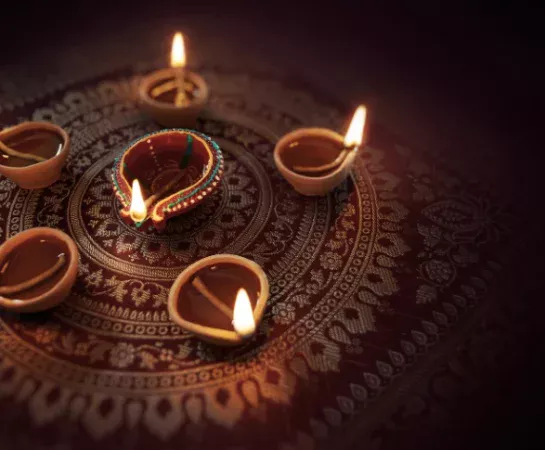
Why Diwali’s Date Changes Every Year
Why Diwali's Date Changes Every Year In October 2025, Diwali split down the middle. Cities where the sun set before 5:30 p.m. lit their lamps on October 21. Everywhere else celebrated a day earlier, on October 20. Same festival, same religious significance, nearly a billion
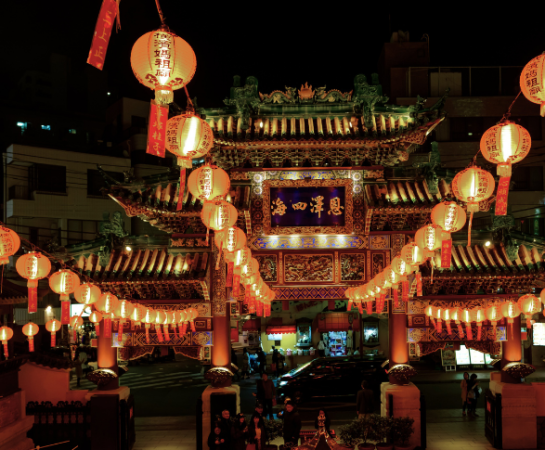
Why Chinese New Year Changes Date Every Year
Chinese New Year fell on January 22 in 2023, February 10 in 2024, January 29 in 2025, and February 17 in 2026. That's a swing of nearly four weeks across four consecutive years, and none of it is random. Every date traces back to a

Why the Earliest Sunset Comes Before the Winter Solstice
In New York, the Sun sets earliest on Monday, December 7, 2026, at about 4:28 PM. The shortest day comes two weeks later. The solstice falls at 20:50 UTC on December 21 (3:50 PM EST), and on that day New York gets roughly 9 hours

Total Solar Eclipse on August 2, 2027: Where, When, and Why It Lasts So Long
On Monday, August 2, 2027, the Moon's shadow will cross southern Spain, North Africa and the Arabian Peninsula, producing the second-longest total solar eclipse of the 21st century. At its maximum, in southern Egypt near Luxor, the Sun will be completely covered for about 6

When Does Winter Start: Meteorological vs Astronomical Seasons
Winter 2026 starts twice in the Northern Hemisphere. Meteorological winter begins on Tuesday, December 1, 2026. Astronomical winter begins at the December solstice, on Monday, December 21, 2026 at 20:50 UTC, which is 3:50 p.m. Eastern and 12:50 p.m. Pacific. Both answers are correct. They
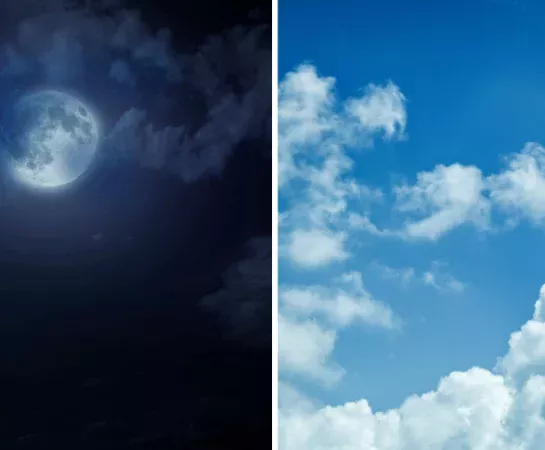
Why the Sky Is Blue During the Day and Black at Night
Sunlight is white. Air is, as far as anyone can tell by looking through a window, colorless. And yet every clear afternoon the same 400,000-kilometer column of gas above your head reads as a specific, saturated blue, then goes black within an hour of sunset.
Time Tools
Quick access to timers, stopwatch, world clock and time zone tools.
Time Guides
Read useful guides about time zones, calendars, finance and astronomy.


