Major Airports in Argentina
- Aeroparque Jorge Newbery (AEP) - 20:32:27
- Ezeiza International Airport - Ministro Pistarini (EZE) - 20:32:27
- General Enrique Mosconi International Airport (CRD) - 20:32:27
- Gobernador Horacio Guzman International Airport (JUJ) - 20:32:27
- Governor Francisco Gabrielli International Airport (MDZ) - 20:32:27
- Ingeniero Aeronáutico Ambrosio L.V. Taravella International Airport (COR) - 20:32:27
- Martín Miguel de Güemes International Airport (SLA) - 20:32:27
- Piloto Civil Norberto Fernández International Airport (RGL) - 20:32:27
- Presidente Perón International Airport (NQN) - 20:32:27
- Resistencia International Airport (RES) - 20:32:27
- Rosario Islas Malvinas International Airport (ROS) - 20:32:27
- Teniente Benjamín Matienzo International Airport (TUC) - 20:32:27
- Teniente Luis Candelaria International Airport (BRC) - 20:32:27
Daylight saving time in Argentina
Argentina has 12 listed IANA time zones. None of them observe daylight saving time in 2026. The UTC offset remains stable throughout the year.
Best Time to Call Argentina
Business hours in Argentina (9 AM–5 PM local time) fall at these local times elsewhere:
- Beijing: 8:00 PM – 4:00 AM (next day) ( Partial overlap)
- Paris: 2:00 PM – 10:00 PM ( Partial overlap)
- Toronto: 8:00 AM – 4:00 PM ( Convenient)
- Seoul: 9:00 PM – 5:00 AM (next day) ( Partial overlap)
- Mexico City: 6:00 AM – 2:00 PM ( Partial overlap)
- Cairo: 3:00 PM – 11:00 PM ( Partial overlap)
- Bangkok: 7:00 PM – 3:00 AM (next day) ( Partial overlap)
Times shown reflect current UTC offsets and may shift by up to an hour around daylight saving transitions.
Time Difference from Argentina
Compare time in Argentina with other countries.
Most Popular Cities in Argentina
Holidays in Argentina
Official national public holidays. Regional and religious observances may vary by area.
About Time in Argentina
Argentina Unified the Clock Before It Chose a Time Zone
Argentina's first national time standard was not based on Greenwich or on a modern whole hour UTC offset. It was based on Córdoba. During the nineteenth century, cities, churches, public offices and railway companies could keep different local times because noon was still closely tied to the local meridian. That became increasingly impractical as the railway and telegraph networks connected places that had previously had little need to synchronize their clocks.
The National Observatory in Córdoba provided the reference that made national synchronization possible. In 1894 the federal government ordered the national railways and public offices to use the time of the observatory's meridian. The standard corresponded to approximately 4 hours, 16 minutes and 48 seconds west of Greenwich, an offset that looks unusual today but made sense because it represented an actual astronomical meridian rather than one of the standardized 15 degree time zones. Historical research from the Córdoba Observatory dates the nationwide use of this standard from 1 November 1894. Argentina was consequently among the early South American states to replace a patchwork of local clocks with a single national time.
The system changed again in 1920. Argentina adopted the international zone system and moved to an exact offset of four hours west of Greenwich, now written as UTC-4. The adjustment was only 16 minutes and 48 seconds compared with Córdoba Mean Time, but it represented a fundamental change in how official time was defined. The country was no longer setting its clocks from the longitude of one Argentine observatory. It was locating itself within an international framework built around Greenwich and standardized one hour zones.
Why Argentina's Clock Is Ahead of Its Solar Geography
Argentina currently uses UTC-3 throughout the country and keeps that offset all year. The arrangement is convenient for national coordination, but it does not closely follow the country's longitude. Researchers at CONICET have pointed out that UTC-4 corresponds much more closely to the solar position of most of Argentina, while part of the western territory lies even farther west. The reference meridian for UTC-3 is 45 degrees west, considerably east of mainland Argentina.
The difference becomes more noticeable toward the Andes. Mendoza, for example, lies close to 69 degrees west longitude but uses the same UTC-3 clock as Buenos Aires and the rest of the country. As a result, the Sun reaches its highest point well after 12:00 by the civil clock. This is not a malfunction of the time zone. It is the predictable consequence of assigning a comparatively easterly clock to a western longitude.
The practical issue is therefore not simply whether Argentina has one time zone, but how that official time interacts with daylight. In western provinces, school, work and transport schedules can begin relatively early in solar terms, particularly during seasons when sunrise is already late. Argentine researchers have examined this mismatch in studies of natural lighting, energy use and circadian timing. It is one reason the choice between UTC-3 and UTC-4 continues to be discussed as more than an abstract question about what number should appear on a clock.
A Century of Clock Changes, Including Summers When Provinces Disagreed
Argentina's twentieth century time history is unusually complicated. After adopting UTC-4 in 1920, the country began alternating between UTC-4 and UTC-3 in 1930. The Naval Hydrographic Service records repeated seasonal changes through much of the following decades. Later experiments went further: Argentina used UTC-2 during several summer periods, effectively putting clocks two hours ahead of the UTC-4 standard that had originally been adopted in 1920.
The most recent national experiment began with Law 26,350, approved in December 2007. It defined UTC-3 for the winter period and UTC-2 for summer, with the executive branch responsible for setting the summer dates. Clocks advanced at the end of December 2007 and returned to UTC-3 in March 2008. Another summer period was ordered for 2008 and 2009 as an energy saving measure.
That second season exposed the geographic difficulty of applying the same daylight saving rule to a country extending so far from east to west. Decree 1705 of October 2008 exempted a group of provinces from the UTC-2 summer schedule after government energy studies concluded that the change was not advantageous everywhere. Provinces in much of western and southern Argentina therefore remained on UTC-3 while participating areas moved one hour ahead. For several months, domestic travel and communications could involve a time difference inside a country that normally operates on a single national clock.
The experiment ended in March 2009. The official historical record maintained by the Servicio de Hidrografía Naval shows UTC-3 beginning again on 15 March 2009 and continuing afterward. Argentina has not made another seasonal clock change since then. The result is a system that is operationally simple today but sits on top of one of South America's more complex histories of standard time, daylight saving and provincial exceptions.
From Astronomical Observations to Atomic Time in Buenos Aires
Argentina's official time is not simply a legal offset stored in computer systems. It is maintained by a national institution with a history extending back to the nineteenth century. The Observatorio Naval Buenos Aires was created in 1881, originally with the practical task of supplying accurate time to ships in the port of Buenos Aires. Accurate time was essential to navigation because determining longitude depended on comparing local astronomical observations with a reliable reference clock.
The methods used to distribute that time changed with communications technology. The observatory began transmitting radiotelegraphic time signals for ships in 1911. In 1923 the national government assigned it responsibility for determining the official time of Buenos Aires, a function that developed into responsibility for the Hora Oficial Argentina. Telephone distribution began in 1927, and official time signals were later transmitted through broadcasting. What had once required astronomical observations and physical signals in the port gradually became a service available across the country.
A more fundamental technical change arrived in 1967, when the observatory incorporated its first atomic frequency standard. From that point Argentina could participate directly in the international system of atomic timekeeping rather than relying only on astronomical determination of time from the rotation of the Earth. Research published by specialists from the observatory confirms that it began contributing to international time standards after the introduction of its first atomic clock and has continued to participate in the global UTC system.
That institutional continuity connects several distinct eras of timekeeping. Argentina moved from local solar clocks to the Córdoba meridian, from Córdoba to standardized Greenwich based zones, and from astronomical observations to atomic standards. The present UTC-3 display on a phone or computer hides that history, but the national time behind it is still maintained, compared and distributed as a metrological service rather than being merely a convention selected in software.
Frequently Asked Questions
How many time zones does Argentina have?
One. The whole of Argentina follows America/Argentina/Buenos_Aires, so every city shows the same local time as the capital, Buenos Aires.
Is Argentina ahead of or behind GMT?
Argentina is currently 3 hours behind GMT (UTC-3).
Does Argentina use summer time?
No. Argentina does not observe daylight saving time, so its clocks stay at UTC-3 all year. Its time difference with countries that do change their clocks still shifts by an hour in spring and autumn.
How many public holidays does Argentina have in 2026?
Argentina has 19 national public holidays in 2026, when banks and government offices are usually closed. Some regions may also have their own local holidays.
How do I dial a phone number in Argentina from abroad?
From a mobile phone, type +54 and then the local number without the leading 0 used for domestic calls, if it has one. From a landline, replace the plus sign with your exit code: 011 from the US and Canada, or 00 from most of Europe, for example 00 54 followed by the number.
What language is spoken in Argentina?
The main languages of Argentina are Spanish, English and Italian.
Beyond the Clock

When Does the Fed Announce Interest Rates: Exact Time and Why It Moves Markets
The Federal Reserve announces its interest rate decision at 2:00 p.m. Eastern Time on the final day of each scheduled Federal Open Market Committee (FOMC) meeting, and the Chair's press conference follows at 2:30 p.m. Those times have been fixed since March 2013. The rest

Why Bitcoin ETFs Close at 4 PM While Bitcoin Never Stops Trading
Bitcoin trades every minute of the year. The ETFs that hold it do not. A US spot bitcoin ETF follows a stock exchange schedule: regular trading from 9:30 AM to 4:00 PM ET on weekdays, thinner extended sessions on either side, and no trading at

What Is the Closing Auction and Why the Last 10 Minutes Move the Market
The 4:00 p.m. bell on the New York Stock Exchange does not simply end the trading day. It triggers the closing auction, a one-time match of buyers and sellers at a single price that becomes each stock's official close, and which NYSE describes as the

Jobs Report Day: Why the First Friday of the Month Moves Every Market at Once
Once a month, at 8:30 a.m. Eastern, currency pairs jump, bond yields snap, and equity futures swing before most traders have settled at their desks. Everyone calls it "the first Friday of the month." Almost everyone is wrong about why it lands there. The date

When Do the Clocks Change in 2026: US, UK, and EU Dates
The clocks fall back twice this autumn on the two sides of the Atlantic, one week apart. The United Kingdom and every European Union country end summer time on Sunday, October 25, 2026. The United States and most of Canada end daylight saving time on

What Time Zone Is Mexico In and Why It Stopped Changing Its Clocks
Mexico uses four time zones, and since October 30, 2022, most of the country keeps the same time all year. Mexico City, Guadalajara and Monterrey stay at UTC−6 in January and in July. Cancún stays at UTC−5, Los Cabos and Mazatlán at UTC−7. The only
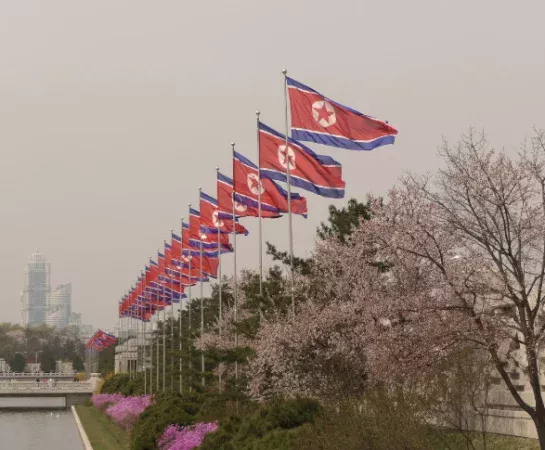
Why North Korea Changed Its Time Zone Twice in One Decade
North Korea turned its clocks back 30 minutes on August 15, 2015, breaking from South Korea and Japan to create its own "Pyongyang Time," then reversed the entire move less than three years later, on May 5, 2018, realigning with Seoul again. Both changes were

Why Japan Never Adopted Daylight Saving Time
The premise behind that headline needs a small correction before the story even starts. Japan did try daylight saving time, for four full years, complete with clocks moving forward and back on a fixed schedule. What Japan never did was choose it. The distinction between
Time Tools
Quick access to timers, stopwatch, world clock and time zone tools.
Time Guides
Read useful guides about time zones, calendars, finance and astronomy.


