Current Time in UTC+3:30
Time Difference from UTC+3:30
Compare time in UTC+3:30 with major cities worldwide.
When the Time Difference with UTC+3:30 Changes
Clocks change on different dates around the world, so the gap between UTC+3:30 and these places is not the same all year. Next 12 months; dates in UTC+3:30 time.
Best Time to Call UTC+3:30
Business hours on UTC+3:30 (9 AM-5 PM local time) fall at these local times elsewhere:
- New York: 12:30 AM - 8:30 AM ( Outside normal hours)
- Los Angeles: 9:30 PM (previous day) - 5:30 AM ( Outside normal hours)
- London: 5:30 AM - 1:30 PM ( Partial overlap · 4 h 30 min shared)
- Dubai: 9:30 AM - 5:30 PM ( Convenient · 7 h 30 min shared)
- Mumbai: 11:00 AM - 7:00 PM ( Convenient · 6 h shared)
- Tokyo: 2:30 PM - 10:30 PM ( Partial overlap · 2 h 30 min shared)
- Sydney: 4:30 PM - 12:30 AM (next day) ( Partial overlap · 30 min shared)
in UTC+3:30 today, it is:
- New York: 3:30 AM night
- Los Angeles: 12:30 AM night
- London: 8:30 AM outside working hours
- Dubai: 12:30 PM working hours
- Mumbai: 2:00 PM working hours
- Tokyo: 5:30 PM outside working hours
- Sydney: 7:30 PM outside working hours
Times are for today. Clock changes shift them on some dates: see when the time difference changes.
Clock and Sun on UTC+3:30
UTC+3:30 is set to the sun at 52.5° E, but the places that use it spread far to the east and west of that line, so the sun is highest at very different clock times.
| City (100,000+ people) | Longitude | Sun highest at about |
|---|---|---|
| Khowy (westernmost) | 45.0° E | 12:30 |
| Zabol (easternmost) | 61.5° E | 11:24 |
Between the two, solar noon by the clock differs by about 1 hour 6 minutes: mornings stay dark longer in Khowy and evenings get dark earlier in Zabol.
Mean solar time from longitude. Over the year the real solar noon moves up to about 16 minutes earlier or later.
About UTC+3:30
UTC+3:30 belongs to a single country. Iran Standard Time is the only offset in the world that is three and a half hours ahead of UTC, and it puts Tehran half an hour ahead of Istanbul, Baghdad and Riyadh and half an hour behind Dubai.
Iran's Half Hour
Iran replaced the local mean time of Tehran, about 3 hours 26 minutes ahead of Greenwich, with UTC+3:30 in 1935. The offset fits the country well: the 52.5 degrees East meridian on which it is based runs through the centre of Iran, so the clock is never far from the sun in either Tabriz in the west or Mashhad in the east.
The End of Summer Time
For decades Iran moved its clocks forward each spring, to UTC+4:30, at the start of the Persian new year in late March, and back at the September equinox. The practice was used from 1978 to 1980, from 1991 to 2005 and again from 2008. In March 2022 parliament voted to abolish it, and on the night of 21 to 22 September 2022 the clocks went back for the last time. Since then UTC+3:30 has applied all year.
Converting UTC+3:30
Because Iran no longer changes its clocks, its distance from Europe changes twice a year. Tehran is 3 hours 30 minutes ahead of London in winter and 2 hours 30 minutes in the British summer, and 8 hours 30 minutes ahead of New York in winter, 7 hours 30 minutes in summer. Kabul, on UTC+4:30, is always one hour ahead.
Beyond the Clock
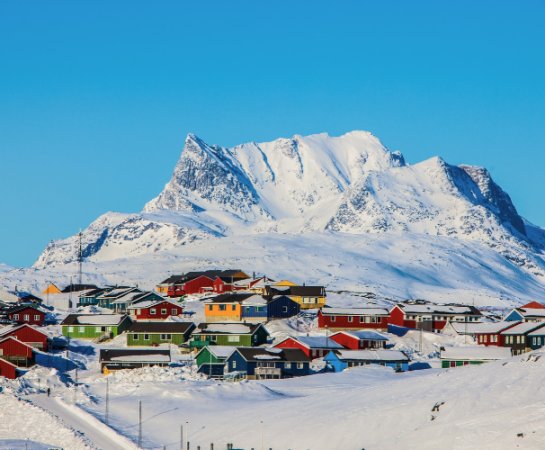
Why Greenland Moved Its Clocks Forward an Hour in 2023
On the evening of Saturday, March 25, 2023, most of Greenland set its clocks forward one hour, as it had every spring for more than four decades. The difference came in October: the clocks never went back. With that non-event, Nuuk moved its standard time

The Gulf Weekend: Why the UAE Switched to Saturday-Sunday and Saudi Arabia Did Not
Dubai and Riyadh are one hour apart on the clock but share only four working days a week. Since January 1, 2022, the United Arab Emirates has worked Monday to Friday with a Saturday-Sunday weekend, the same pattern as Europe and North America. Saudi Arabia,

Why Saskatchewan Never Changes Its Clocks
Saskatchewan keeps the same time all year: Central Standard Time, six hours behind UTC. That sounds like a province that simply skipped daylight saving time, but the geography says otherwise. The 105th meridian, the center line of the Mountain time zone, runs almost straight through

Which US States Are Split Between Two Time Zones (and Where the Line Runs)
"What time zone is Texas in?" has two correct answers. Houston, Dallas and Austin are on Central Time, while El Paso is on Mountain Time, an hour behind the rest of the state. Florida, Kentucky, Tennessee, Michigan and nine other states work the same way:

Why Election Day Is the Tuesday After the First Monday in November
The next federal Election Day in the United States is Tuesday, November 3, 2026. The date comes from a short formula in federal law, "the Tuesday next after the first Monday in November," written in 1845 and never rewritten since. It confines every federal general

Friday the 13th: How Often It Happens and Why It Falls on a Friday Most Often
November 13, 2026 is the third Friday the 13th of the year, after February 13 and March 13. That won't happen again until 2037. The next one after November comes on August 13, 2027, and then the calendar produces the longest possible drought: 14 months

When Is Eid al-Fitr and How Its Date Depends on Ramadan’s Final Moon Sighting
Eid al-Fitr never sits on a fixed date, and it isn't confirmed until the night before it happens. Unlike Christmas or New Year's Day, locked to the Gregorian calendar months in advance, the first day of Shawwal depends on whether a sliver of crescent moon

What Is Nowruz and Why It Always Falls on the Spring Equinox
Nowruz is the Persian New Year, celebrated by more than 300 million people across Iran, Afghanistan, Central Asia, the Caucasus, and Kurdish communities, and it begins at the exact astronomical instant of the March equinox rather than on a fixed date on any calendar grid.


