Major Airports in Mongolia
- Ulaanbaatar Chinggis Khaan International Airport (UBN) - 07:02:21
Daylight saving time in Mongolia
Mongolia has 2 listed IANA time zones. None of them observe daylight saving time in 2026. The UTC offset remains stable throughout the year.
Best Time to Call Mongolia
Business hours in Mongolia (9 AM–5 PM local time) fall at these local times elsewhere:
- Beijing: 9:00 AM – 5:00 PM ( Convenient)
- Paris: 3:00 AM – 11:00 AM ( Outside normal hours)
- Toronto: 9:00 PM (previous day) – 5:00 AM ( Partial overlap)
- Seoul: 10:00 AM – 6:00 PM ( Convenient)
- Mexico City: 7:00 PM (previous day) – 3:00 AM ( Partial overlap)
- Cairo: 4:00 AM – 12:00 PM ( Outside normal hours)
- Bangkok: 8:00 AM – 4:00 PM ( Convenient)
Times shown reflect current UTC offsets and may shift by up to an hour around daylight saving transitions.
Time Difference from Mongolia
Compare time in Mongolia with other countries.
Most Popular Cities in Mongolia
Holidays in Mongolia
Official national public holidays. Regional and religious observances may vary by area.
About Time in Mongolia
Every Two Hours, Fresh Mare's Milk Enters a Fermentation That Continues Through the Night
During the Mongolian summer, making airag creates a daily rhythm that begins with the horse herd. Surveys of traditional producers found that mares are commonly milked about every two hours during the production season, with some households working at even shorter intervals. Each milking produces only a relatively small quantity, so the drink is built gradually through repeated additions rather than made from one large batch.
The fresh milk is cooled before being added to a khokhuur, the traditional cowhide vessel containing an active starter from previously fermented airag. UNESCO describes repeated churning as essential to the process. The milk is worked hundreds of times at minimum, while detailed field studies record producers stirring it several thousand times during a session and repeating the work throughout the day.
The fermentation does not stop when the household goes to sleep. After the evening's accumulated mare's milk is added and churned, microorganisms continue transforming lactose into lactic acid, alcohol and carbon dioxide overnight. By the following morning, yesterday's milk has become part of the living batch that will receive another day of fresh milk.
Starting the season takes longer. Research among airag-producing households found that establishing the first active starter can require two or three weeks of repeated stirring and management. Once the fermentation is stable, however, the household can maintain it continuously by adding new milk and preserving enough of the previous batch to seed the next one.
The annual production window is determined by mares, pasture and climate rather than by one national opening date. A nationwide survey found airag production beginning sometime between May and September, most commonly around July, while the end of production varied much more strongly by region. In some areas it declined during August or September; in others it continued well into October, with occasional production lasting even later.
This makes airag a food governed by several nested clocks. Mares are milked every few hours. Fermentation continues from one day into the next. The starter can survive through much of the summer. The entire production season follows lactation and pasture conditions. A bowl served to a guest therefore contains the result of a process that has been maintained continuously through hundreds of small acts of timing.
At 03:37:53 UTC, 260 Kilometers of the Gobi-Altai Began to Break
On 4 December 1957, one of the largest instrumentally recorded continental earthquakes of the twentieth century struck southern Mongolia. The USGS catalogue gives an origin time of 03:37:53 UTC. Modern studies usually place its moment magnitude around 8.0 to 8.1, although older surface-wave estimates commonly gave 8.3.
The event did not rupture one short fault beneath a city. Geological surveys mapped a deformation zone extending roughly 260 kilometers along the Bogd fault system, with additional reverse faulting on nearby structures. Later field measurements found average horizontal displacement of several meters and local offsets reaching about seven meters.
The dry Gobi landscape helped preserve that moment in unusual detail. Stream channels, ridges, alluvial fans and other surface features were displaced abruptly and remained visible for decades. A movement that occurred within seconds could therefore still be measured long after the seismic waves had disappeared.
Research also shows that the 1957 rupture was more complex than a single fracture propagating smoothly from one end to the other. Different fault segments moved in different ways. Left-lateral strike-slip dominated the main Bogd fault, while subsidiary faults experienced strong reverse motion. Modern rupture analysis treats the earthquake as a sequence involving several connected structures.
The preserved scarps allowed scientists to look further backward in time. Trenches across the Gurvan Bulag fault revealed evidence that major surface ruptures had occurred there before 1957. One study placed the previous large event most probably between about 2,600 and 4,400 years earlier, with evidence for still older earthquakes.
This gives the earthquake two very different clocks. Instrumental seismology can assign the 1957 origin to a specific second. Paleoseismology works with intervals measured in thousands of years. The same fault system therefore preserves both one of Mongolia's most precise twentieth-century timestamps and evidence of recurrence that no human calendar has observed directly.
A Family Does Not Move Because a Month Has Changed, but Because the Next Pasture Is Ready
Mongolian pastoral migration divides the year geographically. Families traditionally use separate winter, spring, summer and autumn pastures, moving livestock when grass, snow, water, temperature and animal condition make another landscape more useful than the current one.
UNESCO inscribed Mongol nomad migration and its associated practices on the Representative List of the Intangible Cultural Heritage of Humanity in 2024. Its description emphasizes that migration dates are selected according to pasture quality, geography, climate and season. The head of a household traditionally chooses when the move should begin, while the entire family participates in preparation.
The four-season system is not simply a repeated circuit between four permanent points. Additional otor movements can take herds to distant temporary grazing areas when local pasture is insufficient or when animals need to build condition. FAO research distinguishes spring otor for young grass, summer movement for muscle and fat development, and autumn movement for consolidating that condition before winter.
Winter changes the value of accumulated time. Livestock must enter the cold season with enough body reserves to survive months when pasture can be sparse, frozen or buried. A productive summer is therefore not merely pleasant weather. It is a period in which animals are effectively storing energy for a future season.
The migration day itself contains another sequence. Families clean the old campsite, prepare carts, dismantle and pack the ger, gather livestock and organize the route. UNESCO records ceremonial practices associated with departure, including the household head selecting the date and family members preparing for the journey together.
Mobility also gives pasture time to recover. Moving away from one grazing area is partly a decision about the future condition of that land. A pasture left unused for part of the year can regenerate before livestock return. Seasonal movement therefore manages not only where animals eat today but when the same landscape will be ready again.
This is why civil dates alone describe the pastoral year poorly. Spring may arrive earlier on a sunny slope than in a sheltered valley. Snow depth can make a traditional winter area unusable. Drought can force an emergency move outside the ordinary sequence. The calendar provides orientation, but the condition of the land decides when time has actually changed.
The 2023-2024 Dzud Turned One Winter into a Disaster That Accelerated Month by Month
A dzud is not a single storm. It is a sequence in which conditions from one season determine how destructive the next one becomes. A dry summer can leave poor pasture and inadequate hay. Heavy autumn or winter snow then covers what forage remains. Ice can seal the ground beneath a hard crust. Extreme cold raises animals' energy requirements at exactly the moment when reaching food becomes most difficult.
The winter of 2023-2024 showed how quickly that sequence can accelerate. United Nations reporting described white and iron dzud conditions across more than three quarters of Mongolia by early 2024. The country experienced its highest snowfall in almost five decades, with snow and ice covering about 90 percent of the territory at the peak of the crisis.
Livestock mortality initially appeared manageable compared with what followed. By February, reported losses were around 612,000 animals in one UN chronology. By 21 February the figure had reached about 1.5 million, and WHO reported more than two million deaths by 22 February.
The number then climbed far faster. By 28 March, more than 5.9 million livestock had died. In April, national reporting placed losses above six million. Later assessment of the completed 2023-2024 event put the final loss above 7.4 million animals.
The damage did not end when temperatures rose. Spring thaw transformed deep winter snow and ice into flood and contamination risks. Roads that had been blocked during winter began reopening, but carcass disposal, veterinary work, household debt and replacement of lost animals became longer recovery problems.
The earlier 2009-2010 dzud shows the same delayed structure at even greater scale. A dry summer and autumn were followed by temperatures reaching below -40 degrees Celsius across most provinces and unusually deep snow. By May 2010, approximately 8.5 million livestock had been reported dead in contemporary assessments, with later national estimates rising above ten million.
The important timing is therefore not the coldest night. A dzud can begin with poor pasture months before winter, accelerate sharply during February and March when weakened livestock exhaust their reserves, and continue affecting herding households for years afterward. Mongolia's disaster records repeatedly show that the most destructive clock is cumulative.
The Last Daylight-Saving Hour in Mongolia Happened Twice
Mongolia's present civil-time system is stable through the year, but the country's most recent daylight-saving experiment ended in an unusual way. In March 2015, Government Resolution No. 82 restored seasonal clock changes after several years without them.
The rule advanced clocks by one hour beginning at 02:00 during the night from the final Friday to Saturday of March. The advanced time remained in effect until midnight during the final weekend of September. The same schedule was used again in 2016.
The autumn transition created a repeated hour at the edge of two dates. In Ulaanbaatar in 2016, when the daylight-saving clock reached 00:00 on 24 September, it was moved backward to 23:00 on 23 September. The final hour of 23 September therefore occurred twice under different UTC offsets.
This is more unusual than the familiar European transition in which an early-morning hour repeats. Mongolia placed the backward change directly at midnight, so the civil calendar itself appeared to step back into the previous date.
The experiment ended before another spring change could occur. On 8 February 2017, the government formally repealed the 2015 resolution. Its announcement stated that Mongolia would no longer move to summer time.
Mongolia nevertheless remains divided between two standard offsets. Ulaanbaatar and most eastern and central parts of the country use UTC+8, while several western areas use UTC+7. The abolition of daylight saving removed the seasonal shift, not the permanent one-hour difference across the country.
The 2015-2016 episode is useful because it shows how a time-zone rule can alter both clocks and dates without anything changing astronomically. The Sun continued moving according to longitude and season. What changed was the legal label assigned to the same instant, and in September 2016 that legal label made one hour of the calendar happen twice.
Frequently Asked Questions
How many time zones does Mongolia have?
One. The whole of Mongolia follows Asia/Ulaanbaatar, so every city shows the same local time as the capital, Ulan Bator.
Is Mongolia ahead of or behind GMT?
Mongolia is currently 8 hours ahead of GMT (UTC+8).
Does Mongolia use summer time?
No. Mongolia does not observe daylight saving time, so its clocks stay at UTC+8 all year. Its time difference with countries that do change their clocks still shifts by an hour in spring and autumn.
How many public holidays does Mongolia have in 2026?
Mongolia has 16 national public holidays in 2026, when banks and government offices are usually closed. Some regions may also have their own local holidays.
How do I dial a phone number in Mongolia from abroad?
From a mobile phone, type +976 and then the local number without the leading 0 used for domestic calls, if it has one. From a landline, replace the plus sign with your exit code: 011 from the US and Canada, or 00 from most of Europe, for example 00 976 followed by the number.
What language is spoken in Mongolia?
The main languages of Mongolia are Mongolian and Russian.
Beyond the Clock

When Do the Clocks Change in 2026: US, UK, and EU Dates
The clocks fall back twice this autumn on the two sides of the Atlantic, one week apart. The United Kingdom and every European Union country end summer time on Sunday, October 25, 2026. The United States and most of Canada end daylight saving time on

IST, CST, BST: Why the Same Time Zone Abbreviation Means Different Things
A meeting invite that says "10:00 IST" looks precise. It isn't. IST is India Standard Time (UTC+05:30), Irish Standard Time (UTC+01:00) and Israel Standard Time (UTC+02:00). In July, the first two are four and a half hours apart. CST can mean Chicago or Shanghai, 14

What Time Zone Is Mexico In and Why It Stopped Changing Its Clocks
Mexico uses four time zones, and since October 30, 2022, most of the country keeps the same time all year. Mexico City, Guadalajara and Monterrey stay at UTC−6 in January and in July. Cancún stays at UTC−5, Los Cabos and Mazatlán at UTC−7. The only
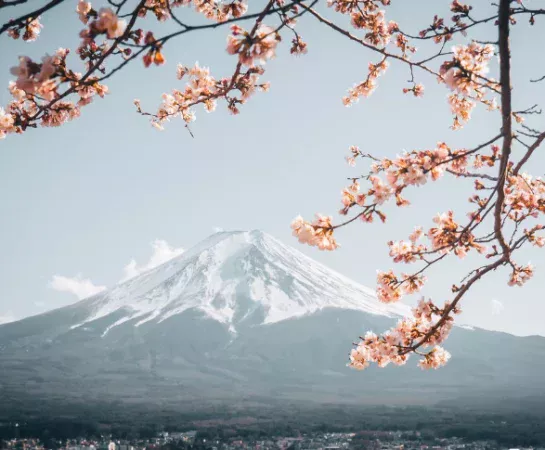
Why Japan Never Adopted Daylight Saving Time
The premise behind that headline needs a small correction before the story even starts. Japan did try daylight saving time, for four full years, complete with clocks moving forward and back on a fixed schedule. What Japan never did was choose it. The distinction between

Why Orthodox Christmas Falls on January 7, Not December 25
Millions of Orthodox Christians open presents and attend Christmas liturgy on January 7. They aren't celebrating a different holiday, and they aren't twelve days behind on purpose. They're marking December 25 on a calendar that stopped syncing with the seasons centuries ago and was never

Why Diwali’s Date Changes Every Year
Why Diwali's Date Changes Every Year In October 2025, Diwali split down the middle. Cities where the sun set before 5:30 p.m. lit their lamps on October 21. Everywhere else celebrated a day earlier, on October 20. Same festival, same religious significance, nearly a billion

Why April Fools’ Day Falls on April 1
Ask almost anyone why April Fools' Day exists and the answer comes back the same way: France switched calendars in the 1500s, some people kept celebrating New Year's on the old date, and everyone else mocked them for it. It's a tidy story, repeated by
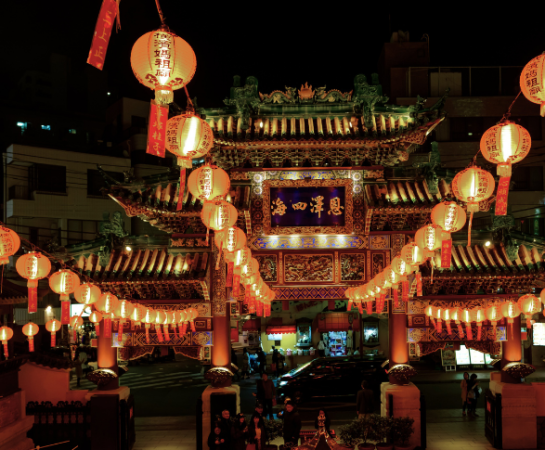
Why Chinese New Year Changes Date Every Year
Chinese New Year fell on January 22 in 2023, February 10 in 2024, January 29 in 2025, and February 17 in 2026. That's a swing of nearly four weeks across four consecutive years, and none of it is random. Every date traces back to a
Time Tools
Quick access to timers, stopwatch, world clock and time zone tools.
Time Guides
Read useful guides about time zones, calendars, finance and astronomy.


