Major Airports in Taiwan
- Hualien Chiashan Airport (HUN) - 07:28:21
- Kaohsiung International Airport (KHH) - 07:28:21
- Penghu Magong Airport (MZG) - 07:28:21
- Taichung International Airport / Ching Chuang Kang Air Base (RMQ) - 07:28:21
- Tainan International Airport / Tainan Air Base (TNN) - 07:28:21
- Taipei Songshan International Airport (TSA) - 07:28:21
- Taiwan Taoyuan International Airport (TPE) - 07:28:21
Daylight saving time in Taiwan
Taiwan has 1 listed IANA time zones. None of them observe daylight saving time in 2026. The UTC offset remains stable throughout the year.
Best Time to Call Taiwan
Business hours in Taiwan (9 AM–5 PM local time) fall at these local times elsewhere:
- Beijing: 9:00 AM – 5:00 PM ( Convenient)
- Paris: 3:00 AM – 11:00 AM ( Outside normal hours)
- Toronto: 9:00 PM (previous day) – 5:00 AM ( Partial overlap)
- Seoul: 10:00 AM – 6:00 PM ( Convenient)
- Mexico City: 7:00 PM (previous day) – 3:00 AM ( Partial overlap)
- Cairo: 4:00 AM – 12:00 PM ( Outside normal hours)
- Bangkok: 8:00 AM – 4:00 PM ( Convenient)
Times shown reflect current UTC offsets and may shift by up to an hour around daylight saving transitions.
Time Difference from Taiwan
Compare time in Taiwan with other countries.
Most Popular Cities in Taiwan
Holidays in Taiwan
Official national public holidays. Regional and religious observances may vary by area.
About Time in Taiwan
The Year That Resets to One: The Minguo Calendar
Official documents, currency, and even product expiration dates in Taiwan commonly carry a second date alongside the ordinary Gregorian year, one that counts forward from 1912 rather than from the birth of Christ. This is the Minguo, or Republic of China, calendar, adopted when the Republic of China was founded on January 1, 1912. Under this system that founding year is Minguo 1, so a Gregorian year is converted simply by subtracting 1911, meaning 2026 corresponds to Minguo 115.
The practice continues a much older Chinese tradition of numbering years from the start of a ruler's reign rather than using a single continuous era, though the Minguo calendar replaces the emperor's name with the republic itself. Months and days still follow the ordinary Gregorian calendar, so only the year count differs. The system produced a genuine practical headache at the start of 2011, when the Gregorian year rolled over to a three digit Minguo year, 100, prompting concern over a possible computer bug similar to the Year 2000 problem, though in the end the transition passed with only minor software glitches.
Taipei's First Weather Station and Taiwan's First Seismograph
In 1897, only two years into Japanese colonial rule, the new administration established a weather observatory in Taipei, then called Taihoku, along with a network of stations across the island, part of a broader effort to understand and forecast the typhoons that regularly battered the colony. That same year the station also installed a Gray Milne seismograph, the first seismic monitoring instrument used anywhere in Taiwan, beginning a continuous record of the island's frequent earthquakes that modern seismologists still draw on today.
The observatory's first major test came almost immediately, when a severe typhoon struck Taipei in 1897, flooding the Tamsui and Keelung rivers and killing several hundred people. In the following decades the colonial government expanded the network to dozens of stations, trained a first generation of Taiwanese meteorologists, and linked Taipei's data by telegraph to observatories in Shanghai, Hong Kong and Manila, weaving the young colony into a much larger regional system for tracking storms and measuring time sensitive natural events across East Asia.
The Clock Tower of Old Taichung Station
Completed in 1917 under Japanese colonial rule, the original Taichung railway station building was designed in a style modeled on western Renaissance architecture, with red brick walls banded in white and a copper tiled roof. At its center rises a clock tower, the single most recognizable feature of the building and, for much of the twentieth century, one of the most visible public timepieces in central Taiwan, keeping the schedules of a railway system that was rapidly reshaping how people and goods moved across the island.
The station served as Taichung's primary rail gateway for nearly a century before a new elevated station took over its transportation duties in 2016. Rather than demolish the historic building, authorities preserved it as a national historic site and reopened the site as a cultural park, where the clock tower and red brick facade continue to anchor the old city center even though trains no longer run beneath it.
01:47 in the Morning: The 921 Earthquake
At 01:47:12 local time on September 21, 1999, a magnitude 7.3 earthquake struck near the town of Jiji in Nantou County, shaking the ground for roughly 100 seconds and becoming the deadliest disaster to hit Taiwan in more than sixty years. Known locally simply as 921, after the date, the quake killed 2,415 people, injured over 11,000, and destroyed more than 50,000 buildings, with damage extending from the mountainous epicenter all the way to Taipei, where a single collapsed building accounted for the capital's entire death toll from the disaster.
The precise timing of the quake, recorded to a fraction of a second by seismic instruments descended from the same monitoring tradition begun in 1897, allowed scientists to reconstruct the rupture of the Chelungpu Fault in unusual detail, producing one of the most thoroughly studied earthquakes of its era. In the disaster's aftermath, authorities designated September 21 as National Disaster Prevention Day, and the ruined shell of a school near the epicenter was preserved as the 921 Earthquake Museum, opened in 2007 to teach visitors about the science of earthquakes and the reconstruction that followed.
Elevation, Season, and the Rhythm of Taiwan's Oolong Harvest
Taiwan's prized oolong tea is not picked on a single fixed date but according to a calendar shaped jointly by the seasons and the elevation of each individual tea garden. In general, spring picking runs from roughly March through May and winter picking from October through December, with summer and autumn harvests filling the months between, though at high mountain plantations above 1,000 meters the entire cycle shifts later, since cooler temperatures delay the start of spring growth the higher a garden sits.
Because harvesting begins at lower elevations and moves progressively upward as the weeks pass, a single spring season can stretch from early April at low altitude gardens to late May or even early June at the very highest plantations, effectively giving growers a rolling, weeks long picking calendar rather than one single harvest day. Spring and winter teas, picked in the cooler, foggier conditions typical of those seasons, are generally considered the finest oolongs, while the hotter, faster growing summer leaves are prized instead for black tea production, so the same tea bushes yield noticeably different products depending on precisely when in the year they are picked.
Sun Yat-sen and the Night the Calendar Changed
Sun Yat-sen, a physician turned revolutionary born in Guangdong province in 1866, spent decades organizing uprisings and raising support abroad before the Qing dynasty finally collapsed following the Wuchang Uprising of October 1911. On December 29 of that year, delegates from seventeen provinces meeting in Nanjing elected Sun as provisional president of a new Republic of China, and on the night of January 1, 1912, he was formally sworn into office.
As part of that same inauguration, Sun announced that the new republic would adopt the Gregorian calendar for civil administration, with 1912 itself designated the first year of the republic, the origin of the Minguo dating system still used in Taiwan today, even as the wider public continued observing traditional holidays by the older lunisolar calendar. Sun resigned the presidency within months as political power shifted north, and he spent much of the rest of his life in further struggle and exile before his death in Beijing in 1925, but he remains commemorated on both sides of the Taiwan Strait as the founding figure of the republic whose first year still marks the start of Taiwan's official calendar.
Frequently Asked Questions
How many time zones does Taiwan have?
One. The whole of Taiwan follows Asia/Taipei, so every city shows the same local time as the capital, Taipei.
Is Taiwan ahead of or behind GMT?
Taiwan is currently 8 hours ahead of GMT (UTC+8).
Does Taiwan use summer time?
No. Taiwan does not observe daylight saving time, so its clocks stay at UTC+8 all year. Its time difference with countries that do change their clocks still shifts by an hour in spring and autumn.
How many public holidays does Taiwan have in 2026?
Taiwan has 22 national public holidays in 2026, when banks and government offices are usually closed. Some regions may also have their own local holidays.
How do I dial a phone number in Taiwan from abroad?
From a mobile phone, type +886 and then the local number without the leading 0 used for domestic calls, if it has one. From a landline, replace the plus sign with your exit code: 011 from the US and Canada, or 00 from most of Europe, for example 00 886 followed by the number.
What language is spoken in Taiwan?
The main languages of Taiwan are Chinese, Min Nan Chinese and Hakka Chinese.
Beyond the Clock

India vs US Time Difference: Why the Gap Changes Twice a Year
For most of the year, India is 9 hours 30 minutes ahead of New York. From November 1, 2026 to March 14, 2027, it is 10 hours 30 minutes ahead. India's clocks do not change in either case. The whole difference comes from the United
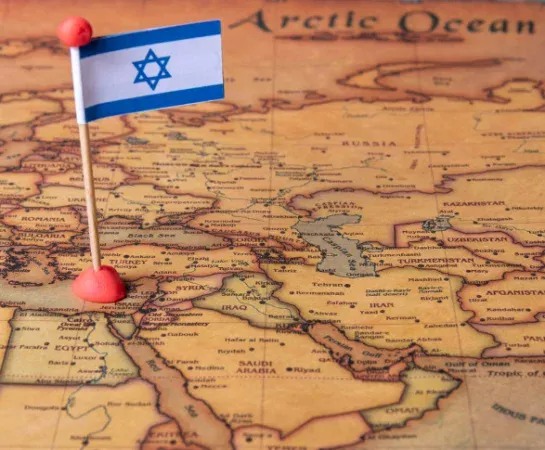
Why Israel Changes Its Clocks on a Different Schedule Than Europe
Israel's clocks now fall back on the same day the European Union's do, the last Sunday of October, a deliberate alignment written into a 2013 law. But the two systems still don't match. Israel springs forward on the Friday before the EU's last Sunday of
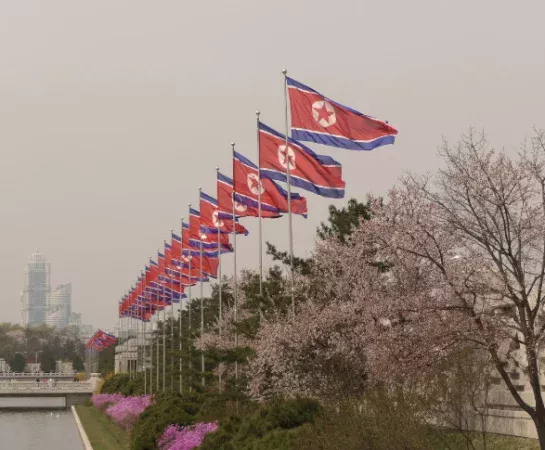
Why North Korea Changed Its Time Zone Twice in One Decade
North Korea turned its clocks back 30 minutes on August 15, 2015, breaking from South Korea and Japan to create its own "Pyongyang Time," then reversed the entire move less than three years later, on May 5, 2018, realigning with Seoul again. Both changes were

Why India’s Time Zone Is Exactly 5:30 Off UTC
India runs on a single clock from the Arabian Sea to the Myanmar border, a stretch of roughly 3,000 kilometers, and that clock sits at a UTC offset almost nobody outside the region can round off in their head. UTC+5:30 isn't a rough approximation or

The Hour That Happens Twice: What Actually Occurs at 1:30 AM When Clocks Fall Back
At 1:59:59 a.m. on Sunday, November 1, 2026, clocks in New York will not tick over to 2:00. They will jump back to 1:00:00 a.m., and the next 60 minutes will replay. Every time from 1:00 to 1:59 happens twice that night, once on Eastern

Why the International Space Station Runs on UTC Instead of Local Time
Astronauts aboard the International Space Station see the sun rise and set 16 times in a 24-hour period, once every 90 to 93 minutes, as the station circles Earth at roughly 28,000 kilometers per hour. No conventional time zone survives contact with that kind of
Standard Time vs Daylight Time: What’s the Actual Difference
Most people assume "Standard Time" is the normal, default setting and "Daylight Time" is some separate seasonal overlay that temporarily replaces it. That mental model is backwards in a way that federal law makes explicit, and once you see the actual legal language, the whole

Why the Hour Was Originally a Different Length in Summer and Winter
For most of recorded history, an hour was not a fixed amount of time. It was a fraction, one twelfth of however long daylight happened to last that day. In June that fraction stretched past 80 modern minutes. In December it shrank to barely 40.
Time Tools
Quick access to timers, stopwatch, world clock and time zone tools.
Time Guides
Read useful guides about time zones, calendars, finance and astronomy.


