Major Airports in Macao
- Macau International Airport (MFM) - 07:19:02
Daylight saving time in Macao
Macao has 1 listed IANA time zones. None of them observe daylight saving time in 2026. The UTC offset remains stable throughout the year.
Best Time to Call Macao
Business hours in Macao (9 AM–5 PM local time) fall at these local times elsewhere:
- Beijing: 9:00 AM – 5:00 PM ( Convenient)
- Paris: 3:00 AM – 11:00 AM ( Outside normal hours)
- Toronto: 9:00 PM (previous day) – 5:00 AM ( Partial overlap)
- Seoul: 10:00 AM – 6:00 PM ( Convenient)
- Mexico City: 7:00 PM (previous day) – 3:00 AM ( Partial overlap)
- Cairo: 4:00 AM – 12:00 PM ( Outside normal hours)
- Bangkok: 8:00 AM – 4:00 PM ( Convenient)
Times shown reflect current UTC offsets and may shift by up to an hour around daylight saving transitions.
Time Difference from Macao
Compare time in Macao with other countries.
Most Popular Cities in Macao
Holidays in Macao
Official national public holidays. Regional and religious observances may vary by area.
About Time in Macao
A 25-Minute Jump Put the City on the Modern Clock
The transition from local solar time to a standardized zone can be reconstructed with unusual precision. Until 1904, civil time was based on a local mean-time offset of UTC+7:34:10. Portaria No. 204, dated 21 October 1904 and published in the Official Gazette eight days later, ordered the adoption of GMT+8 from 30 October in order to follow the time already used in neighboring Hong Kong. Clocks were advanced by exactly 25 minutes and 50 seconds.
That adjustment was closely connected to geography. The territory lies near 113 degrees 35 minutes east longitude, while the central meridian corresponding to UTC+8 is 120 degrees east. Earth rotates approximately 15 degrees per hour, so the longitudinal difference represents roughly 26 minutes of mean solar time. The old offset therefore tracked local longitude closely, while the new standard deliberately traded that astronomical fit for synchronization with a wider regional system.
The change also means that the Portuguese time reform of 1911, which standardized civil time in Portugal and several overseas territories, did not create the local UTC+8 system. It was already in place. Modern official practice retains the same base offset: the Civil Aviation Authority defines Macao Local Time as UTC plus eight hours, while UTC itself is used for international air traffic services and aeronautical documentation.
There is still a visible solar consequence. Because the city lies west of the UTC+8 reference meridian, mean solar noon occurs roughly 25 to 26 minutes after 12:00 standard time. The exact apparent solar noon varies through the year because of the equation of time, but the underlying longitude effect is essentially the same difference that the 1904 clock reform absorbed.
During the War, the Clock Reached UTC+10
The most extreme offsets in the historical record occurred during the 1940s. Legislative measures introduced in December 1941 moved the clock one hour ahead from UTC+8 to UTC+9. The title of the relevant colonial decree described exceptional measures intended to maintain public and private services while restricting consumption of essential goods, placing the change within the emergency conditions of the wartime period.
A further advance followed at the end of April 1942. At 23:00 on 30 April, clocks moved forward by another hour, producing an effective UTC+10 offset. They returned to UTC+9 in November. The pattern was repeated in 1943, when another summer advance again took local civil time to UTC+10 before the additional hour was removed at the end of September.
The underlying wartime UTC+9 arrangement continued until the end of September 1945. At midnight, the clock was moved back one hour and UTC+8 was restored. Historical timestamps from these years therefore require particular care. Applying the modern UTC+8 offset retrospectively can produce an error of one hour, and during the advanced periods of 1942 and 1943 the error can reach two hours.
One Summer-Time Period Ran for Almost Ten Months
Seasonal clock changes continued long after the wartime emergency, but the schedule was far from uniform. The detailed legal history preserved in the international time-zone database shows repeated advances and reversals from the 1940s through the 1970s, with transition dates and even the clock time of the change varying between periods.
The 1973 and 1974 sequence is particularly unusual. A normal summer-time period ended on 21 October 1973 when clocks returned from UTC+9 to UTC+8. Only ten weeks later, on 30 December, they were advanced again. That second period then continued through the following winter, spring and summer until 20 October 1974. For almost ten consecutive months the local clock remained at UTC+9.
The pattern then became increasingly irregular. Seasonal changes operated again in 1975 and 1976, were absent in 1977 and 1978, and returned for one final season in 1979. On 13 May 1979 clocks moved from UTC+8 to UTC+9; on 21 October they moved back. No daylight-saving change has been made since. The present system therefore looks simple only when viewed from the modern period. Historical local time contains numerous transitions that software must preserve if old records are to be converted correctly.
Before Personal Clocks, the Night Watch Announced the Hour by Sound
Timekeeping also had a distinctly Chinese civic tradition. Night watchmen once walked local neighborhoods carrying lanterns and striking gongs or wooden instruments. Different rhythms communicated different periods of the night, allowing residents to estimate the hour without owning a clock. The same patrols warned of fire, theft and other dangers, so time reporting and neighborhood security were performed by the same community service.
The Patane Night Watch House is the only surviving building associated with this system in the city. Cultural Affairs Bureau research describes Patane as an old Chinese settlement where residents and merchants collectively supported night-watch services. The watchmen provided both time announcements and security alarms, and the profession gradually developed into a more organized patrol structure with characteristics of a local civil-defense service.
The oldest known photograph showing the Patane watch house dates from the 1940s. Oral history collected during its restoration records that a watchman and his family continued to live there into the 1960s. The building was put to other uses during the 1970s as the profession disappeared. Its preservation is significant because it documents a method of public time distribution that required no centralized clock display: the hour was broadcast acoustically through the streets.
A European Mechanical Clock Was Chiming the Hours in 1691
Another form of public timekeeping appeared within the Jesuit complex at St. Paul's. Historical research published by the Cultural Affairs Bureau describes a large mechanical clock in the church tower that attracted considerable attention because such mechanisms were still unusual in the region. A Chinese account written in 1691 by Guangdong customs official Gong Xianglin described the clock striking through a twelve-hour sequence, repeating the cycle through day and night.
The clock also illustrates the transfer of European horological technology through the Jesuit network. Nineteenth-century historian Anders Ljungstedt reported that an inscription on its principal gear identified it as a gift from Louis XIV of France to the Jesuit college. Cultural Affairs Bureau research suggests that it may have reached the city with the group of French Jesuits sent by the king in 1687, although that route should be treated as a historical inference rather than a documented shipping record.
Chinese observers did not simply describe the mechanism in European terms. Contemporary poetry interpreted its regular chiming through familiar Chinese divisions of the day. The clock therefore operated at a meeting point between two timekeeping traditions: European mechanical hours and an audience accustomed to older Chinese systems of watches and double-hours.
The church and college were destroyed by fire in 1835, leaving the famous façade and archaeological remains of the St. Paul's complex. The clock itself did not survive as a working public timekeeper, but written descriptions preserve an important episode in the history of technology: by the late seventeenth century, a sophisticated European striking clock was already regulating audible hours in one of East Asia's major international trading ports.
Frequently Asked Questions
How many time zones does Macao have?
One. The whole of Macao follows Asia/Macau, so every city shows the same local time as the capital, Macau.
Is Macao ahead of or behind GMT?
Macao is currently 8 hours ahead of GMT (UTC+8).
Does Macao use summer time?
No. Macao does not observe daylight saving time, so its clocks stay at UTC+8 all year. Its time difference with countries that do change their clocks still shifts by an hour in spring and autumn.
How many public holidays does Macao have in 2026?
Macao has 10 national public holidays in 2026, when banks and government offices are usually closed. Some regions may also have their own local holidays.
How do I dial a phone number in Macao from abroad?
From a mobile phone, type +853 and then the full local number exactly as it is written, because numbers in Macao have no domestic prefix to drop. From a landline, replace the plus sign with your exit code: 011 from the US and Canada, or 00 from most of Europe, for example 00 853 followed by the number.
What language is spoken in Macao?
The main languages of Macao are Chinese and Portuguese.
Beyond the Clock

When Do the Clocks Change in 2026: US, UK, and EU Dates
The clocks fall back twice this autumn on the two sides of the Atlantic, one week apart. The United Kingdom and every European Union country end summer time on Sunday, October 25, 2026. The United States and most of Canada end daylight saving time on

IST, CST, BST: Why the Same Time Zone Abbreviation Means Different Things
A meeting invite that says "10:00 IST" looks precise. It isn't. IST is India Standard Time (UTC+05:30), Irish Standard Time (UTC+01:00) and Israel Standard Time (UTC+02:00). In July, the first two are four and a half hours apart. CST can mean Chicago or Shanghai, 14

What Time Zone Is Mexico In and Why It Stopped Changing Its Clocks
Mexico uses four time zones, and since October 30, 2022, most of the country keeps the same time all year. Mexico City, Guadalajara and Monterrey stay at UTC−6 in January and in July. Cancún stays at UTC−5, Los Cabos and Mazatlán at UTC−7. The only

Why Japan Never Adopted Daylight Saving Time
The premise behind that headline needs a small correction before the story even starts. Japan did try daylight saving time, for four full years, complete with clocks moving forward and back on a fixed schedule. What Japan never did was choose it. The distinction between

Three Kings Day: Why Epiphany Falls on January 6
On the morning of Wednesday, January 6, 2027, children across Spain will open what are traditionally the main presents of the holiday season. In Spain the gifts come not from Santa Claus but from the Three Kings. In Puerto Rico, children leave grass in shoeboxes

Why Orthodox Christmas Falls on January 7, Not December 25
Millions of Orthodox Christians open presents and attend Christmas liturgy on January 7. They aren't celebrating a different holiday, and they aren't twelve days behind on purpose. They're marking December 25 on a calendar that stopped syncing with the seasons centuries ago and was never

Why Diwali’s Date Changes Every Year
Why Diwali's Date Changes Every Year In October 2025, Diwali split down the middle. Cities where the sun set before 5:30 p.m. lit their lamps on October 21. Everywhere else celebrated a day earlier, on October 20. Same festival, same religious significance, nearly a billion
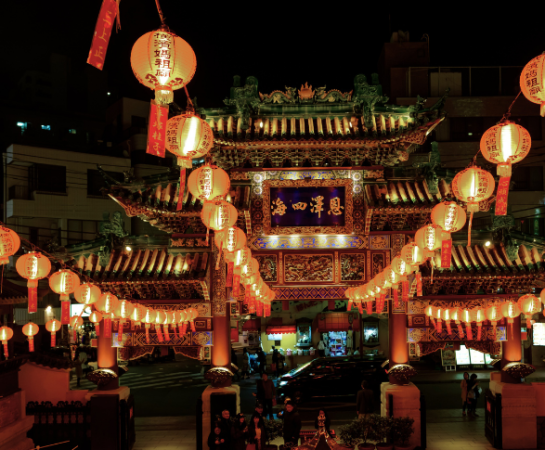
Why Chinese New Year Changes Date Every Year
Chinese New Year fell on January 22 in 2023, February 10 in 2024, January 29 in 2025, and February 17 in 2026. That's a swing of nearly four weeks across four consecutive years, and none of it is random. Every date traces back to a
Time Tools
Quick access to timers, stopwatch, world clock and time zone tools.
Time Guides
Read useful guides about time zones, calendars, finance and astronomy.


