Major Airports in Falkland Islands
- Mount Pleasant Airport / RAF Mount Pleasant (MPN) - 20:21:41
Daylight saving time in Falkland Islands
Falkland Islands has 1 listed IANA time zones. None of them observe daylight saving time in 2026. The UTC offset remains stable throughout the year.
Best Time to Call Falkland Islands
Business hours in Falkland Islands (9 AM–5 PM local time) fall at these local times elsewhere:
- Beijing: 8:00 PM – 4:00 AM (next day) ( Partial overlap)
- Paris: 2:00 PM – 10:00 PM ( Partial overlap)
- Toronto: 8:00 AM – 4:00 PM ( Convenient)
- Seoul: 9:00 PM – 5:00 AM (next day) ( Partial overlap)
- Mexico City: 6:00 AM – 2:00 PM ( Partial overlap)
- Cairo: 3:00 PM – 11:00 PM ( Partial overlap)
- Bangkok: 7:00 PM – 3:00 AM (next day) ( Partial overlap)
Times shown reflect current UTC offsets and may shift by up to an hour around daylight saving transitions.
Time Difference from Falkland Islands
Compare time in Falkland Islands with other countries.
Most Popular Cities in Falkland Islands
Holidays in Falkland Islands
Official national public holidays. Regional and religious observances may vary by area.
About Time in Falkland Islands
A King Penguin Breeding Cycle Can Outlast the Calendar Year
On the Falkland Islands, the breeding season of many seabirds fits comfortably inside one austral summer. King penguins do not. Their reproductive cycle is so long that a successful pair cannot normally raise one chick every year.
Falklands Conservation describes the cycle as lasting more than twelve months. Breeding adults return to colonies while chicks from the previous season may still be present. Egg laying begins around mid-March, followed by an incubation period of approximately fifty-five days. Once the chick hatches, months of feeding and development remain before it becomes independent.
The slow schedule changes the arithmetic of reproduction. A pair typically produces about two chicks in three years rather than one every breeding season. A successful attempt therefore reaches forward into the period when a faster-breeding species would already be beginning another complete cycle.
This creates an unusual colony in which different biological years overlap. Adults preparing for another breeding attempt can stand among large brown chicks produced during the previous cycle. Calendar year boundaries have little relevance to a process that crosses them naturally.
Other Falkland penguins run on much shorter clocks. Gentoo and Magellanic penguins generally return during September, lay eggs around October and raise young through the austral summer. Rockhopper penguins arrive later and lay around the beginning of November. These species compress courtship, incubation and chick rearing into one seasonal pulse.
King penguins reveal a different solution. Their chicks require such a long developmental period that reproduction cannot be synchronized to one summer. The colony therefore carries unfinished biological time from one year into the next.
The Wool Year Has Legal Boundaries: Standard Shearing Begins on 1 November
Sheep farming created another tightly defined seasonal clock on the islands. The Falkland Islands Department of Agriculture does not leave the main shearing period entirely to individual preference. Its welfare rules specify when different shearing methods may be used.
Standard shearing is permitted from 1 November through the end of February. Cover combs, which leave more wool on the animal for protection, are required from 15 September through 31 October and again from 1 March through 31 March.
April is treated differently. Routine shearing is not allowed, apart from limited exceptions such as animals going for immediate slaughter or small numbers of stragglers handled under veterinary conditions. The rule reflects a basic Falkland constraint: removing a fleece changes an animal's protection against wind, rain and cold almost instantly.
The calendar therefore sits on top of weather risk. Department guidance tells farmers to consider the forecast and sheep chill before beginning shearing. A date may make the work legally permissible without making that particular day meteorologically sensible.
Lambing adds another layer. Agricultural guidance advises against shearing during the three weeks before lambing and for six weeks afterward. A flock manager therefore has to fit shearing between the official seasonal window, reproductive timing and actual weather.
The result is a working year built from several overlapping deadlines. Wool growth is continuous, but removal is concentrated into defined months. Lambs arrive on a biological schedule, while storms can erase what looked like a suitable working day only hours earlier. The calendar controls when work may happen; weather decides whether it should.
A Lighthouse Clockwork Once Turned the Flash at Cape Pembroke
Before radio navigation and satellite positioning, the eastern approach to Stanley depended on a light whose timing had to remain mechanically reliable through long South Atlantic nights. Cape Pembroke Lighthouse first displayed a light in December 1855 from a cast-iron tower east of the settlement.
The original apparatus was comparatively simple. Eighteen lamps burning rape-seed oil produced a fixed light visible in clear conditions for about fourteen miles. A sailor needed to see the light, but there was no repeating flash pattern to count.
The rebuilt lighthouse introduced a more explicitly temporal signal. Structural problems with the first tower led to reconstruction beginning in 1906. Around 700 tons of materials were required, and the tower was re-erected roughly 200 yards west of its original position.
When the new light came into operation in June 1907, its optical system had changed from a fixed catoptric arrangement to a third-order dioptric apparatus. The lantern mechanism revolved on a clockwork stand, producing a flashing signal visible for about sixteen miles in clear weather.
That mechanism turned time into identity. At sea, a lighthouse is not identified only by where light appears on the horizon. Mariners can distinguish lights through their repeating characteristics, counting intervals of brightness and darkness against published navigational information. A clockwork mechanism therefore converted the Cape Pembroke tower from a continuously visible beacon into a timed signal.
The historic lighthouse ceased operation in 1982. In 1987, a ground-mounted solar-powered navigation light was installed nearby. The energy source and equipment changed completely, but the principle survived: safe navigation still depends on a light behaving predictably in time as well as being visible in space.
Peat Beneath the Islands Has Been Recording Wind and Fire for More Than 11,000 Years
The Falklands contain an unusually large proportion of peatland, and some deposits began accumulating before the Holocene. Instead of measuring time in minutes or seasons, these landscapes preserve environmental change layer by layer across thousands of years.
A study of peatland initiation compiled thirty basal radiocarbon dates from across the archipelago. Six sites began forming before the Holocene, and the oldest published basal sample had a calibrated age of approximately 16,163 years before present. At Lake Sulivan, independent work found peat growth beginning at about 16,500 calibrated years before present.
One detailed whitegrass peat profile preserves approximately 11,550 years of development. Plant remains, stable isotopes, charcoal and other chemical signals allow researchers to reconstruct how the peat changed rather than treating it as an undifferentiated mass of old organic matter.
Charcoal occurs throughout that profile, indicating repeated burning over thousands of years. Laboratory analysis also identified a change in peat decomposition around 7,020 calibrated years before present, interpreted as possibly reflecting stronger Southern Hemisphere westerly winds.
A newer 8,700-year reconstruction used dust deposited in Falkland peat as another wind archive. Researchers found increased dust deposition and greater variability beginning around 5,700 calibrated years before present. Because much airborne material reaches the islands from distant sources, the peat can preserve changes in atmospheric circulation occurring far beyond the coastline.
The timescale is what makes the record valuable. Instrumental weather observations cover only a small fraction of this history. Peat extends the sequence backward through millennia, allowing researchers to compare recent wind, moisture and fire conditions with environmental states that existed long before permanent settlement.
The Clock Change of September 2010 Never Had to Be Undone
The islands' modern civil-time history contains an unusual transition from seasonal daylight saving to a permanently advanced clock. For many years, local time moved between UTC-4 in winter and UTC-3 during the brighter part of the year.
On 18 April 2010, clocks moved back from UTC-3 to UTC-4 in the normal autumn transition. On 5 September, they advanced again by one hour, from 02:00 to 03:00, beginning the next period of summer time.
What made that particular change different became clear afterward. The following year was designated as a trial in which clocks would remain on summer time instead of returning to UTC-4 during autumn. The islands therefore stayed at UTC-3 throughout 2011.
The experiment was eventually made permanent. Falkland Islands Government records state that the Executive Council confirmed on 25 January 2012 that, following the 2011 trial, clocks would remain on summer time, UTC-3, indefinitely.
The practical effect is unusual terminology. The islands no longer perform a seasonal daylight-saving transition, yet their permanent civil time still corresponds to what had previously been called Falkland Islands Summer Time. The seasonal adjustment disappeared by keeping the advanced setting rather than by restoring the former winter clock.
This means the September 2010 advance became the beginning of the clock configuration that ultimately survived. No annual switch now separates summer and winter. The Sun continues to follow the large seasonal changes of a latitude near 52 degrees south, while the legal clock remains fixed at UTC-3 through the entire year.
Frequently Asked Questions
How many time zones does Falkland Islands have?
One. The whole of Falkland Islands follows Atlantic/Stanley, so every city shows the same local time as the capital, Stanley.
Is Falkland Islands ahead of or behind GMT?
Falkland Islands is currently 3 hours behind GMT (UTC-3).
Does Falkland Islands use summer time?
No. Falkland Islands does not observe daylight saving time, so its clocks stay at UTC-3 all year. Its time difference with countries that do change their clocks still shifts by an hour in spring and autumn.
How many public holidays does Falkland Islands have in 2026?
Falkland Islands has 12 national public holidays in 2026, when banks and government offices are usually closed. Some regions may also have their own local holidays.
How do I dial a phone number in Falkland Islands from abroad?
From a mobile phone, type +500 and then the local number without the leading 0 used for domestic calls, if it has one. From a landline, replace the plus sign with your exit code: 011 from the US and Canada, or 00 from most of Europe, for example 00 500 followed by the number.
What language is spoken in Falkland Islands?
The main language of Falkland Islands is English.
Beyond the Clock

Why the Year Starts on January 1
Nothing happens in the sky on January 1. The winter solstice comes about ten days earlier, Earth's closest approach to the Sun a few days later, and no lunar phase is tied to the date. January 1 is not an astronomical boundary. It is an

What Is Nowruz and Why It Always Falls on the Spring Equinox
Nowruz is the Persian New Year, celebrated by more than 300 million people across Iran, Afghanistan, Central Asia, the Caucasus, and Kurdish communities, and it begins at the exact astronomical instant of the March equinox rather than on a fixed date on any calendar grid.
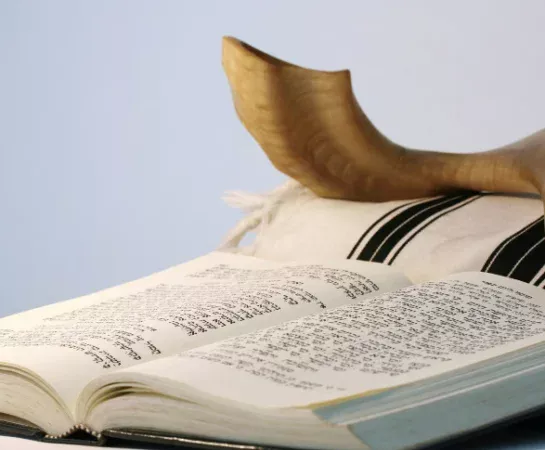
When Is Yom Kippur and Why It Always Falls 10 Days After Rosh Hashanah
Yom Kippur is the tenth day of Tishrei, and Rosh Hashanah is the first, so the ten-day gap between them looks like simple arithmetic. It isn't. The Hebrew calendar has a set of centuries-old rules that quietly forbid Rosh Hashanah from landing on three specific
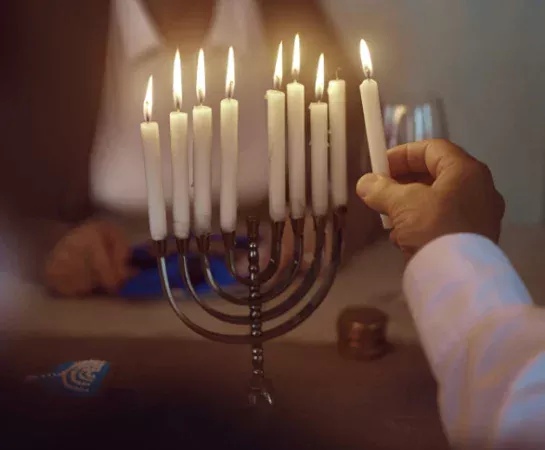
Why Hanukkah’s Date Moves Every Year on the Solar Calendar
In 2013, the first candle of Hanukkah was lit on the night before Thanksgiving, a coincidence rare enough that it won't happen again until 2070. Eleven years later, in 2024, the first candle fell on the evening of December 25 itself, the same alignment that

Full Moon Names by Month: Where Beaver Moon and Cold Moon Come From
The November 2026 full moon, the Beaver Moon, peaks at 9:53 AM Eastern Time on Tuesday, November 24. The December full moon, the Cold Moon, follows at 8:28 PM Eastern on Wednesday, December 23. In UTC that moment already falls on December 24, so in
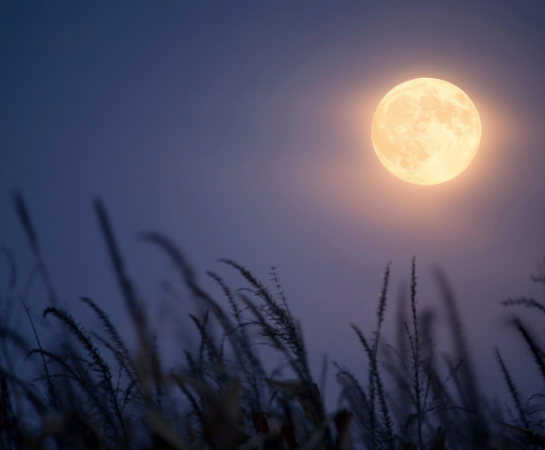
What Is a Harvest Moon and Why It Rises at Almost the Same Time Several Nights Running
On most nights of the year, the Moon rises roughly 50 minutes later than it did the night before. Around the Harvest Moon, that gap collapses to as little as 10 minutes in parts of the UK and Canada, and rarely more than 30 minutes
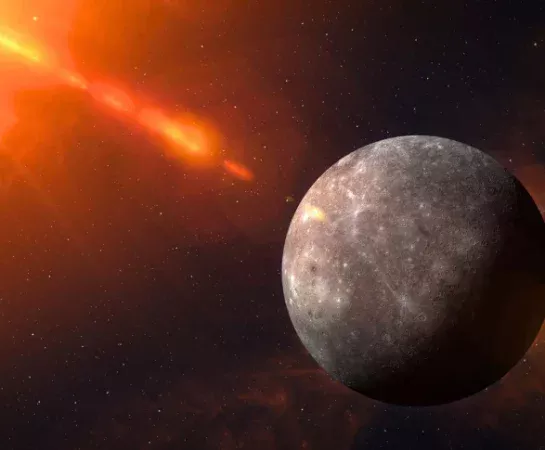
Mercury Retrograde: What’s Astronomically Real vs Astrological Myth
Mercury retrograde generates millions of searches every time it happens, and almost none of that content stops to explain what's actually occurring in space. The phenomenon itself is completely real, observable, and predictable centuries in advance. What isn't real is nearly everything attached to it

What Is Sidereal Time and How It Differs From Solar Time
Ask how long it takes Earth to spin once on its axis and the honest answer depends on what you're measuring the spin against. Measured against the sun, a full rotation takes 24 hours, the day everyone lives by. Measured against the distant stars, that
Time Tools
Quick access to timers, stopwatch, world clock and time zone tools.
Time Guides
Read useful guides about time zones, calendars, finance and astronomy.


