Major Airports in Belize
- Philip S. W. Goldson International Airport (BZE) - 16:43:39
Daylight saving time in Belize
Belize has 1 listed IANA time zones. None of them observe daylight saving time in 2026. The UTC offset remains stable throughout the year.
Best Time to Call Belize
Business hours in Belize (9 AM–5 PM local time) fall at these local times elsewhere:
- Beijing: 11:00 PM – 7:00 AM (next day) ( Outside normal hours)
- Paris: 5:00 PM – 1:00 AM (next day) ( Partial overlap)
- Toronto: 11:00 AM – 7:00 PM ( Convenient)
- Seoul: 12:00 AM (next day) – 8:00 AM (next day) ( Outside normal hours)
- Mexico City: 9:00 AM – 5:00 PM ( Convenient)
- Cairo: 6:00 PM – 2:00 AM (next day) ( Partial overlap)
- Bangkok: 10:00 PM – 6:00 AM (next day) ( Outside normal hours)
Times shown reflect current UTC offsets and may shift by up to an hour around daylight saving transitions.
Time Difference from Belize
Compare time in Belize with other countries.
Countries in the Same Time Zone as Belize
Most Popular Cities in Belize
Holidays in Belize
Official national public holidays. Regional and religious observances may vary by area.
About Time in Belize
The Statute Measures Belize City to the Hundredth of a Second
Belize has an unusually geographical definition of official time. The Definition of Time Act does not merely name a zone. It fixes Standard Time to the mean time of longitude 90 degrees west, corresponding to a six-hour difference from Greenwich. The same provision states that this meridian time is seven minutes, seventeen seconds and twenty-seven hundredths of a second later than mean time at Belize City. A national clock rule is therefore written into law as a relationship between two meridians.
The wording preserves an older way of thinking about time zones. Before standardized zones, local mean time followed longitude: move west and local noon arrives later. Once the 90-degree meridian became the reference, every place in the territory could use one clock even though the Sun crossed each local meridian at a different moment. The law turns that astronomical distinction into a legal one.
There is an instructive wrinkle in the digital record. The current IANA tz database models Belize before 1 April 1912 at local mean time 5 hours, 52 minutes and 48 seconds behind Greenwich, followed by GMT-6. On that model the standardization moved clocks backward by 7 minutes and 12 seconds. The later statutory comparison with Belize City gives a difference of 7 minutes 17.27 seconds, so the two figures are not identical. They come from different historical reference records and should not be forced into artificial agreement when reconstructing an old timestamp.
The Act also contains a provision that would look odd in an ordinary time-zone summary: Greenwich mean time remains available for astronomy, meteorology and navigation. Legal documents normally follow the prescribed local time, but these scientific and navigational activities were explicitly protected from that requirement. The distinction reflects a practical reality of older timekeeping. A government office needed one local civil clock; a navigator or observer often needed a reference that could be compared beyond the territory.
For Decades the Seasonal Adjustment Was Only Thirty Minutes
Belize once practiced a form of daylight saving that would look unfamiliar today. The IANA historical record shows a recurring 30-minute advance beginning in October 1918. Instead of moving from GMT-6 to GMT-5, clocks moved to GMT-5:30. They returned to standard time the following February. This pattern continued through the season that ended in February 1942.
The calendar of the change was precise. The advance came at midnight following the first Saturday on or after 1 October, while the return occurred at midnight following the first Saturday on or after 8 February. A Saturday night could therefore contain a jump from 24:00 directly into a clock half an hour ahead, while the February reversal repeated thirty minutes of local time.
War altered the arrangement. From the end of 27 June 1942 the recorded saving became a full hour, putting the clock at GMT-5. That wartime offset survived until the end of 15 December 1945. Two years later the older half-hour pattern returned, beginning again in October 1947 and continuing seasonally until the final 30-minute rollback in February 1968. Half-hour daylight saving was not a brief experiment here; it formed part of the clock for long stretches on both sides of the Second World War.
Two much shorter one-hour episodes followed. The tz database records advances on 5 December 1973 and 18 December 1982, each reversed the following February. The last of those reversals, in February 1983, returned the country to GMT-6, the offset it has retained without seasonal changes. These later transitions carry a different evidentiary weight: IANA notes that its 1918 to 1968 rules were reconstructed from legislation and related historical sources, while the 1973 to 1983 entries still rely on the secondary chronology of Shanks and Pottenger because better documentation has not yet been incorporated.
Cahal Pech Complicates the Solar Observatory Story
Ancient Maya architecture is often introduced through an attractive idea: an E Group consisted of buildings arranged so that observers could track important positions of the rising Sun and turn architecture into a monumental calendar. Research in Belize shows why that explanation needs qualification. E Groups are real archaeological forms with important relationships to time, ritual and public space, but similar-looking complexes did not necessarily perform exactly the same function.
Excavations at Cahal Pech near San Ignacio identified a previously unrecognized E Group dating to roughly 700 to 500 BCE. The complex stood in an open plaza and its excavators interpret it as a probable setting for communal public events. Its later history changed substantially. During the Late Preclassic period the complex was replaced by an ancestor shrine associated with royal burials and a reorganization of public and elite space.
Comparative research in the Belize River Valley goes further. Jaime Awe, Julie Hoggarth and James Aimers have argued that several local architectural groups once discussed under the E Group label are better understood as Eastern Triadic Assemblages, with strong evidence for ancestor ritual rather than a primary role as functioning solar observatories. The point is not that astronomy was unimportant to the Maya. It is that architectural orientation, calendrical practice, dynastic ritual and ancestor veneration can overlap, and a familiar building shape by itself does not prove that people stood there to mark solstices or equinoxes.
At Caracol, a Katun Could Leave an Archaeological Signature
Caracol provides a different kind of evidence for how Maya society handled time. Recent research by Diane and Arlen Chase examines not only dates carved on monuments but the way recurring periods appear in tombs, caches, shrines and residential compounds. Their work at Caracol and Santa Rita Corozal traces forms of ritual engagement with time across roughly thirteen centuries.
The katun, a period of twenty tun years in the Maya Long Count system, is particularly visible. At Caracol, large monuments commemorated important temporal stations in the political center, but the pattern was not restricted to rulers. Archaeological sequences of specialized cache vessels in residential groups have been interpreted as markers associated with katun cycles. Repeated offerings therefore appear to have carried calendrical structure into household ritual as well as public ceremony.
Tombs preserve another layer of chronology. Six Late Classic tombs at Caracol contained recorded hieroglyphic dates, anchoring particular chambers to named moments in the Maya calendar. Two sequential chambers in Structure B20 have dates that researchers interpret as consistent with a double-katun pattern. That would place their ritual use within a span structured by approximately forty tun years rather than by an arbitrary interval between burials.
The distinction between recording time and physically organizing behavior around it is important. A carved date tells an archaeologist when an event was commemorated. A sequence of deposits recurring at meaningful calendrical intervals suggests that the calendar helped determine when ritual action should happen. The Chase research argues that such patterns were distributed across Caracol rather than confined to its monumental core.
Santa Rita Corozal, in northern Belize, extends the story into the Postclassic period. There, ritual deposits and effigy incense burners provide evidence for continued material expression of calendrical cycles in shrines and households. Seen alongside Caracol, the archaeological record describes a concept of time very different from the later colonial rule based on longitude 90 degrees west. One system organized history through nested ceremonial cycles; the other synchronized public clocks to a meridian. Both left unusually concrete traces of how time was made usable.
Frequently Asked Questions
How many time zones does Belize have?
One. The whole of Belize follows America/Belize, so every city shows the same local time as the capital, Belmopan.
Is Belize ahead of or behind GMT?
Belize is currently 6 hours behind GMT (UTC-6).
Does Belize use summer time?
No. Belize does not observe daylight saving time, so its clocks stay at UTC-6 all year. Its time difference with countries that do change their clocks still shifts by an hour in spring and autumn.
How many public holidays does Belize have in 2026?
Belize has 14 national public holidays in 2026, when banks and government offices are usually closed. Some regions may also have their own local holidays.
How do I dial a phone number in Belize from abroad?
From a mobile phone, type +501 and then the local number without the leading 0 used for domestic calls, if it has one. From a landline, replace the plus sign with your exit code: 011 from the US and Canada, or 00 from most of Europe, for example 00 501 followed by the number.
What language is spoken in Belize?
The main languages of Belize are English and Spanish.
Beyond the Clock

When Do the Clocks Change in 2026: US, UK, and EU Dates
The clocks fall back twice this autumn on the two sides of the Atlantic, one week apart. The United Kingdom and every European Union country end summer time on Sunday, October 25, 2026. The United States and most of Canada end daylight saving time on

IST, CST, BST: Why the Same Time Zone Abbreviation Means Different Things
A meeting invite that says "10:00 IST" looks precise. It isn't. IST is India Standard Time (UTC+05:30), Irish Standard Time (UTC+01:00) and Israel Standard Time (UTC+02:00). In July, the first two are four and a half hours apart. CST can mean Chicago or Shanghai, 14

What Time Zone Is Mexico In and Why It Stopped Changing Its Clocks
Mexico uses four time zones, and since October 30, 2022, most of the country keeps the same time all year. Mexico City, Guadalajara and Monterrey stay at UTC−6 in January and in July. Cancún stays at UTC−5, Los Cabos and Mazatlán at UTC−7. The only

Why Japan Never Adopted Daylight Saving Time
The premise behind that headline needs a small correction before the story even starts. Japan did try daylight saving time, for four full years, complete with clocks moving forward and back on a fixed schedule. What Japan never did was choose it. The distinction between

Why the Earliest Sunset Comes Before the Winter Solstice
In New York, the Sun sets earliest on Monday, December 7, 2026, at about 4:28 PM. The shortest day comes two weeks later. The solstice falls at 20:50 UTC on December 21 (3:50 PM EST), and on that day New York gets roughly 9 hours

Total Solar Eclipse on August 2, 2027: Where, When, and Why It Lasts So Long
On Monday, August 2, 2027, the Moon's shadow will cross southern Spain, North Africa and the Arabian Peninsula, producing the second-longest total solar eclipse of the 21st century. At its maximum, in southern Egypt near Luxor, the Sun will be completely covered for about 6

When Does Winter Start: Meteorological vs Astronomical Seasons
Winter 2026 starts twice in the Northern Hemisphere. Meteorological winter begins on Tuesday, December 1, 2026. Astronomical winter begins at the December solstice, on Monday, December 21, 2026 at 20:50 UTC, which is 3:50 p.m. Eastern and 12:50 p.m. Pacific. Both answers are correct. They
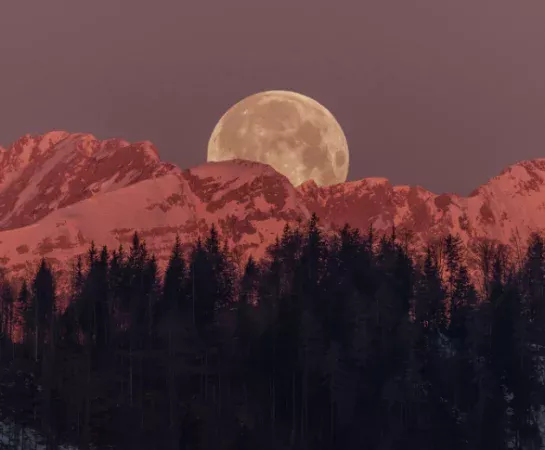
What Is a Supermoon and When Is the Next One
Every time a supermoon rises, the same statistic gets repeated: 14% bigger, 30% brighter. It's in almost every news segment and nearly every listicle, and it's also a comparison almost nobody in the audience will ever actually witness, because it measures the single closest possible
Time Tools
Quick access to timers, stopwatch, world clock and time zone tools.
Time Guides
Read useful guides about time zones, calendars, finance and astronomy.


