Major Airports in Honduras
- Juan Manuel Gálvez International Airport (RTB) - 22:51:22
- Palmerola International Airport (XPL) - 22:51:22
- Ramón Villeda Morales International Airport (SAP) - 22:51:22
Daylight saving time in Honduras
Honduras has 1 listed IANA time zones. None of them observe daylight saving time in 2026. The UTC offset remains stable throughout the year.
Best Time to Call Honduras
Business hours in Honduras (9 AM–5 PM local time) fall at these local times elsewhere:
- Beijing: 11:00 PM – 7:00 AM (next day) ( Outside normal hours)
- Paris: 5:00 PM – 1:00 AM (next day) ( Partial overlap)
- Toronto: 11:00 AM – 7:00 PM ( Convenient)
- Seoul: 12:00 AM (next day) – 8:00 AM (next day) ( Outside normal hours)
- Mexico City: 9:00 AM – 5:00 PM ( Convenient)
- Cairo: 6:00 PM – 2:00 AM (next day) ( Partial overlap)
- Bangkok: 10:00 PM – 6:00 AM (next day) ( Outside normal hours)
Times shown reflect current UTC offsets and may shift by up to an hour around daylight saving transitions.
Time Difference from Honduras
Compare time in Honduras with other countries.
Countries in the Same Time Zone as Honduras
Most Popular Cities in Honduras
Holidays in Honduras
Official national public holidays. Regional and religious observances may vary by area.
About Time in Honduras
Copán Preserved Time in Stone on Several Different Scales
At Copán, time was not recorded through a single calendar. Classic Maya inscriptions combined several systems capable of identifying a day within repeating ritual and solar cycles while also placing historical events within a much longer chronology. The 260-day Tzolk'in and the 365-day Haab worked together in the 52-year Calendar Round, while the Long Count provided a continuous count of days suitable for recording events across periods far longer than an individual lifetime.
This is particularly important at Copán because its monuments are historical documents as well as works of sculpture. Smithsonian material on the site identifies, for example, the Long Count date 9.14.19.8.0 on Stela A, corresponding to 731 CE. Dates carved beside rulers and dynastic texts allowed events to be positioned within a formal chronology rather than remembered only through relative expressions such as a certain number of years after an accession or battle.
The Hieroglyphic Stairway expanded this use of written chronology on an exceptional scale. Harvard's Peabody Museum describes 63 steps carrying more than 1,100 glyph blocks and recording the history of Copán's rulers from the fifth through the eighth centuries. UNESCO, counting individual glyphs rather than blocks, reports more than 1,800 signs and identifies the stairway as the longest known Maya inscription. The distinction between blocks and individual glyphs explains why the two authoritative counts differ without contradicting one another.
For historians, these inscriptions make Copán unusually valuable because political history and calendrical notation survive together. Reconstructing a reign involves reading dates, period endings and intervals alongside names and events. Time was therefore part of the architecture of political memory itself, not simply a background measurement added to a narrative.
Stela D May Have Functioned as a Solar Time Instrument
One of the most interesting modern interpretations of Copán concerns Stela D in the Main Plaza. Researchers from the Universidad Nacional Autónoma de Honduras have studied the monument, its altar and the surrounding architecture as a possible integrated sundial. Their work, published in the peer-reviewed journal Ancient Mesoamerica, used observations and digital modeling to examine the shadows produced at different hours and at important points in the solar year.
The proposed system is more sophisticated than a device intended merely to identify noon. The researchers found that the size and orientation of the shadows could mark solstices, equinoxes and the two annual passages of the Sun through the zenith. At Copán's tropical latitude, the Sun can pass directly overhead twice each year, a phenomenon that does not occur at higher temperate latitudes. Tracking those events provides information about the progression of the tropical year.
The study also connects the movement of the shadows with serpent imagery carved on the monument. The authors interpret changes in shadow direction through the annual solar cycle as potentially related to this iconography. Smithsonian's Living Maya Time project presents the same research while appropriately describing it as the conclusion of Honduran astronomers rather than as an uncontested fact about the monument's original use.
That distinction is important. Archaeological astronomy reconstructs intent from orientation, repeated observations, imagery and archaeological context, so interpretations should not be stated with greater certainty than the evidence allows. What is firmly established is that solar cycles, calendrical dates and monumental architecture were deeply interconnected at Copán. Stela D provides a particularly well-studied example of how those relationships may have been translated into a physical method of tracking time.
Tegucigalpa Once Kept a Time Offset Accurate to the Second
The modern national clock is UTC-6, but older timekeeping was tied much more closely to longitude. Historical zone data reconstructs Tegucigalpa Mean Time as UTC-5:48:52. An offset containing minutes and seconds looks strange from a modern perspective, but it was a normal consequence of using local mean solar time. Longitude determines the average timing of the Sun's daily passage across the local meridian, so cities at different longitudes naturally obtained different clock readings.
That system ended on 1 April 1921, when the capital adopted a six-hour offset west of Greenwich. The adjustment from UTC-5:48:52 to UTC-6 meant setting clocks back by 11 minutes and 8 seconds. From then on, civil time was aligned with the 90-degree-west reference meridian of the UTC-6 zone rather than with Tegucigalpa's own astronomical longitude.
The change also shifted the relationship between the clock and the Sun. Tegucigalpa lies east of the ideal UTC-6 central meridian, so mean solar noon occurs somewhat before 12:00 standard time rather than exactly at noon. The precise apparent solar-noon time varies through the year because of the equation of time, but the underlying longitude effect remains.
The current arrangement is straightforward. The Honduran civil aviation authority's official aeronautical information publishes UTC-6 as the national time-zone offset, and the same standard applies throughout the year. There is currently no seasonal clock change.
Three Experiments With Daylight Saving, Separated by Eighteen Years
Seasonal clock changing has been the exception rather than the rule. Historical records show only three years of daylight-saving operation in the modern time-zone record: 1987, 1988 and 2006. In 1987 clocks advanced from UTC-6 to UTC-5 on 3 May and returned in late September. The experiment was repeated from 1 May to 25 September 1988, after which standard time remained unchanged for more than seventeen years.
The third experiment came under very different economic circumstances. On 7 May 2006, the government advanced official time by one hour as part of a broader energy-saving plan. Contemporary reporting from ACAN-EFE, reproduced by La Nación, records a presidential announcement that the measure would run until 7 August and was intended to reduce energy consumption. Other measures included changes to public-sector working hours and restrictions intended to reduce government fuel use.
The decision also had a regional dimension. Guatemala and Nicaragua had already introduced similar clock changes during the preceding days as Central American governments responded to high oil and energy costs. Contemporary reporting estimated that Honduran authorities hoped the wider conservation program could substantially reduce monthly fuel expenditure. This context explains why the 2006 change was treated as an emergency efficiency measure rather than the beginning of a permanent annual daylight-saving system.
The return to UTC-6 occurred at midnight at the beginning of 7 August. The clock moved from 00:00 back to 23:00 on the previous civil date, effectively repeating the final hour of Sunday. IANA incorporated the transition into the international time-zone database shortly afterward. No daylight-saving change has been observed since, and modern records remain on UTC-6 throughout the year.
Why Historical Honduran Timestamps Need More Than a "CST" Label
The combination of local mean time, the 1921 standardization and three daylight-saving periods creates a practical problem for historical data. A timestamp labeled only "CST" does not necessarily contain enough information to reconstruct an old event accurately. Before April 1921, Tegucigalpa was not on UTC-6 at all. During parts of 1987, 1988 and 2006, civil clocks instead ran at UTC-5.
The 2006 transition demonstrates the ambiguity especially clearly. A local time between 23:00 and midnight on 6 August occurred twice when clocks were moved back. A database containing only the date and local clock reading cannot distinguish those two instants without an offset or additional transition information. Modern systems avoid this problem by storing UTC or by retaining an IANA zone identifier such as America/Tegucigalpa together with the timestamp.
This is why historical time-zone databases contain apparently obscure entries such as UTC-5:48:52. They are not decorative historical details. They allow software to reconstruct the relationship between a recorded local time and universal time according to the rules actually in force on that date. For archival material, scientific observations, legal records and transport logs, using today's UTC-6 offset retrospectively can produce an incorrect result.
Frequently Asked Questions
How many time zones does Honduras have?
One. The whole of Honduras follows America/Tegucigalpa, so every city shows the same local time as the capital, Tegucigalpa.
Is Honduras ahead of or behind GMT?
Honduras is currently 6 hours behind GMT (UTC-6).
Does Honduras use summer time?
No. Honduras does not observe daylight saving time, so its clocks stay at UTC-6 all year. Its time difference with countries that do change their clocks still shifts by an hour in spring and autumn.
How many public holidays does Honduras have in 2026?
Honduras has 11 national public holidays in 2026, when banks and government offices are usually closed. Some regions may also have their own local holidays.
How do I dial a phone number in Honduras from abroad?
From a mobile phone, type +504 and then the local number without the leading 0 used for domestic calls, if it has one. From a landline, replace the plus sign with your exit code: 011 from the US and Canada, or 00 from most of Europe, for example 00 504 followed by the number.
What language is spoken in Honduras?
The main language of Honduras is Spanish.
Beyond the Clock

Why the Moon’s Phases Don’t Actually Change Its Size
A thin crescent looks small enough to disappear. A full moon looks like it's swelling on the horizon. Neither impression is true. The Moon's diameter is 3,474 kilometers on every night of the month, whether it's a sliver or a full disc, and nothing in

Why Saturn’s Rings Are Disappearing From View in 2025 and 2026
Saturn's rings turned edge-on to Earth on March 23, 2025, at 12:04 p.m. EDT, and for weeks the planet looked like a plain yellow ball through backyard telescopes. This is not decay or destruction. It is a geometric alignment called a ring plane crossing, and
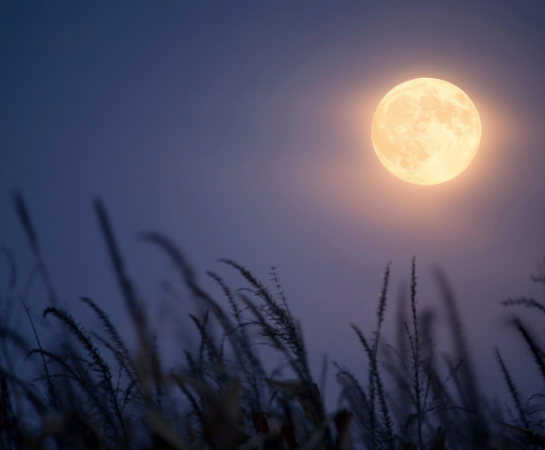
What Is a Harvest Moon and Why It Rises at Almost the Same Time Several Nights Running
On most nights of the year, the Moon rises roughly 50 minutes later than it did the night before. Around the Harvest Moon, that gap collapses to as little as 10 minutes in parts of the UK and Canada, and rarely more than 30 minutes
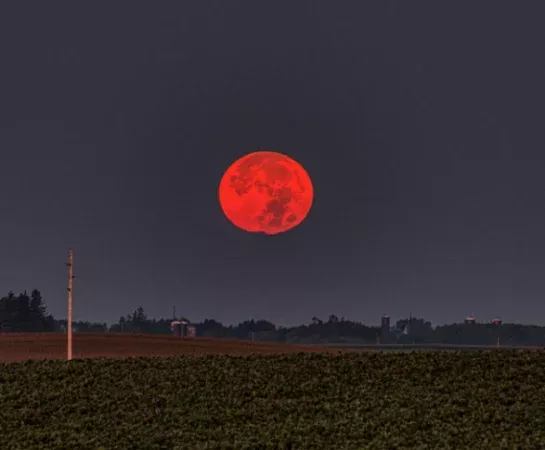
What Is a Blood Moon and Why Does the Moon Turn Red
On the night of August 27, 2026, the Moon came within a hair of disappearing entirely. Earth's shadow covered 96.2% of its surface, a partial eclipse so deep that skywatchers across the Americas, Europe, and Africa watched it turn a rusty, almost total red without

When Does the Fed Announce Interest Rates: Exact Time and Why It Moves Markets
The Federal Reserve announces its interest rate decision at 2:00 p.m. Eastern Time on the final day of each scheduled Federal Open Market Committee (FOMC) meeting, and the Chair's press conference follows at 2:30 p.m. Those times have been fixed since March 2013. The rest

What Is the Closing Auction and Why the Last 10 Minutes Move the Market
The 4:00 p.m. bell on the New York Stock Exchange does not simply end the trading day. It triggers the closing auction, a one-time match of buyers and sellers at a single price that becomes each stock's official close, and which NYSE describes as the

Jobs Report Day: Why the First Friday of the Month Moves Every Market at Once
Once a month, at 8:30 a.m. Eastern, currency pairs jump, bond yields snap, and equity futures swing before most traders have settled at their desks. Everyone calls it "the first Friday of the month." Almost everyone is wrong about why it lands there. The date

Earnings Season Calendar: Why Companies Report Before or After the Bell
JPMorgan Chase kicked off the 2026 earnings season on Tuesday, January 13, reporting its fourth-quarter results before the market opened, the same slot the bank has used every January for years. Two days later, Netflix, Microsoft, and Nvidia would report in the opposite window, after
Time Tools
Quick access to timers, stopwatch, world clock and time zone tools.
Time Guides
Read useful guides about time zones, calendars, finance and astronomy.


