Current Time in UTC+6:30
05:48:08
Sunday, 22 November 2026
UTC Offset:
UTC+6:30 (GMT+6:30)
IANA zone:
Asia/Yangon
About:
UTC+6:30 is 6 hours 30 minutes ahead of UTC.
It is used in Cocos Islands and Myanmar; the largest cities on it: Yangon, Mandalay and Nay Pyi Taw.
Time Difference from UTC+6:30
Compare time in UTC+6:30 with major cities worldwide.
-14.5h
-12.5h
-12.5h
-11.5h
-11.5h
-9.5h
-9.5h
-6.5h
-5.5h
-5.5h
-5.5h
-5.5h
-4.5h
-2.5h
+0.5h
+1.5h
+1.5h
+2.5h
+4.5h
When the Time Difference with UTC+6:30 Changes
Clocks change on different dates around the world, so the gap between UTC+6:30 and these places is not the same all year. Next 12 months; dates in UTC+6:30 time.
Los Angeles
-14.5h until 14 Mar 2027
-13.5h 14 Mar – 7 Nov 2027
-14.5h from 7 Nov 2027
Chicago
-12.5h until 14 Mar 2027
-11.5h 14 Mar – 7 Nov 2027
-12.5h from 7 Nov 2027
New York, Toronto
-11.5h until 14 Mar 2027
-10.5h 14 Mar – 7 Nov 2027
-11.5h from 7 Nov 2027
London
-6.5h until 28 Mar 2027
-5.5h 28 Mar – 31 Oct 2027
-6.5h from 31 Oct 2027
Paris, Berlin, Madrid, Rome
-5.5h until 28 Mar 2027
-4.5h 28 Mar – 31 Oct 2027
-5.5h from 31 Oct 2027
Sydney
+4.5h until 3 Apr 2027
+3.5h 3 Apr – 2 Oct 2027
+4.5h from 2 Oct 2027
Best Time to Call UTC+6:30
Business hours on UTC+6:30 (9 AM-5 PM local time) fall at these local times elsewhere:
- New York: 9:30 PM (previous day) - 5:30 AM ( Outside normal hours)
- Los Angeles: 6:30 PM (previous day) - 2:30 AM ( Outside normal hours)
- London: 2:30 AM - 10:30 AM ( Partial overlap · 1 h 30 min shared)
- Dubai: 6:30 AM - 2:30 PM ( Partial overlap · 5 h 30 min shared)
- Mumbai: 8:00 AM - 4:00 PM ( Convenient · 7 h shared)
- Tokyo: 11:30 AM - 7:30 PM ( Partial overlap · 5 h 30 min shared)
- Sydney: 1:30 PM - 9:30 PM ( Partial overlap · 3 h 30 min shared)
in UTC+6:30 today, it is:
- New York: 12:30 AM night
- Los Angeles: 9:30 PM (previous day) outside working hours
- London: 5:30 AM night
- Dubai: 9:30 AM working hours
- Mumbai: 11:00 AM working hours
- Tokyo: 2:30 PM working hours
- Sydney: 4:30 PM working hours
Times are for today. Clock changes shift them on some dates: see when the time difference changes.
Clock and Sun on UTC+6:30
UTC+6:30 is set to the sun at 97.5° E, but the places that use it spread far to the east and west of that line, so the sun is highest at very different clock times.
| City (100,000+ people) | Longitude | Sun highest at about |
|---|---|---|
| Sittwe (westernmost) | 92.9° E | 12:18 |
| Keng Tung (easternmost) | 99.9° E | 11:50 |
Between the two, solar noon by the clock differs by about 28 minutes: mornings stay dark longer in Sittwe and evenings get dark earlier in Keng Tung.
Mean solar time from longitude. Over the year the real solar noon moves up to about 16 minutes earlier or later.
About UTC+6:30
UTC+6:30 is shared by two places that have little else in common: Myanmar, a country of more than 50 million people, and the Cocos (Keeling) Islands, a small Australian territory in the Indian Ocean with a few hundred residents.
Myanmar
Myanmar's standard time has been UTC+6:30 for about a century, apart from the years of Japanese occupation from 1942 to 1945, when its clocks were set to Tokyo time, UTC+9. Yangon lies at about 96 degrees East, where the sun is roughly 6 hours 24 minutes ahead of Greenwich, so the half-hour offset keeps clock and sun close together. The country does not use daylight saving time.
The Cocos Islands
The Cocos (Keeling) Islands, about 2,700 kilometres northwest of Perth, have kept UTC+6:30 since the beginning of the twentieth century. They are therefore an hour and a half behind Perth, even though they are part of Australia. Christmas Island, another Australian territory nearby, uses UTC+7 instead.
Converting UTC+6:30
UTC+6:30 is 30 minutes ahead of Dhaka and 30 minutes behind Bangkok. It is 6 hours 30 minutes ahead of London in winter and 5 hours 30 minutes in the British summer, and 11 hours 30 minutes ahead of New York in winter, 10 hours 30 minutes in summer.
Beyond the Clock

Election Night 2026: Poll Closing Times Across US Time Zones
On Tuesday, November 3, 2026, the first polls close at 6 p.m. Eastern Time and the last at 1 a.m. Eastern on Wednesday. That seven-hour stretch is not a quirk of state law. Almost every state closes its polls at 7 or 8 p.m. local

Countries That Don’t Use Daylight Saving Time (and the Ones That Recently Quit)
Most of the world never changes its clocks. About 70 countries observe daylight saving time (DST) in at least part of their territory, according to National Geographic. Out of roughly 195 countries, that is about one in three. The list of places giving it up

Why Morocco Changed Its Clocks for Ramadan, and Why It Stopped in 2026
For eight years, Morocco ran one of the strangest clock systems in the world. The country kept GMT+1 all year as its working time, then set its clocks back to GMT for roughly a month around Ramadan, and moved them forward again after Eid al-Fitr.

Europe Time Zones Explained: WET, CET and EET and Why the Map Doesn’t Match
Most of Europe runs on three standard time zones: Western European Time (WET), Central European Time (CET) and Eastern European Time (EET). On paper they are one hour apart and centered on the meridians at 0°, 15° E and 30° E. In practice, the borders
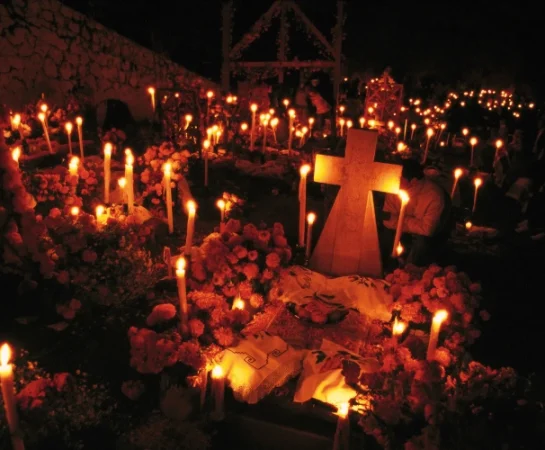
Día de los Muertos: Why the Day of the Dead Spans November 1 and 2
Día de los Muertos lasts two days because it sits on top of two separate Catholic feasts: All Saints' Day on November 1 and All Souls' Day on November 2. Mexican tradition gave each day its own guests. November 1 belongs to children who have

Why Veterans Day Is Observed at 11 AM on November 11
Veterans Day is one of the few American holidays tied to a specific minute. The national observance at Arlington National Cemetery opens with a wreath at the Tomb of the Unknown Soldier at 11:00 AM, and many local ceremonies follow the same hour. The time

Why the Year Starts on January 1
Nothing happens in the sky on January 1. The winter solstice comes about ten days earlier, Earth's closest approach to the Sun a few days later, and no lunar phase is tied to the date. January 1 is not an astronomical boundary. It is an

When Is Yom Kippur and Why It Always Falls 10 Days After Rosh Hashanah
Yom Kippur is the tenth day of Tishrei, and Rosh Hashanah is the first, so the ten-day gap between them looks like simple arithmetic. It isn't. The Hebrew calendar has a set of centuries-old rules that quietly forbid Rosh Hashanah from landing on three specific
Time Tools
All time tools
Time Zone Converter
Compare cities and plan meetings
World Clock
Your cities as live clocks
Time Zones
Abbreviations and UTC offsets
Clock Widget
A free clock for your website
Timer
Countdown with an alarm
Stopwatch
Measure time with laps
Unix Timestamp
Convert epoch time to a date
Age Calculator
Exact age from a date of birth
Days Between Dates
Count the days between two dates
Work Hours
Weekly timecard and payroll hours


