Days in Hong Kong are currently getting shorter, about 6 minutes shorter than a week ago.*
* Calculated from sunrise and sunset times; actual visible daylight can vary slightly with weather, elevation and atmospheric conditions.
Key Facts About Time in Hong Kong
- Its antipode, the point exactly opposite on Earth, is on land, in Argentina.
- Last moved its clocks forward for summer in 1979.
- Replaced local solar time with a standard time zone on 30 October 1904.
Time Difference from Hong Kong
Compare time in Hong Kong with major cities worldwide.
When the Time Difference with Hong Kong Changes
Clocks change on different dates around the world, so the gap between Hong Kong and these places is not the same all year. Next 12 months; dates in Hong Kong time.
Best Time to Call Hong Kong
Business hours in Hong Kong (9 AM-5 PM local time) fall at these local times elsewhere:
- New York: 8:00 PM (previous day) - 4:00 AM ( Outside normal hours)
- Los Angeles: 5:00 PM (previous day) - 1:00 AM ( Outside normal hours)
- London: 1:00 AM - 9:00 AM ( Outside normal hours)
- Dubai: 5:00 AM - 1:00 PM ( Partial overlap · 4 h shared)
- Mumbai: 6:30 AM - 2:30 PM ( Partial overlap · 5 h 30 min shared)
- Tokyo: 10:00 AM - 6:00 PM ( Convenient · 7 h shared)
- Sydney: 12:00 PM - 8:00 PM ( Partial overlap · 5 h shared)
in Hong Kong today, it is:
- New York: 11:00 PM (previous day) night
- Los Angeles: 8:00 PM (previous day) outside working hours
- London: 4:00 AM night
- Dubai: 8:00 AM outside working hours
- Mumbai: 9:30 AM working hours
- Tokyo: 1:00 PM working hours
- Sydney: 3:00 PM working hours
Times are for today. Clock changes shift them on some dates: see when the time difference changes.
Public Holidays Affecting Hong Kong
Official national holiday observed in Hong Kong.
Daylight saving time in Hong Kong
Hong Kong uses the IANA time zone identifier Asia/Hong_Kong. The current local offset is UTC+8 / HKT.
Hong Kong does not observe daylight saving time in 2026. The UTC offset remains stable throughout the year.
Time Zone History of Hong Kong
Hong Kong follows the Asia/Hong_Kong time zone. According to the IANA time zone database, these are the standard times it has used:
- Until 30 October 1904: local mean time, UTC+7:37
- From 30 October 1904: UTC+8
- From 25 December 1941: UTC+9
- From 18 November 1945: UTC+8, the current standard time
Daylight saving time was used in 32 years between 1941 and 1979. The last switch to summer time was in 1979, and none is scheduled now.
About Time in Hong Kong
A Harbour That Needed the Exact Second
Hong Kong's interest in precise time began on the water. In the late nineteenth century Victoria Harbour was one of the busiest ports in Asia, and every ocean-going ship in it carried a marine chronometer that had to be checked before departure, because an error of a few seconds could mean miles of error in a ship's position after weeks at sea. For a few years the signal came from a ship: from 1882 the old warship HMS Victor Emmanuel, moored in the harbour, carried a time ball for captains to watch.
The Hong Kong Observatory, set up in 1883 on a small hill in Tsim Sha Tsui, took over the job. On 1 January 1885 a new time ball came into service on a tower at the Marine Police station nearby, today part of the 1881 Heritage complex. Every afternoon the ball was hoisted and then dropped at exactly one o'clock, local mean time, which the Observatory calculated from the stars as 7 hours, 36 minutes and 42 seconds ahead of Greenwich.
That odd offset did not last long. From 30 October 1904 Hong Kong adopted a time based on the meridian of 120 degrees East, exactly eight hours ahead of Greenwich. It is the same offset the city uses today.
The Signal Tower on Blackhead Point
As buildings rose around the police station, the time ball became harder to see. In 1907 the Observatory built a new brick tower on Blackhead Point, a small hill a short walk to the east, and the ball moved there. Service resumed on 8 January 1908. At first the ball dropped once a day, and from 1920 twice, at 10:00 and 16:00. Flags and lights on the same tower also sent signals to passing ships, and local people began calling the place Signal Hill. Radio time signals eventually made the ball redundant, and it dropped for the last time on 30 June 1933. The tower still stands in Signal Hill Garden, hidden among the hotels of Tsim Sha Tsui, and is a declared monument.
The Gun That Fires at Noon
Across the harbour in Causeway Bay, a small naval gun is fired every day at exactly 12:00. The Noonday Gun belongs to Jardine Matheson, one of the oldest trading houses in Hong Kong, and a uniformed member of its staff carries out the ritual in a small walled garden by the waterfront, usually in front of a handful of curious onlookers.
The traditional explanation is a story of colonial etiquette. In the nineteenth century, the firm's men are said to have fired a salute to welcome one of their senior partners into harbour. Salutes of that kind were reserved for government officials and senior naval officers, and an offended official ordered the company, as a penalty, to fire a gun every day at noon forever. Whether every detail is true is hard to prove, but the custom is real and has survived for well over a century.
The gun has had interruptions. During the Japanese occupation it was taken away and lost, and the weapon used today is a Hotchkiss three-pounder. Besides the daily noon shot, it is also fired at midnight on New Year's Eve. Noël Coward made it famous far beyond Asia when he mentioned it in his comic song "Mad Dogs and Englishmen".
From Summer Time to an Atomic Clock
Hong Kong first tried summer time in 1941, months before the Japanese invasion. From December 1941 until September 1945 the occupation authorities imposed Tokyo time, one hour ahead of the previous standard. After the war summer time returned and was used in most years until 1979. The government eventually concluded that at Hong Kong's latitude, just south of the Tropic of Cancer, the extra evening daylight brought little benefit, and the clocks have not changed since.
The Observatory remains the city's official timekeeper. Hong Kong adopted Coordinated Universal Time as its reference in 1972, and in 1980 the Observatory began keeping time with a caesium atomic clock, replaced by a newer model in 1994. Anyone can synchronise a computer or phone with its network time service.
Hong Kong Time in Practice
Hong Kong Time is UTC+8 all year. It is the same as Beijing, Shanghai, Taipei, Singapore and Perth, and one hour behind Tokyo and Seoul. Hong Kong is 8 hours ahead of London in winter and 7 hours in British summer, and 13 or 12 hours ahead of New York depending on the season. A 9:00 meeting in Hong Kong therefore falls on the previous evening in New York.
The city lies at about 114 degrees East, west of the 120th meridian, so the sun runs slightly behind the clock. On average it reaches its highest point at about 12:23. Around the June solstice the sun rises shortly before 5:40 and sets after 19:10, while in December it sets at about 17:45.
Near the Star Ferry pier stands the city's best known public clock, the 44-metre red brick and granite tower of the old Kowloon-Canton Railway terminus. The tower was finished in 1915, but the First World War delayed the shipment of its clock and bell from Britain, and they only started working in March 1921. When the railway moved its terminus to Hung Hom in the 1970s, the station building was demolished in 1978, but the tower was kept as a landmark and declared a monument in 1990. It is a reminder that trains, ships and clocks have always been closely linked on this waterfront.
Sun & Daylight in Hong Kong
Hong Kong lies at 22.28° N, 114.17° E in the Northern Hemisphere and the Eastern Hemisphere, about 2,480 km (1,541 mi) from the Equator, in the tropical latitude zone.
Sun Time vs Clock Time
Standard time in Hong Kong, UTC+8, is based on the 120° E meridian, while the city lies at 114.17° E. So on standard time the clock runs about 23 minutes ahead of local solar time.
Solar noon, the moment the sun is highest in the sky, comes as early as 12:06 (around November 3) and as late as 12:37 (around February 11) by the local clock.
Golden Hour & Blue Hour Today
Approximate times from today's sunrise and sunset; the light itself depends on weather.
Time now in other cities in Hong Kong
Airports Serving Hong Kong
Hong Kong International Airport (HKG / VHHH) is the main airport serving Hong Kong: a major airport about 27 km (17 mi) from the city centre.
Current local time at the airport is 07:10:00.
Other airports within 80 km:
- Shenzhen Bao'an International Airport (SZX), China - major, 55 km
- Macau International Airport (MFM), Macao - major, 62 km
Antipode of Hong Kong
The point on Earth exactly opposite Hong Kong lies at 22.28° S, 65.83° W, on land in Argentina. It is near Villazon, Bolivia, about 32 km away. The nearest major city is Sucre, Bolivia, about 370 km away.
When it is noon by the sun in Hong Kong, it is midnight by the sun at its antipode.
Frequently Asked Questions
What time zone is Hong Kong in?
Hong Kong follows the Asia/Hong_Kong time zone, the official IANA identifier used by computers and databases worldwide to track local time accurately. Right now, this puts Hong Kong at UTC+8.
What time is it in Hong Kong right now?
The current local time in Hong Kong is 07:10:00 on Sunday, 22 November 2026. The clock at the top of this page shows the live time and updates every second.
Does Hong Kong observe daylight saving time?
No. Hong Kong stays on UTC+8 (HKT) all year and does not change its clocks.
How far ahead or behind UTC is Hong Kong?
Hong Kong is currently UTC+8, meaning local time is 8 hours ahead of Coordinated Universal Time (UTC).
When did Hong Kong stop using daylight saving time?
The last switch to summer time in Hong Kong was in 1979. In total, clocks were moved forward for summer in 32 years, the first time in 1941. No change is scheduled now, so the clock stays on UTC+8 all year.
Which airport serves Hong Kong?
Hong Kong International Airport (HKG) is the main airport serving Hong Kong, about 27 km away. The current local time at the airport is 07:10:00.
Beyond the Clock
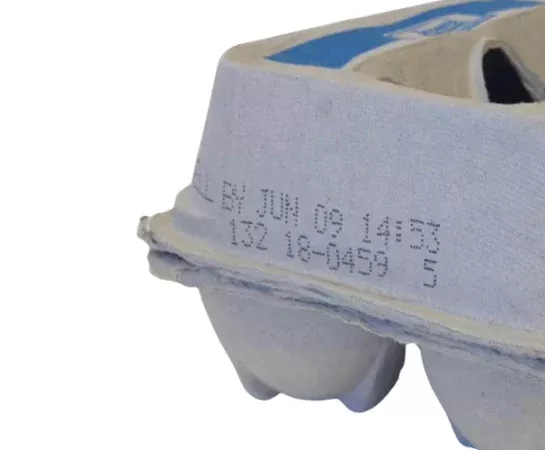
What Is a Julian Date? Ordinal Dates, Astronomers’ Day Numbers and Food Packaging
Ask an astronomer and a warehouse manager what today's Julian date is, and you will get two different numbers. For Wednesday, November 18, 2026, the astronomer says 2461363, meaning the Julian Day count that begins at noon Universal Time. The warehouse manager says 322, because

What Does EOD and COB Mean? When “End of Day” Actually Ends
EOD stands for "end of day" and COB for "close of business." In email and chat they mean the same thing: do this before today's working day ends. The hard part is not the acronym. It is the deadline it points to, because "the end

Why Clocks Change at 2 AM on a Sunday
In the United States, the clock change is written into federal law to the hour. Daylight saving time begins "at 2 o'clock antemeridian" on the second Sunday of March and ends at the same hour on the first Sunday of November (15 U.S.C. 260a). In
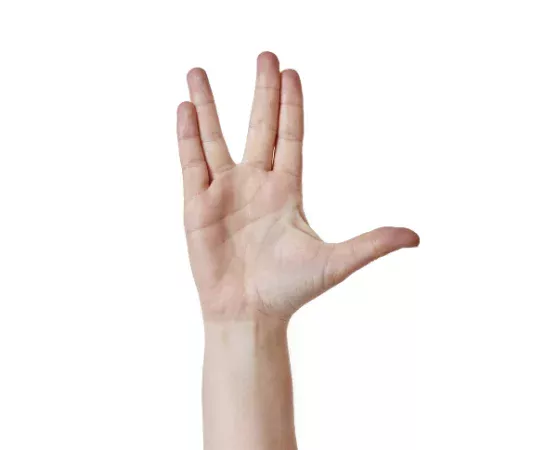
What Is Stardate and How Star Trek Invented Its Own Fictional Time System
A stardate is the fictional timekeeping system Star Trek's Starfleet uses instead of the Gregorian calendar, heard from the show's very first broadcast episode in September 1966, "Captain's log, star date 1513.1," and reworked at least three separate times since, in ways the franchise's own

Why Presidents’ Day Can Never Fall on Washington’s Birthday
The federal holiday honoring George Washington falls on the third Monday in February, and the third Monday in February can only land between February 15 and 21. Washington was born on February 22. The holiday can therefore never fall on the date it commemorates, in

Why Advent Starts on a Different Date Every Year
Advent always begins on a Sunday, and that is the whole reason its date moves. The season is defined as the four Sundays before Christmas, but Christmas is fixed to a date, December 25, not to a day of the week. As Christmas drifts through

Three Kings Day: Why Epiphany Falls on January 6
On the morning of Wednesday, January 6, 2027, children across Spain will open what are traditionally the main presents of the holiday season. In Spain the gifts come not from Santa Claus but from the Three Kings. In Puerto Rico, children leave grass in shoeboxes

Why Orthodox Christmas Falls on January 7, Not December 25
Millions of Orthodox Christians open presents and attend Christmas liturgy on January 7. They aren't celebrating a different holiday, and they aren't twelve days behind on purpose. They're marking December 25 on a calendar that stopped syncing with the seasons centuries ago and was never


