Major Airports in Timor Leste
- Oecusse Route of the Sandalwood International Airport (OEC) - 06:33:56
- Presidente Nicolau Lobato International Airport (DIL) - 07:33:56
Daylight saving time in Timor Leste
Timor Leste has 1 listed IANA time zones. None of them observe daylight saving time in 2026. The UTC offset remains stable throughout the year.
Best Time to Call Timor Leste
Business hours in Timor Leste (9 AM–5 PM local time) fall at these local times elsewhere:
- Beijing: 8:00 AM – 4:00 PM ( Convenient)
- Paris: 2:00 AM – 10:00 AM ( Outside normal hours)
- Toronto: 8:00 PM (previous day) – 4:00 AM ( Partial overlap)
- Seoul: 9:00 AM – 5:00 PM ( Convenient)
- Mexico City: 6:00 PM (previous day) – 2:00 AM ( Partial overlap)
- Cairo: 3:00 AM – 11:00 AM ( Outside normal hours)
- Bangkok: 7:00 AM – 3:00 PM ( Partial overlap)
Times shown reflect current UTC offsets and may shift by up to an hour around daylight saving transitions.
Time Difference from Timor Leste
Compare time in Timor Leste with other countries.
Countries in the Same Time Zone as Timor Leste
Holidays in Timor Leste
Official national public holidays. Regional and religious observances may vary by area.
About Time in Timor Leste
Portugal's 1911 Time Law Gave Timor UTC+8, but Added an Exception for Its Border
The decree that reorganized legal time across the Portuguese territories in 1911 did not treat Timor as a simple entry in a table of offsets. Article 2 assigned Macau and Timor a standard eight hours ahead of Greenwich. Article 5 then added a special condition for Portuguese India and Timor: they were to keep their time counting in harmony with neighboring foreign colonies until those neighbors adopted the zonal time assigned to them under the new system.
That proviso reflected Timor's geography. Portuguese Timor occupied the eastern part of an island whose western section belonged to the Netherlands East Indies, so an abrupt legal divergence at the land boundary had practical consequences that did not exist for an isolated colony. The law explicitly allowed local synchronization with the neighboring administration to take priority temporarily over the nominal UTC+8 assignment.
The same decree treated standard time as infrastructure rather than merely a number. Public offices, buildings, and stations were required to keep their internal and external clocks on legal time, and telegraph offices were instructed to give priority to making the correct time known. Observatories and other bodies already responsible for determining time were to continue distributing or transmitting it telegraphically.
The system formally entered into force with the beginning of the civil day on January 1, 1912. Modern IANA tzdb reconstructs Dili before that boundary at local mean time UTC+8:22:20 and then at UTC+8. In that reconstruction the adjustment amounts to 22 minutes 20 seconds backward. The second-level value is representative Dili local mean time, not evidence that every clock across the colony had previously been regulated to that precision.
The 1912 boundary has itself been re-examined recently. In the 2024b release, IANA changed the historical Dili transition by 22 minutes after a closer reading of the Portuguese legislation. It is a rare case in which a century-old colonial time law still altered the timestamps produced by modern time-zone software.
The One-Hour Change Discussed in 1974 Never Became a Secure Historical Transition
A later episode survives in testimony rather than legislation. In a 1999 account, João Carrascalão recalled that the Portuguese administration had tried to move East Timor's clocks forward in 1974 because sunrise came very early. According to his recollection, the proposal encountered resistance because it conflicted with local patterns of daily life.
IANA's maintainers examined the claim when reconstructing Dili's history and made an unusually explicit source note: they had no independent record of the 1974 attempt. The database therefore did not invent a transition from the recollection. The episode remains useful as evidence that a one-hour advance was being discussed, but not as proof that East Timorese clocks actually changed.
That distinction matters because the same basic idea returned under completely different political circumstances twenty-six years later, this time with an official decision and a precise implementation date.
At Midnight on September 17, 2000, the UN Transitional Administration Skipped an Hour
On August 16, 2000, the Cabinet of the East Timor Transitional Administration decided to advance the territory's time permanently by one hour. The announcement was carried by the office of the UN Secretary-General's deputy spokesman and specified that there would be no seasonal adjustment.
The change took effect at midnight after Saturday, September 16. East Timor had been using UTC+8; when the clock reached the boundary, the new UTC+9 standard began. In local civil time, 00:00 was followed by 01:00 on September 17, so the first hour of that date did not occur.
The timing is politically important. This was not an act of the later independent Democratic Republic of Timor-Leste, which restored independence in 2002. The decision belonged to the UN-administered transitional period following the 1999 referendum and the establishment of UNTAET.
The 2000 decision also settled the issue that had appeared only as an unverified proposal in the 1974 recollection: East Timor really did move one hour farther ahead. Government documents issued after independence continue to use Dili time at GMT+9, including official procurement deadlines that explicitly identify local Dili time as GMT+09:00.
Frequently Asked Questions
How many time zones does Timor Leste have?
One. The whole of Timor Leste follows Asia/Dili, so every city shows the same local time as the capital, Dili.
Is Timor Leste ahead of or behind GMT?
Timor Leste is currently 9 hours ahead of GMT (UTC+9).
Does Timor Leste use summer time?
No. Timor Leste does not observe daylight saving time, so its clocks stay at UTC+9 all year. Its time difference with countries that do change their clocks still shifts by an hour in spring and autumn.
How many public holidays does Timor Leste have in 2026?
Timor Leste has 18 national public holidays in 2026, when banks and government offices are usually closed. Some regions may also have their own local holidays.
How do I dial a phone number in Timor Leste from abroad?
From a mobile phone, type +670 and then the local number without the leading 0 used for domestic calls, if it has one. From a landline, replace the plus sign with your exit code: 011 from the US and Canada, or 00 from most of Europe, for example 00 670 followed by the number.
What language is spoken in Timor Leste?
The main languages of Timor Leste are Tetum, Portuguese and Indonesian.
Beyond the Clock

How Many Weeks Are in a Quarter and How 4-4-5 Fiscal Calendars Work
A quarter is 13 weeks only on paper. A calendar quarter runs 90, 91, or 92 days, which works out to somewhere between 12.86 and 13.14 weeks, and it never starts on the same weekday two years in a row. That small mismatch is why

What Week Number Is It? ISO Week Numbers vs US Week Numbers
Ask a spreadsheet in Chicago and a planner in Stockholm what week Sunday, January 3, 2027 falls in, and you get two different years. Excel's default setting says week 2 of 2027. The ISO standard used across Europe says week 53 of 2026. Both answers

How Many Working Hours Are in a Year: Why 2,080 Isn’t Always Right
The standard answer is 2,080: 40 hours a week times 52 weeks. It sits behind most salary calculators and HR spreadsheets. But 52 weeks cover only 364 days. Every year has one or two days left over, and whether they land on a weekday or

Time Blocking vs Time Boxing vs Task Batching: What’s the Difference
The three names sound alike and are often used interchangeably, and all three promise a more focused day. They are not competing methods. Each one answers a different question. A frequent way for a technique to disappoint is being asked to do another one's job:

Which US States Are Split Between Two Time Zones (and Where the Line Runs)
"What time zone is Texas in?" has two correct answers. Houston, Dallas and Austin are on Central Time, while El Paso is on Mountain Time, an hour behind the rest of the state. Florida, Kentucky, Tennessee, Michigan and nine other states work the same way:

India vs US Time Difference: Why the Gap Changes Twice a Year
For most of the year, India is 9 hours 30 minutes ahead of New York. From November 1, 2026 to March 14, 2027, it is 10 hours 30 minutes ahead. India's clocks do not change in either case. The whole difference comes from the United

Why Israel Changes Its Clocks on a Different Schedule Than Europe
Israel's clocks now fall back on the same day the European Union's do, the last Sunday of October, a deliberate alignment written into a 2013 law. But the two systems still don't match. Israel springs forward on the Friday before the EU's last Sunday of
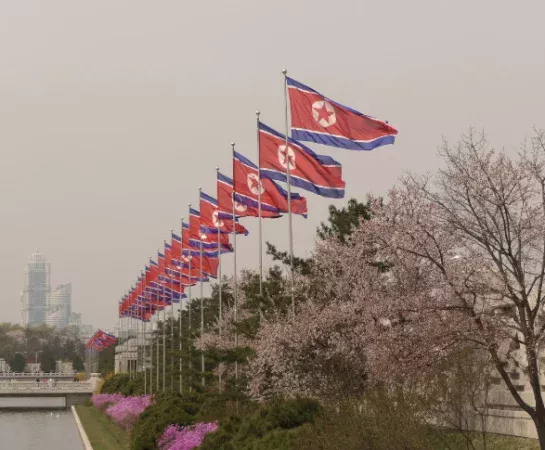
Why North Korea Changed Its Time Zone Twice in One Decade
North Korea turned its clocks back 30 minutes on August 15, 2015, breaking from South Korea and Japan to create its own "Pyongyang Time," then reversed the entire move less than three years later, on May 5, 2018, realigning with Seoul again. Both changes were
Time Tools
Quick access to timers, stopwatch, world clock and time zone tools.
Time Guides
Read useful guides about time zones, calendars, finance and astronomy.


