Major Airports in North Korea
- Pyongyang Sunan International Airport (FNJ) - 07:54:44
Daylight saving time in North Korea
North Korea has 1 listed IANA time zones. None of them observe daylight saving time in 2026. The UTC offset remains stable throughout the year.
Best Time to Call North Korea
Business hours in North Korea (9 AM–5 PM local time) fall at these local times elsewhere:
- Beijing: 8:00 AM – 4:00 PM ( Convenient)
- Paris: 2:00 AM – 10:00 AM ( Outside normal hours)
- Toronto: 8:00 PM (previous day) – 4:00 AM ( Partial overlap)
- Seoul: 9:00 AM – 5:00 PM ( Convenient)
- Mexico City: 6:00 PM (previous day) – 2:00 AM ( Partial overlap)
- Cairo: 3:00 AM – 11:00 AM ( Outside normal hours)
- Bangkok: 7:00 AM – 3:00 PM ( Partial overlap)
Times shown reflect current UTC offsets and may shift by up to an hour around daylight saving transitions.
Time Difference from North Korea
Compare time in North Korea with other countries.
Countries in the Same Time Zone as North Korea
Most Popular Cities in North Korea
Holidays in North Korea
Official national public holidays. Regional and religious observances may vary by area.
About Time in North Korea
A Calendar That Began With One Man's Birth
For twenty-seven years, official North Korean documents, newspapers, banknotes and birth certificates did not simply record the Gregorian year alongside the date; they counted from an entirely different starting point. The Juche calendar, decreed on 8 July 1997, the third anniversary of founding leader Kim Il Sung's death, designated 1912, the year of his birth, as Juche 1. There was no Juche 0, and any date before 1912 continued to be written in the ordinary Gregorian style, but from the calendar's formal introduction on 9 September 1997, North Korea's own foundation day, every year from 1912 onward was expected to carry its Juche number in official use throughout the country.
The system quietly came to an end in October 2024, when North Korean newspapers began dropping the Juche year in favour of plain Gregorian dates, and by the printing of the country's 2025 wall calendars, the Juche numbering had disappeared from public circulation entirely. Outside observers have generally read the change as part of a broader shift by current leader Kim Jong Un to reduce the degree to which official life continues to revolve around his father and grandfather, even as the specific holidays built around their birthdays, the Day of the Sun for Kim Il Sung and the Day of the Shining Star for Kim Jong Il, have continued to be marked on the calendar exactly as before.
Thirty Minutes, Deliberately Out of Step
Shortly after midnight on 15 August 2015, factory whistles, train horns and ship sirens sounded across North Korea as the country's clocks were turned back by exactly thirty minutes, timed to coincide precisely with the seventieth anniversary of Korea's 1945 liberation from Japanese colonial rule. State television showed a ceremonial bell being rung in traditional Korean costume to mark the moment. The new standard, immediately named Pyongyang Time, set North Korea's official clock at 127 degrees 30 minutes east longitude, deliberately restoring the meridian Korea itself had used before Japan's 1910 to 1945 occupation, rather than the meridian imposed by Japanese colonial decree in 1912 and still used by both South Korea and Japan today.
North Korea's state news agency KCNA framed the move explicitly around erasing what it called the legacy of Japanese colonial rule, describing the earlier imposition of a shared time zone as one of many injustices inflicted during the occupation. The practical result was that, for the first time since Japan's colonial administration standardised Korean time in 1912, the two Koreas found themselves keeping different clocks despite sharing a single peninsula, a split that immediately raised logistical questions for the countries' one remaining joint economic project, the Kaesong Industrial Complex, where officials on both sides now had to account for a thirty-minute gap in coordinating shifts and paperwork across a border that, on paper, the two states had never stopped disputing.
A War That Has Not Technically Ended in Seventy Years
At 10am on 27 July 1953, representatives of the United Nations Command, North Korea and China signed the Korean Armistice Agreement at Panmunjom, halting active combat after three years of fighting that had begun with North Korea's invasion of the South on 25 June 1950. The agreement itself was the product of the longest negotiated armistice in recorded history, requiring 158 separate meetings spread across two years and seventeen days, complicated throughout by the need to translate every session into English, Korean and Chinese simultaneously.
What the armistice explicitly was not, however, was a peace treaty. Its own text described its purpose as ensuring a ceasefire only "until a final peaceful settlement is achieved," a settlement that, more than seventy years later, has still never been signed. South Korea's own president at the time, Syngman Rhee, refused to add his signature at all, objecting to the peninsula's continued division, though his government did agree to observe the ceasefire regardless. The armistice did produce one lasting physical legacy, the Demilitarized Zone, a heavily fortified buffer roughly two hundred and fifty kilometres long and four kilometres wide running along the original front line, which has now stood in place for longer than the shooting war it was built to pause ever lasted in the first place.
Frequently Asked Questions
How many time zones does North Korea have?
One. The whole of North Korea follows Asia/Pyongyang, so every city shows the same local time as the capital, Pyongyang.
Is North Korea ahead of or behind GMT?
North Korea is currently 9 hours ahead of GMT (UTC+9).
Does North Korea use summer time?
No. North Korea does not observe daylight saving time, so its clocks stay at UTC+9 all year. Its time difference with countries that do change their clocks still shifts by an hour in spring and autumn.
How many public holidays does North Korea have in 2026?
North Korea has 21 national public holidays in 2026, when banks and government offices are usually closed. Some regions may also have their own local holidays.
How do I dial a phone number in North Korea from abroad?
From a mobile phone, type +850 and then the local number without the leading 0 used for domestic calls, if it has one. From a landline, replace the plus sign with your exit code: 011 from the US and Canada, or 00 from most of Europe, for example 00 850 followed by the number.
What language is spoken in North Korea?
The main language of North Korea is Korean.
Beyond the Clock

Why the Earliest Sunset Comes Before the Winter Solstice
In New York, the Sun sets earliest on Monday, December 7, 2026, at about 4:28 PM. The shortest day comes two weeks later. The solstice falls at 20:50 UTC on December 21 (3:50 PM EST), and on that day New York gets roughly 9 hours

When Does Winter Start: Meteorological vs Astronomical Seasons
Winter 2026 starts twice in the Northern Hemisphere. Meteorological winter begins on Tuesday, December 1, 2026. Astronomical winter begins at the December solstice, on Monday, December 21, 2026 at 20:50 UTC, which is 3:50 p.m. Eastern and 12:50 p.m. Pacific. Both answers are correct. They
What Is a Supermoon and When Is the Next One
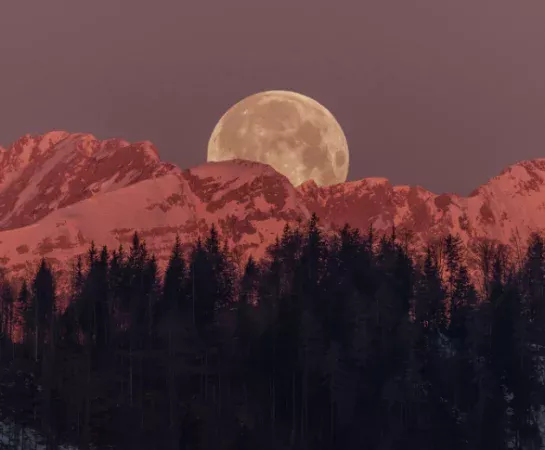
Every time a supermoon rises, the same statistic gets repeated: 14% bigger, 30% brighter. It's in almost every news segment and nearly every listicle, and it's also a comparison almost nobody in the audience will ever actually witness, because it measures the single closest possible
Why the Sky Is Blue During the Day and Black at Night
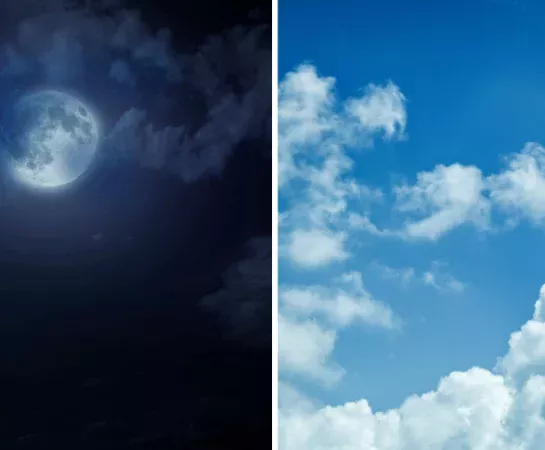
Sunlight is white. Air is, as far as anyone can tell by looking through a window, colorless. And yet every clear afternoon the same 400,000-kilometer column of gas above your head reads as a specific, saturated blue, then goes black within an hour of sunset.

How Many Weeks Are in a Quarter and How 4-4-5 Fiscal Calendars Work
A quarter is 13 weeks only on paper. A calendar quarter runs 90, 91, or 92 days, which works out to somewhere between 12.86 and 13.14 weeks, and it never starts on the same weekday two years in a row. That small mismatch is why

What Week Number Is It? ISO Week Numbers vs US Week Numbers
Ask a spreadsheet in Chicago and a planner in Stockholm what week Sunday, January 3, 2027 falls in, and you get two different years. Excel's default setting says week 2 of 2027. The ISO standard used across Europe says week 53 of 2026. Both answers

How Many Working Hours Are in a Year: Why 2,080 Isn’t Always Right
The standard answer is 2,080: 40 hours a week times 52 weeks. It sits behind most salary calculators and HR spreadsheets. But 52 weeks cover only 364 days. Every year has one or two days left over, and whether they land on a weekday or

Time Blocking vs Time Boxing vs Task Batching: What’s the Difference
The three names sound alike and are often used interchangeably, and all three promise a more focused day. They are not competing methods. Each one answers a different question. A frequent way for a technique to disappoint is being asked to do another one's job:
Time Tools
Quick access to timers, stopwatch, world clock and time zone tools.
Time Guides
Read useful guides about time zones, calendars, finance and astronomy.


