Major Airports in Palau
- Roman Tmetuchl International Airport (ROR) - 06:52:49
Daylight saving time in Palau
Palau has 1 listed IANA time zones. None of them observe daylight saving time in 2026. The UTC offset remains stable throughout the year.
Best Time to Call Palau
Business hours in Palau (9 AM–5 PM local time) fall at these local times elsewhere:
- Beijing: 8:00 AM – 4:00 PM ( Convenient)
- Paris: 2:00 AM – 10:00 AM ( Outside normal hours)
- Toronto: 8:00 PM (previous day) – 4:00 AM ( Partial overlap)
- Seoul: 9:00 AM – 5:00 PM ( Convenient)
- Mexico City: 6:00 PM (previous day) – 2:00 AM ( Partial overlap)
- Cairo: 3:00 AM – 11:00 AM ( Outside normal hours)
- Bangkok: 7:00 AM – 3:00 PM ( Partial overlap)
Times shown reflect current UTC offsets and may shift by up to an hour around daylight saving transitions.
Time Difference from Palau
Compare time in Palau with other countries.
Countries in the Same Time Zone as Palau
Most Popular Cities in Palau
Holidays in Palau
Official national public holidays. Regional and religious observances may vary by area.
About Time in Palau
Palau's Missing December 31, 1844 Entered tzdb More Than 170 Years Later
The current Pacific/Palau record contains a full-day discontinuity at the end of 1844. In the reconstruction, Koror is first represented by local mean time at UTC-15:02:04 and then by the numerically equivalent solar time on the opposite side of the date line, UTC+8:57:56. The offsets differ by exactly twenty-four hours.
Read as a civil calendar sequence, December 30 is followed by January 1, 1845. December 31 does not occur. The clock-of-day itself does not need an ordinary one-hour or twenty-minute correction; the change is the calendar date attached to essentially the same solar time.
That entry deserves a stronger qualification than the raw database line suggests. Palau's 1844 transition was added to tzdb only in 2018, during a wider investigation of Pacific island time history. The maintainer noted that several former Spanish Pacific possessions should probably share the American-to-Asian date transition already documented for the Philippines. The resulting Palau entry is therefore a historical reconstruction based on the wider Spanish Pacific calendar reform, not a Palau-specific decree recovered from an island archive.
The distinction matters because the Philippine reform itself is well established: Governor-General Narciso Clavería ordered December 31, 1844 removed from the calendar so that December 30 was followed by January 1, 1845. Extending that reform to Palau is historically plausible and is how current tzdb models the island, but the database history shows exactly where inference enters the record.
The Best-Documented Early UTC+9 Rule Comes From 1919, Not the Convenient 1901 Boundary
Pacific/Palau places Koror on UTC+8:57:56 until 1901 and UTC+9 afterward. The apparent precision of that boundary is misleading. During the 2018 review of Pacific data, IANA maintainers explicitly questioned widespread 1901 cutoffs inherited from older compilations. One maintainer noted that a German introduction of zone time around 1901 was possible after Germany obtained control of much of the region in 1899, but also stated that better dates should replace 1901 wherever stronger evidence could be found.
The Japanese-period record provides firmer evidence for the nine-hour standard. Research incorporated into the IANA discussion identifies a January 1919 command that divided the occupied South Pacific islands among three reference meridians. The Palau and Yap administrative area was assigned the 135°E meridian, equivalent to GMT+9, with the order taking effect on February 1, 1919.
The initial command was directed at the occupying administration, so it should not automatically be interpreted as proof that every local resident changed a personal clock at the same instant. Later administrative publications, however, treated those meridian assignments as the standard-time structure of the territory.
A 1937 reorganization reduced the wider island administration to two standard-time regions. Palau, Yap, and Saipan remained in the western group based on 135°E, while territories farther east used 150°E. Another order in 1941 abolished that internal difference and placed the entire South Seas administration on the 135°E meridian. Palau's clock therefore did not need to move in either reform: the UTC+9 standard already used in the Palau district became the standard imposed across the larger administrative area.
That chronology also prevents a tempting but incorrect shortcut. Palau today shares UTC+9 with Japan, and the Palau government itself describes the country as nine hours ahead of Greenwich and in the same time zone as Japan. The surviving historical record does not justify saying simply that Japan created Palau's UTC+9 clock. The database places a nine-hour standard earlier, although its 1901 boundary is weakly sourced; the 1919 Japanese order is the first much better documented administrative rule in the sequence.
Frequently Asked Questions
How many time zones does Palau have?
One. The whole of Palau follows Pacific/Palau, so every city shows the same local time as the capital, Ngerulmud.
Is Palau ahead of or behind GMT?
Palau is currently 9 hours ahead of GMT (UTC+9).
Does Palau use summer time?
No. Palau does not observe daylight saving time, so its clocks stay at UTC+9 all year. Its time difference with countries that do change their clocks still shifts by an hour in spring and autumn.
How many public holidays does Palau have in 2026?
Palau has 13 national public holidays in 2026, when banks and government offices are usually closed. Some regions may also have their own local holidays.
How do I dial a phone number in Palau from abroad?
From a mobile phone, type +680 and then the local number without the leading 0 used for domestic calls, if it has one. From a landline, replace the plus sign with your exit code: 011 from the US and Canada, or 00 from most of Europe, for example 00 680 followed by the number.
What language is spoken in Palau?
The main languages of Palau are Palauan, English and Japanese.
Beyond the Clock

Friday the 13th: How Often It Happens and Why It Falls on a Friday Most Often
November 13, 2026 is the third Friday the 13th of the year, after February 13 and March 13. That won't happen again until 2037. The next one after November comes on August 13, 2027, and then the calendar produces the longest possible drought: 14 months

When Is Eid al-Fitr and How Its Date Depends on Ramadan’s Final Moon Sighting
Eid al-Fitr never sits on a fixed date, and it isn't confirmed until the night before it happens. Unlike Christmas or New Year's Day, locked to the Gregorian calendar months in advance, the first day of Shawwal depends on whether a sliver of crescent moon

What Is Nowruz and Why It Always Falls on the Spring Equinox
Nowruz is the Persian New Year, celebrated by more than 300 million people across Iran, Afghanistan, Central Asia, the Caucasus, and Kurdish communities, and it begins at the exact astronomical instant of the March equinox rather than on a fixed date on any calendar grid.
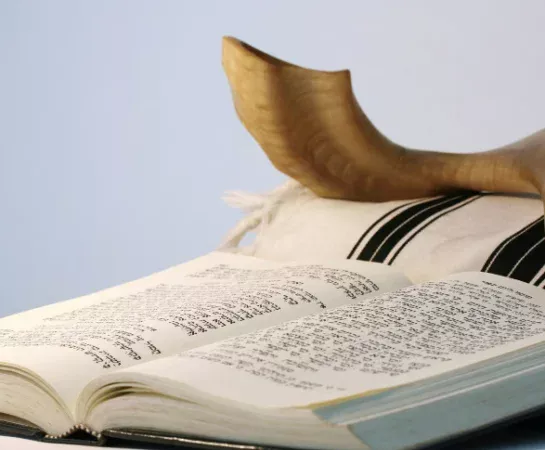
When Is Yom Kippur and Why It Always Falls 10 Days After Rosh Hashanah
Yom Kippur is the tenth day of Tishrei, and Rosh Hashanah is the first, so the ten-day gap between them looks like simple arithmetic. It isn't. The Hebrew calendar has a set of centuries-old rules that quietly forbid Rosh Hashanah from landing on three specific

When Does a Day Actually Begin? Midnight, Sunrise, and Sunset Across Cultures
Hebcal, the widely used Jewish calendar service, lists Saturday, December 5, 2026 as 25 Kislev 5787, the first day of Hanukkah. The first Hanukkah candle is lit the evening before, on Friday, December 4. This is not an error. The Hebrew date changes at sunset,

The Hour That Happens Twice: What Actually Occurs at 1:30 AM When Clocks Fall Back
At 1:59:59 a.m. on Sunday, November 1, 2026, clocks in New York will not tick over to 2:00. They will jump back to 1:00:00 a.m., and the next 60 minutes will replay. Every time from 1:00 to 1:59 happens twice that night, once on Eastern

Why the International Space Station Runs on UTC Instead of Local Time
Astronauts aboard the International Space Station see the sun rise and set 16 times in a 24-hour period, once every 90 to 93 minutes, as the station circles Earth at roughly 28,000 kilometers per hour. No conventional time zone survives contact with that kind of

Standard Time vs Daylight Time: What’s the Actual Difference
Most people assume "Standard Time" is the normal, default setting and "Daylight Time" is some separate seasonal overlay that temporarily replaces it. That mental model is backwards in a way that federal law makes explicit, and once you see the actual legal language, the whole
Time Tools
Quick access to timers, stopwatch, world clock and time zone tools.
Time Guides
Read useful guides about time zones, calendars, finance and astronomy.


