Major Airports in Cayman Islands
- Owen Roberts International Airport (GCM) - 19:43:46
Daylight saving time in Cayman Islands
Cayman Islands has 1 listed IANA time zones. None of them observe daylight saving time in 2026. The UTC offset remains stable throughout the year.
Best Time to Call Cayman Islands
Business hours in Cayman Islands (9 AM–5 PM local time) fall at these local times elsewhere:
- Beijing: 10:00 PM – 6:00 AM (next day) ( Outside normal hours)
- Paris: 4:00 PM – 12:00 AM (next day) ( Partial overlap)
- Toronto: 10:00 AM – 6:00 PM ( Convenient)
- Seoul: 11:00 PM – 7:00 AM (next day) ( Outside normal hours)
- Mexico City: 8:00 AM – 4:00 PM ( Convenient)
- Cairo: 5:00 PM – 1:00 AM (next day) ( Partial overlap)
- Bangkok: 9:00 PM – 5:00 AM (next day) ( Partial overlap)
Times shown reflect current UTC offsets and may shift by up to an hour around daylight saving transitions.
Time Difference from Cayman Islands
Compare time in Cayman Islands with other countries.
Most Popular Cities in Cayman Islands
Holidays in Cayman Islands
Official national public holidays. Regional and religious observances may vary by area.
About Time in Cayman Islands
Three in the Morning, Eight Lives Lost, and a Legend That Grew From It
Shortly after 3am on 8 February 1794, the Royal Navy frigate HMS Convert, escorting a convoy of merchant ships from Jamaica bound for Britain and the United States, ran aground on the treacherous eastern reefs of Grand Cayman after the captains mistook the low silhouette of the island for that of Jamaica in the darkness. Nine more vessels from the convoy wrecked alongside it within the same disastrous night. Residents of what was then a small, isolated settlement of fewer than a thousand people put out in small boats through rough seas to rescue the survivors, an effort that saved the overwhelming majority of the roughly four hundred people aboard the stricken ships, though accounts of the exact death toll vary between six and ten.
What followed the rescue, in popular memory, grew considerably larger than the documented event itself. For generations, Caymanians told the story that a son of King George III had been among those saved that night, and that the grateful king had personally decreed the islands forever free of both taxation and military conscription in gratitude, a legend still repeated to tourists visiting the memorial at East End today. Margaret Leshikar-Denton, former director of the Cayman Islands National Museum, spent decades researching the wreck for a definitive account and found no documentary evidence for any royal passenger or any royal tax decree at all, though she considered it plausible the islands may have received some informal exemption from military conscription. The rescue itself was real, and remains a genuine point of local pride; the tax-free legend built on top of it, however cherished, appears to be exactly that, a legend.
A Fishery Governed by the Turtle's Own Calendar
Early Spanish sailors encountered such an abundance of green sea turtles around the islands that they gave them a name reflecting it directly: Las Tortugas. From the 1600s onward, passing ships used the islands as a provisioning stop specifically because live turtles, easily kept aboard for weeks as fresh meat, could be caught there in large numbers, and permanent Caymanian settlements grew up around turtling as both a food source and an export trade. By the early 1800s, local turtle populations around the islands themselves had already been fished down, pushing Caymanian turtlers to travel as far as the Miskito Cays off Nicaragua to keep the industry alive into the early twentieth century.
What eventually forced the industry's decline was not a change in demand but the turtles' own biological clock. Female green turtles do not nest every year, may lay several clutches when they do, and famously return to breed near the beach of their own birth only after fifteen to twenty years at sea, a reproductive rhythm too slow to withstand sustained commercial harvesting. Modern regulations now protect the remaining population directly around that cycle: legal turtle fishing in Cayman waters, tightly restricted since 2008, is closed specifically during May and November, the months bracketing the nesting season each female depends on, an attempt to let a fishery that helped found the islands' economy coexist, however narrowly, with the reproductive timetable of the animal it was built on.
Thirty-Seven Hours That Split Caymanian History in Two
Hurricane Ivan reached Grand Cayman on the afternoon of Saturday, 11 September 2004, and did not fully release the island until Monday morning, thirty-seven continuous hours of tropical-storm-force wind, including a seven-hour stretch of sustained winds above 100 miles per hour beginning in the early hours of 12 September as the storm, briefly a Category 5, passed within about thirty miles of the coast. A storm surge of roughly ten feet swept across large parts of the low-lying island, and by the time the wind finally dropped, somewhere between eighty-one and ninety-five percent of all structures on Grand Cayman had been damaged, a substantial share of them left completely uninhabitable.
The practical aftermath extended for months rather than days: a dusk-to-dawn curfew imposed as the storm cleared remained in force, gradually eased but not fully lifted, until 9 December, nearly three months after landfall, while residents went without reliable power, water or sewer service for much of that stretch. The event left such a clear line through daily life on the islands that Caymanians still commonly describe the years around it as either Before Ivan or After Ivan, an informal but genuinely functional way of dating personal and civic history that, two decades on, remains in everyday use.
Frequently Asked Questions
How many time zones does Cayman Islands have?
One. The whole of Cayman Islands follows America/Cayman, so every city shows the same local time as the capital, George Town.
Is Cayman Islands ahead of or behind GMT?
Cayman Islands is currently 5 hours behind GMT (UTC-5).
Does Cayman Islands use summer time?
No. Cayman Islands does not observe daylight saving time, so its clocks stay at UTC-5 all year. Its time difference with countries that do change their clocks still shifts by an hour in spring and autumn.
How many public holidays does Cayman Islands have in 2026?
Cayman Islands has 13 national public holidays in 2026, when banks and government offices are usually closed. Some regions may also have their own local holidays.
How do I dial a phone number in Cayman Islands from abroad?
From a mobile phone, type +1-345 and then the 10-digit number, without the 1 that is dialed first for long-distance calls inside the country. From a landline in the US or Canada, dial 1 and the 10-digit number; from most of Europe, dial 00 1-345 followed by the number.
What language is spoken in Cayman Islands?
The main language of Cayman Islands is English.
Beyond the Clock

When Does the Fed Announce Interest Rates: Exact Time and Why It Moves Markets
The Federal Reserve announces its interest rate decision at 2:00 p.m. Eastern Time on the final day of each scheduled Federal Open Market Committee (FOMC) meeting, and the Chair's press conference follows at 2:30 p.m. Those times have been fixed since March 2013. The rest

Why Bitcoin ETFs Close at 4 PM While Bitcoin Never Stops Trading
Bitcoin trades every minute of the year. The ETFs that hold it do not. A US spot bitcoin ETF follows a stock exchange schedule: regular trading from 9:30 AM to 4:00 PM ET on weekdays, thinner extended sessions on either side, and no trading at

What Is the Closing Auction and Why the Last 10 Minutes Move the Market
The 4:00 p.m. bell on the New York Stock Exchange does not simply end the trading day. It triggers the closing auction, a one-time match of buyers and sellers at a single price that becomes each stock's official close, and which NYSE describes as the
Jobs Report Day: Why the First Friday of the Month Moves Every Market at Once
Once a month, at 8:30 a.m. Eastern, currency pairs jump, bond yields snap, and equity futures swing before most traders have settled at their desks. Everyone calls it "the first Friday of the month." Almost everyone is wrong about why it lands there. The date

The Hour That Happens Twice: What Actually Occurs at 1:30 AM When Clocks Fall Back
At 1:59:59 a.m. on Sunday, November 1, 2026, clocks in New York will not tick over to 2:00. They will jump back to 1:00:00 a.m., and the next 60 minutes will replay. Every time from 1:00 to 1:59 happens twice that night, once on Eastern
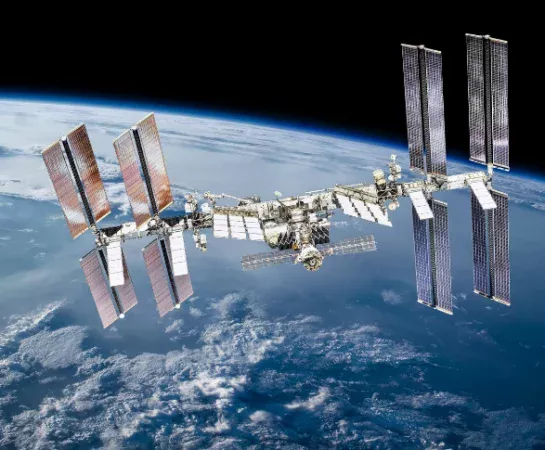
Why the International Space Station Runs on UTC Instead of Local Time
Astronauts aboard the International Space Station see the sun rise and set 16 times in a 24-hour period, once every 90 to 93 minutes, as the station circles Earth at roughly 28,000 kilometers per hour. No conventional time zone survives contact with that kind of
Standard Time vs Daylight Time: What’s the Actual Difference
Most people assume "Standard Time" is the normal, default setting and "Daylight Time" is some separate seasonal overlay that temporarily replaces it. That mental model is backwards in a way that federal law makes explicit, and once you see the actual legal language, the whole

Why the Hour Was Originally a Different Length in Summer and Winter
For most of recorded history, an hour was not a fixed amount of time. It was a fraction, one twelfth of however long daylight happened to last that day. In June that fraction stretched past 80 modern minutes. In December it shrank to barely 40.
Time Tools
Quick access to timers, stopwatch, world clock and time zone tools.
Time Guides
Read useful guides about time zones, calendars, finance and astronomy.


