Major Airports in Peru
- Alejandro Velasco Astete International Airport (CUZ) - 23:45:40
- Cap FAP David Abenzur Rengifo International Airport (PCL) - 23:45:40
- Capitán FAP Carlos Martínez de Pinillos International Airport (TRU) - 23:45:40
- Capitán FAP José A. Quiñones González International Airport (CIX) - 23:45:40
- Coronel FAP Francisco Secada Vignetta International Airport (IQT) - 23:45:40
- Inca Manco Capac International Airport (JUL) - 23:45:40
- Jorge Chávez International Airport (LIM) - 23:45:40
- Rodríguez Ballón International Airport (AQP) - 23:45:40
Daylight saving time in Peru
Peru has 1 listed IANA time zones. None of them observe daylight saving time in 2026. The UTC offset remains stable throughout the year.
Best Time to Call Peru
Business hours in Peru (9 AM–5 PM local time) fall at these local times elsewhere:
- Beijing: 10:00 PM – 6:00 AM (next day) ( Outside normal hours)
- Paris: 4:00 PM – 12:00 AM (next day) ( Partial overlap)
- Toronto: 10:00 AM – 6:00 PM ( Convenient)
- Seoul: 11:00 PM – 7:00 AM (next day) ( Outside normal hours)
- Mexico City: 8:00 AM – 4:00 PM ( Convenient)
- Cairo: 5:00 PM – 1:00 AM (next day) ( Partial overlap)
- Bangkok: 9:00 PM – 5:00 AM (next day) ( Partial overlap)
Times shown reflect current UTC offsets and may shift by up to an hour around daylight saving transitions.
Time Difference from Peru
Compare time in Peru with other countries.
Most Popular Cities in Peru
Holidays in Peru
Official national public holidays. Regional and religious observances may vary by area.
About Time in Peru
Cusco Used the Horizon as an Agricultural Calendar
In the Inca capital, knowing the season was not reduced to naming a month. The position of the Sun against mountains and artificial horizon markers around Cusco helped determine when important parts of the agricultural and ritual year had arrived.
Early colonial descriptions refer to pillars or markers on the hills surrounding the city. Observers watched where the Sun rose or set relative to them. Some marker groups were associated with the beginning of the dry season, while others were connected with planting time.
The principle is straightforward. The point where the Sun rises and sets shifts along the horizon through the year, reaching its most extreme positions near the solstices. A fixed feature on a distant ridge can therefore act as a seasonal reference without requiring a mechanical clock.
This astronomical system was tied to the much larger ceque organization of Cusco. Historical and archaeological research identifies at least 328 sacred places, or huacas, arranged conceptually along 42 lines radiating from the city. Scholars have shown that the ceque system encoded social, spatial and temporal divisions simultaneously.
That does not mean every huaca functioned as a calendar marker or that one universally accepted reconstruction of an Inca calendar exists. Researchers have disagreed for decades over exactly how astronomical observations, ritual sequences, lunar reckoning and the ceque system fitted together.
The stronger conclusion is more interesting than a simplified twelve-month chart. Inca timekeeping was embedded in the landscape. Mountains, shrines, horizon positions and agricultural conditions could all help tell people where they were in the annual cycle.
Local observation remained essential because agricultural timing varied with altitude and microclimate. A planting instruction from Cusco could not replace knowledge of whether soil moisture, frost risk and seasonal conditions at a particular field were actually suitable. Time was astronomical at the centre but environmental in the field.
Nasca's Puquios Turned Underground Water into a Year-Round Resource
On Peru's extremely dry south coast, the problem was not simply how much rain fell but how long water remained available after rain had disappeared from the surface. The puquios of Nasca solved that problem by collecting groundwater through subterranean filtration galleries and carrying it toward settlements and fields.
Archaeological research documents 36 functioning puquios in the Nasca, Taruga and Las Trancas valleys, while the historical system may once have included more than fifty.
The galleries tap subsurface water moving through alluvial deposits. Because much of the flow travels underground, evaporation is reduced compared with exposed canals and reservoirs. Water can therefore remain usable during parts of the year when surface channels are dry.
The chronology of the system is itself important. Archaeological settlement surveys indicate that the puquios were not yet present during Early Nasca phases. They were certainly functioning by the time the region came under Inca control in the late fifteenth century, and researchers place their initial construction most plausibly in later Nasca periods.
Many puquios include vertical access shafts, sometimes arranged in striking spirals. These openings were not clocks or astronomical devices. They allowed access for construction, cleaning and maintenance, which was crucial because a groundwater system can survive for centuries only if sediment and structural failures are repeatedly managed.
The time advantage of a puquio is therefore hydrological rather than calendrical. A rainstorm may last hours and a seasonal river may disappear for months, but groundwater moves much more slowly through sediments. Engineering allowed Nasca communities to exploit that delayed movement.
Some of the same galleries continue to carry water today. Their survival turns ancient infrastructure into a very long-running water system: constructed centuries ago, maintained generation after generation and still converting groundwater travel time into usable irrigation.
At 15:23:29, Forty-Five Seconds of Shaking Released a Mountain
On 31 May 1970, a major earthquake struck off north-central Peru at 15:23:29 local time. Modern catalogs place its magnitude around 7.9. Strong shaking lasted roughly forty-five seconds.
The most destructive sequence began high on Huascarán. Earthquake shaking destabilized an enormous mass of rock, ice, snow and soil on the north peak. USGS investigators estimated the resulting debris avalanche at approximately 50 to 100 million cubic metres.
It travelled about 14.5 kilometres from its source toward Yungay and Ranrahirca. The estimated average speed was extraordinary, roughly 280 to 335 kilometres per hour.
At those speeds, fourteen and a half kilometres can be crossed in only a few minutes. Terrain did little to stop the flow. Investigators documented the avalanche overriding topographic obstacles up to about 140 metres high, while some large boulders were thrown far beyond the main deposit.
The sequence did not end at Yungay. Muddy water generated by the avalanche continued down the Río Santa for approximately 160 kilometres toward the Pacific, damaging farms, transport routes and hydroelectric infrastructure.
This makes the disaster a particularly stark example of cascading time. The earthquake source operated over seconds. Slope failure accelerated into a high-speed avalanche over minutes. Flood and sediment effects travelled much farther downstream afterward. Reconstruction then occupied years.
The precise earthquake timestamp is scientifically useful because seismic arrival times recorded around the world allow researchers to reconstruct the origin and rupture. Yet for people below Huascarán, the meaningful interval was even harsher: only minutes separated the first shaking from the arrival of a mass moving at highway speeds many times over.
Peruvian Anchoveta Has Two Spawning Peaks, but El Niño Can Rewrite Them
The Peruvian anchoveta does not reproduce according to one short annual spawning season. Long-term observations by the Instituto del Mar del Perú show reproductive activity extending across much of the year, with especially strong seasonal peaks.
Historical data from Chimbote and Callao for 1961-1968 found sexual activity extending approximately from August through March. Two principal spawning peaks appeared, one around September and another around February.
Farther south, around Ilo and adjacent waters, the seasonal pattern started somewhat earlier, broadly from July through February. Even within one national fishery, reproduction therefore followed different local schedules.
The timing matters because management cannot treat all months equally. When a high proportion of adults are spawning, fishing pressure affects not only current biomass but the reproductive process producing the next generation. Modern monitoring therefore tracks gonadal maturity and spawning indicators continuously before authorities set or adjust fishing seasons.
El Niño can alter this biological clock sharply. IMARPE analysis of the 1997-1998 event found that anchoveta experienced a shorter spawning season, a delayed spawning maximum and reduced partial fecundity compared with normal conditions.
The 1982-1983 El Niño produced an even more dramatic signal. A long-term review of spawning between 1966 and 1999 found very high spawning indices during cool conditions in 1966, while winter spawning in 1983 was effectively absent in the analyzed record.
The fish therefore respond not to the printed month but to ocean structure. Temperature, upwelling, food availability and variability in sea conditions alter when reproduction is advantageous.
That makes the anchoveta calendar unusually valuable as an environmental indicator. September can be the normal peak in one year and a biologically poor spawning period in another if the Humboldt Current system has shifted enough.
Peruvian Seabirds Time Their Chicks for the Months When Anchoveta Becomes Easier to Find
The same marine calendar extends upward into Peru's seabird colonies. Guanay cormorants, Peruvian boobies and Peruvian pelicans depend heavily on anchoveta, yet their main breeding activity does not simply begin when prey is most abundant.
Long-term research found that these species commonly initiate breeding during austral spring, when anchoveta availability is relatively low. The timing initially appears counterintuitive.
The advantage comes later. Eggs require incubation, chicks need weeks of parental feeding, and young birds eventually become independent. By starting reproduction before the strongest prey period, parents can align the most food-demanding later stages with increased anchoveta availability during summer.
This makes breeding a forecast rather than a reaction. A bird beginning a nest today is effectively committing to environmental conditions that will matter weeks or months later.
The strategy is not equally flexible among species. Research covering long-term changes in the Northern Humboldt Current found that Guanay cormorants shifted breeding more strongly when anchoveta abundance was poor. During the low-anchoveta regime from 1977 to 1990, some breeding shifted from spring toward winter, and reproduction could be skipped in especially unfavorable conditions.
Peruvian boobies were less flexible, maintaining a more consistent spring onset. Pelicans occupied an intermediate position, retaining the seasonal onset but sometimes foregoing breeding when conditions were poor.
A colony therefore acts as another oceanographic clock. The date when courtship, egg laying and chick rearing begin contains information about food conditions, but different species adjust that clock at different speeds.
Decades of observations are what make the pattern visible. One nesting season looks like bird behavior. Fifty years of nesting dates become a record of how an entire marine ecosystem has changed through time.
Lima Has Used UTC-4 in Summer, but the Experiments Kept Disappearing
Modern Peru uses UTC-5 throughout the year, but its twentieth-century time-zone history contains several short attempts to advance the national clock by one hour.
IANA historical data reconstruct Lima local mean time at approximately UTC-5:08:12 before the adoption of a round standard offset. By 1908, the capital was using UTC-5, eliminating the remaining longitude-based difference.
Seasonal clock changing first appears in the modern reconstruction in 1938. At the beginning of that year, clocks advanced by one hour to UTC-4 and returned to UTC-5 on 1 April.
A second sequence began later in 1938, with the clock again advanced during the southern summer. Seasonal changes continued into 1940 before the country returned to a stable UTC-5 regime.
The idea reappeared decades later. IANA records summer-time experiments in 1986-1987 and again in 1990. In each case, the advanced clock moved Peru temporarily from UTC-5 to UTC-4 before standard time returned around the beginning of April.
Historical reconstruction of some of these twentieth-century transitions is imperfect. The IANA maintainers explicitly note ambiguities in older sources, particularly around individual years, which is why exact pre-digital transition records should not be treated with the same confidence as modern time-zone rules.
The pattern itself is clear: Peru repeatedly tested an extra summer hour but never turned it into a durable annual system.
Today the absence of daylight saving makes civil time comparatively simple. Yet that simplicity is the result of abandoning several experiments rather than of a clock history in which UTC-5 was never challenged.
Peruvian Labour Law Turns 22:00 into a Legal Boundary
Peru's labour rules give the night an exact legal beginning and end. Official Ministry of Labour guidance defines night work as work performed between 22:00 and 06:00.
The boundary changes the legal treatment of the same task. Work completed at 21:59 belongs to the daytime regime; the same work performed two minutes later falls inside the statutory night period.
The ordinary constitutional limit remains eight hours per day or forty-eight hours per week. Employers can organize working time in different ways, but the average and maximum limits still operate within the applicable labour framework.
Night work also carries a wage rule. A worker whose schedule falls within the legally defined night period cannot receive less than the minimum remuneration applicable to night work, calculated with the statutory surcharge over the general minimum wage.
In 2026, the congressional labour committee approved a proposal to regulate the night-work surcharge more explicitly and reaffirmed 22:00 to 06:00 as the national night interval for the proposed regime. That proposal is part of the legislative process rather than a reason to treat every new provision as already in force.
The important time principle predates that proposal: Peruvian labour law does not define night by sunset. Sunset changes by location and season; the legal night begins at the same clock reading nationwide.
This is a useful contrast with older Andean time systems. Inca agricultural observation depended on where the Sun actually appeared on the horizon. Modern labour regulation deliberately ignores that movement and creates a fixed eight-hour legal night that begins every day at 22:00.
Frequently Asked Questions
How many time zones does Peru have?
One. The whole of Peru follows America/Lima, so every city shows the same local time as the capital, Lima.
Is Peru ahead of or behind GMT?
Peru is currently 5 hours behind GMT (UTC-5).
Does Peru use summer time?
No. Peru does not observe daylight saving time, so its clocks stay at UTC-5 all year. Its time difference with countries that do change their clocks still shifts by an hour in spring and autumn.
How many public holidays does Peru have in 2026?
Peru has 17 national public holidays in 2026, when banks and government offices are usually closed. Some regions may also have their own local holidays.
How do I dial a phone number in Peru from abroad?
From a mobile phone, type +51 and then the local number without the leading 0 used for domestic calls, if it has one. From a landline, replace the plus sign with your exit code: 011 from the US and Canada, or 00 from most of Europe, for example 00 51 followed by the number.
What language is spoken in Peru?
The main languages of Peru are Spanish, Quechua and Aymara.
Beyond the Clock

Why Europe Still Changes Its Clocks Despite Voting to Stop
On Sunday, October 25, 2026, clocks across the European Union will go back one hour, exactly as they have every autumn since the 1980s. That is seven and a half years after the European Parliament voted to end seasonal clock changes by 2021. Many Europeans

When Do the Clocks Change in 2026: US, UK, and EU Dates
The clocks fall back twice this autumn on the two sides of the Atlantic, one week apart. The United Kingdom and every European Union country end summer time on Sunday, October 25, 2026. The United States and most of Canada end daylight saving time on

What Time Zone Is Mexico In and Why It Stopped Changing Its Clocks
Mexico uses four time zones, and since October 30, 2022, most of the country keeps the same time all year. Mexico City, Guadalajara and Monterrey stay at UTC−6 in January and in July. Cancún stays at UTC−5, Los Cabos and Mazatlán at UTC−7. The only
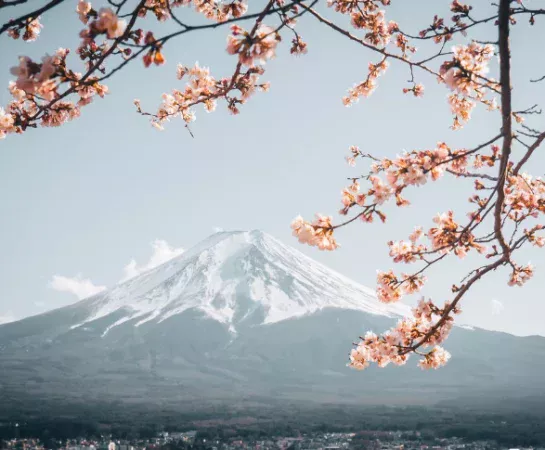
Why Japan Never Adopted Daylight Saving Time
The premise behind that headline needs a small correction before the story even starts. Japan did try daylight saving time, for four full years, complete with clocks moving forward and back on a fixed schedule. What Japan never did was choose it. The distinction between

Why the Earliest Sunset Comes Before the Winter Solstice
In New York, the Sun sets earliest on Monday, December 7, 2026, at about 4:28 PM. The shortest day comes two weeks later. The solstice falls at 20:50 UTC on December 21 (3:50 PM EST), and on that day New York gets roughly 9 hours

Total Solar Eclipse on August 2, 2027: Where, When, and Why It Lasts So Long
On Monday, August 2, 2027, the Moon's shadow will cross southern Spain, North Africa and the Arabian Peninsula, producing the second-longest total solar eclipse of the 21st century. At its maximum, in southern Egypt near Luxor, the Sun will be completely covered for about 6
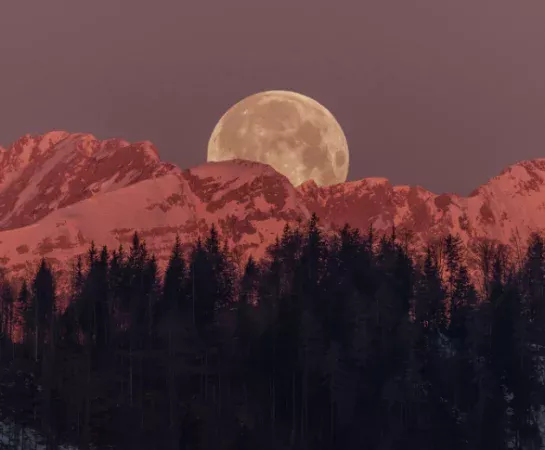
What Is a Supermoon and When Is the Next One
Every time a supermoon rises, the same statistic gets repeated: 14% bigger, 30% brighter. It's in almost every news segment and nearly every listicle, and it's also a comparison almost nobody in the audience will ever actually witness, because it measures the single closest possible
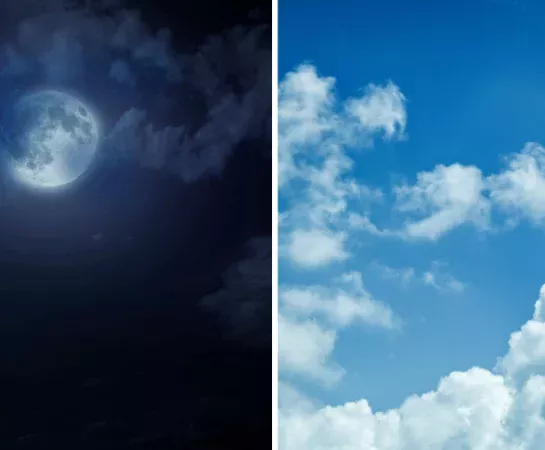
Why the Sky Is Blue During the Day and Black at Night
Sunlight is white. Air is, as far as anyone can tell by looking through a window, colorless. And yet every clear afternoon the same 400,000-kilometer column of gas above your head reads as a specific, saturated blue, then goes black within an hour of sunset.
Time Tools
Quick access to timers, stopwatch, world clock and time zone tools.
Time Guides
Read useful guides about time zones, calendars, finance and astronomy.


