Major Airports in Bahamas
- Grand Bahama International Airport (FPO) - 19:04:23
- Lynden Pindling International Airport (NAS) - 19:04:23
- San Salvador International Airport (ZSA) - 19:04:23
Daylight saving time changes in Bahamas
Bahamas has 1 listed IANA time zones. 1 of them observe daylight saving time changes in 2026.
Next change: November 1, 2026
Clock moves back from 02:00 to 01:00 local time.
Best Time to Call Bahamas
Business hours in Bahamas (9 AM–5 PM local time) fall at these local times elsewhere:
- Beijing: 9:00 PM – 5:00 AM (next day) ( Partial overlap)
- Paris: 3:00 PM – 11:00 PM ( Partial overlap)
- Toronto: 9:00 AM – 5:00 PM ( Convenient)
- Seoul: 10:00 PM – 6:00 AM (next day) ( Outside normal hours)
- Mexico City: 7:00 AM – 3:00 PM ( Partial overlap)
- Cairo: 4:00 PM – 12:00 AM (next day) ( Partial overlap)
- Bangkok: 8:00 PM – 4:00 AM (next day) ( Partial overlap)
Times shown reflect current UTC offsets and may shift by up to an hour around daylight saving transitions.
Time Difference from Bahamas
Compare time in Bahamas with other countries.
Holidays in Bahamas
Official national public holidays. Regional and religious observances may vary by area.
About Time in Bahamas
The Lighthouse at Hope Town Is Still a Mechanical Clock at Sea
Elbow Reef Lighthouse on Abaco survives as an operating piece of nineteenth-century timekeeping machinery. First lit in 1863, it remains manually operated rather than converted to a fully automated electric beacon. The light is produced with kerosene, while a keeper supplies the energy that turns the optical mechanism.
The routine is exacting. The keeper climbs the tower and winds the mechanism every two hours, making 427 turns of the hand winch. The stored mechanical energy keeps the large first-order Fresnel lens rotating at the required speed. According to the Bahamas Ministry of Tourism, the resulting beam produces its identifying sequence every fifteen seconds.
The timing is not ornamental. Before electronic navigation, a lighthouse could be identified at night by the rhythm of its flashes as well as by its position. IALA records the characteristic of Elbow Reef as a group of five white flashes every fifteen seconds. A mariner who could not distinguish the tower itself could recognize the station from that repeating pattern.
The surviving mechanism is exceptionally rare. The Elbow Reef Lighthouse Society, working with the Bahamas Port Department, describes it as the only active manned lightstation of its type still operating with its original combination of hand-wound rotation and kerosene illumination. Hurricanes, automation and the disappearance of replacement parts eliminated similar systems elsewhere, but Hope Town retained the human routine required to keep its optical clock running through the night.
Junkanoo Owns the Hours After Midnight
Junkanoo does not simply occupy two dates on the Bahamian calendar. Its principal Nassau parades belong to the unusual interval after one civil day has ended and before ordinary morning activity begins. On Boxing Day and New Year's Day, groups enter Bay Street in the hours after midnight and continue through the night toward sunrise.
The timing reaches back to the festival's history under slavery. UNESCO's inscription of Junkanoo on the Representative List of the Intangible Cultural Heritage of Humanity records that enslaved Africans used a three-day Christmas holiday to recreate festivals and develop the tradition that later became Junkanoo. The exact origin of the name remains disputed, so the stronger historical evidence concerns the Christmas holiday period and the development of the masquerade rather than any single origin story for the word.
The modern parade has converted that inherited holiday time into an intensely regulated competition. UNESCO's documentation lists timekeepers alongside judges, marshals, supervisors and other officials involved in the event. Groups can spend most of a year constructing costumes, composing music and rehearsing for a performance measured over a few hours on Bay Street.
The Bahamas Postal Service described the post-midnight rhythm particularly clearly for the return of the major parade in 2022: spectators were advised that although the celebration belongs to Boxing Day, the main Nassau rush begins at about 2 a.m. and continues until a few hours after sunrise. Anyone wanting to see the beginning therefore has to arrive downtown on Christmas night. The same inversion occurs at New Year, when months of work are released into the first hours of 1 January.
Nassau's 1929 Hurricane Came With a Four-Hour False Reprieve
The hurricane that struck Nassau in September 1929 left a remarkable contemporary chronology. A report preserved in the U.S. Monthly Weather Review states that strong westerly gales had already been affecting Nassau for about twenty-four hours when the most severe conditions arrived at approximately 1:30 p.m. on Wednesday, 25 September.
The first violent phase lasted about seven hours. Water rose high enough to flood roads and damage the sea wall, houses were damaged or unroofed, and shipping in the harbor suffered heavily. Then the center of the hurricane moved over Nassau and the wind dropped into a lull lasting approximately four hours.
To people experiencing the storm without satellite imagery or modern radar, such a long calm could easily resemble the end of the hurricane. It was not. Around midnight, the wind resumed from the southeast and east and was reported to be even stronger. Severe conditions continued throughout Thursday, 26 September, and winds were still strong as the storm finally abated on Friday.
The sequence is one of the clearest historical examples of why the eye of a hurricane can produce a dangerous interruption rather than an ending: twenty-four hours of preliminary gale, roughly seven hours of severe wind, about four hours of calm, then another violent phase extending through the following day. The contemporary report also records a minimum barometer reading of 27.64 inches during the storm and extensive losses to buildings and vessels.
Dorian Turned Forward Motion Almost to Zero
Ninety years after the 1929 hurricane, modern instruments documented an even more extreme timing problem. Hurricane Dorian made landfall on Elbow Cay, Great Abaco, at 16:40 UTC on 1 September 2019 with estimated sustained winds of 160 knots. The National Hurricane Center identifies it as the strongest hurricane in modern records to make landfall in The Bahamas.
Instead of passing rapidly across the islands, Dorian lost the atmospheric steering currents that had been carrying it west. Its eye reached Grand Bahama near 02:15 UTC on 2 September with winds near 155 knots, then slowed further. By the evening of 2 September, NHC advisories described the hurricane as stationary, with the center barely moving just north of Grand Bahama.
The result was not simply a stronger storm but a much longer exposure. NHC's final report states that Great Abaco experienced at least tropical-storm-force winds for about three days. Grand Bahama endured the core of the hurricane while its forward movement fell almost to zero, prolonging destructive winds, storm surge and rainfall over essentially the same locations.
The country's Disaster Risk Management Authority describes Dorian as stalling near Grand Bahama for at least twenty-four hours. That duration is central to understanding the disaster. A hurricane moving at ordinary forward speed may expose one place to its eyewall for a limited period; Dorian repeatedly subjected the northern Bahamas to severe conditions because the storm itself nearly stopped travelling.
A Cable Completed in 1892 Collapsed the Communication Time to Florida
Before submarine telegraphy, sending information between Nassau and the outside world depended heavily on ships. The Bahamas-Florida cable changed that relationship. A surviving section in the Science Museum Group collection identifies the line as a submarine telegraph cable commissioned by the colonial government and laid between Nassau and Jupiter, Florida.
The museum dates completion of the cable to 4 February 1892. The physical specimen itself carries a plate identifying it as the Bahamas-Florida Cable of 1891-92, which helps explain why Bahamian government historical tables sometimes list the first telegraph connection under 1891 while the engineering record gives completion in early 1892.
The difference was fundamental for information time. Messages that previously had to travel with a vessel could be converted into electrical signals and transmitted through the submarine line. Weather information, commercial instructions, government communications and news could cross the sea without waiting for the next ship to make the passage.
The cable belongs to the same late nineteenth-century transformation that was changing ports around the Atlantic. Steamships made voyage schedules more predictable, telegraph networks separated communication from physical transport, and increasingly precise clocks made it possible to coordinate offices and connections. For Nassau, the cable created a direct electrical link with Florida decades before radio became an ordinary means of long-distance communication.
Independence Was Written Into Law for 10 July and Marked at Midnight
The Bahamas Independence Order 1973 was made at Windsor Castle on 20 June and specified 10 July 1973 as the appointed day on which the new constitutional arrangements would come into operation. The date therefore had a legal definition before it became an annual national celebration.
The public transition was marked at midnight. Government commemorations of the fiftieth anniversary in 2023 explicitly recalled the moment fifty years earlier when the Bahamian flag was raised as the country became independent. The United States recognized the new state and established its embassy in Nassau on 10 July, providing an independent diplomatic marker for the same constitutional date.
The national calendar later accumulated other dates representing separate stages of political development. On 10 January 1967 a general election produced the change remembered as Majority Rule, and legislation added 10 January to the official list of public holidays in 2013. Independence Day remains fixed on 10 July, while Majority Rule Day is fixed on 10 January.
The Public Holidays Act also preserves older rhythms elsewhere in the year. Emancipation Day is observed on the first Monday in August rather than permanently on 1 August, even though the abolition process is historically associated with 1 August. Junkanoo follows Boxing Day and New Year's Day, while Easter holidays move with the Christian calendar. The Bahamian public year consequently combines fixed anniversaries, weekday-based holidays and movable religious dates rather than following one uniform rule.
Frequently Asked Questions
How many time zones does Bahamas have?
One. The whole of Bahamas follows America/Nassau, so every city shows the same local time as the capital, Nassau.
Is Bahamas ahead of or behind GMT?
Bahamas is currently 4 hours behind GMT (UTC-4).
Does Bahamas use summer time?
Yes. Nassau uses UTC-5 (EST) in standard time and UTC-4 (EDT) during daylight saving time, and is currently on summer time.
How many public holidays does Bahamas have in 2026?
Bahamas has 13 national public holidays in 2026, when banks and government offices are usually closed. Some regions may also have their own local holidays.
How do I dial a phone number in Bahamas from abroad?
From a mobile phone, type +1-242 and then the 10-digit number, without the 1 that is dialed first for long-distance calls inside the country. From a landline in the US or Canada, dial 1 and the 10-digit number; from most of Europe, dial 00 1-242 followed by the number.
What language is spoken in Bahamas?
The main language of Bahamas is English.
Beyond the Clock

IST, CST, BST: Why the Same Time Zone Abbreviation Means Different Things
A meeting invite that says "10:00 IST" looks precise. It isn't. IST is India Standard Time (UTC+05:30), Irish Standard Time (UTC+01:00) and Israel Standard Time (UTC+02:00). In July, the first two are four and a half hours apart. CST can mean Chicago or Shanghai, 14

Why Nevada and Utah Sit in Different Time Zones Despite Sharing a Border
Nevada runs on Pacific Time. Utah runs on Mountain Time. The two states share a long, mostly straight desert border, yet anyone driving east from Ely, Nevada, toward Delta, Utah, loses an hour the moment they cross the line. This is not an accident of
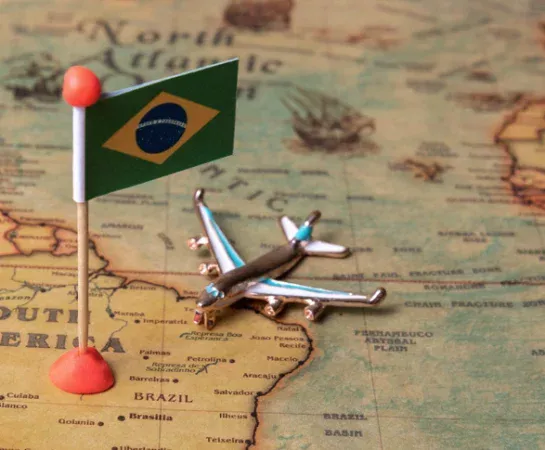
Why Brazil Has Four Time Zones Despite Its Massive Size
Brazil covers 8,514,877 square kilometers, the fifth largest country on Earth, and its territory stretches 4,319 kilometers from its Atlantic tip near João Pessoa to the Peruvian border, a span of roughly 39 degrees of longitude. Despite that scale, Brazil runs on only four time
What Time Zone Is Kiribati In: The Country Furthest Ahead in Time
For most of the 20th century, Kiribati wasn't ahead of anyone. Parts of it were among the last places on Earth to see each new day, not the first. That changed in 1995 through a single, deliberate act of redrawing the map, and the country

Full Moon Names by Month: Where Beaver Moon and Cold Moon Come From
The November 2026 full moon, the Beaver Moon, peaks at 9:53 AM Eastern Time on Tuesday, November 24. The December full moon, the Cold Moon, follows at 8:28 PM Eastern on Wednesday, December 23. In UTC that moment already falls on December 24, so in
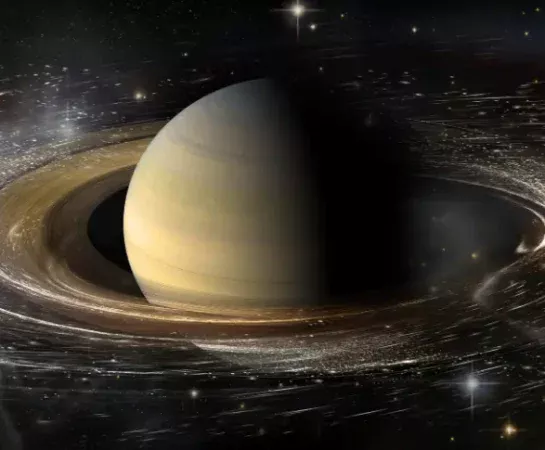
Why Saturn’s Rings Are Disappearing From View in 2025 and 2026
Saturn's rings turned edge-on to Earth on March 23, 2025, at 12:04 p.m. EDT, and for weeks the planet looked like a plain yellow ball through backyard telescopes. This is not decay or destruction. It is a geometric alignment called a ring plane crossing, and
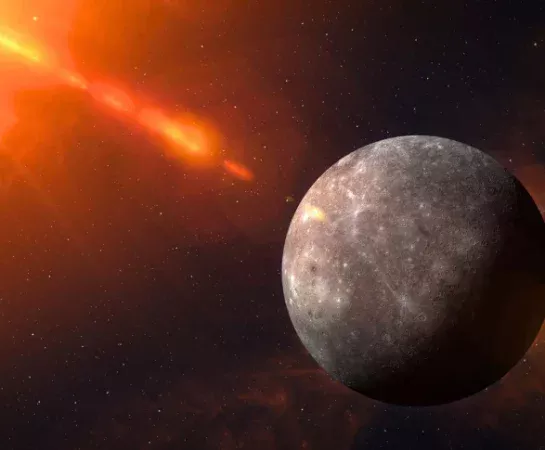
Mercury Retrograde: What’s Astronomically Real vs Astrological Myth
Mercury retrograde generates millions of searches every time it happens, and almost none of that content stops to explain what's actually occurring in space. The phenomenon itself is completely real, observable, and predictable centuries in advance. What isn't real is nearly everything attached to it

What Is Sidereal Time and How It Differs From Solar Time
Ask how long it takes Earth to spin once on its axis and the honest answer depends on what you're measuring the spin against. Measured against the sun, a full rotation takes 24 hours, the day everyone lives by. Measured against the distant stars, that
Time Tools
Quick access to timers, stopwatch, world clock and time zone tools.
Time Guides
Read useful guides about time zones, calendars, finance and astronomy.


