Major Airports in Azerbaijan
- Ganja International Airport (GNJ) - 02:47:23
- Heydar Aliyev International Airport (GYD) - 02:47:23
- Nakhchivan International Airport (NAJ) - 02:47:23
Daylight saving time in Azerbaijan
Azerbaijan has 1 listed IANA time zones. None of them observe daylight saving time in 2026. The UTC offset remains stable throughout the year.
Best Time to Call Azerbaijan
Business hours in Azerbaijan (9 AM–5 PM local time) fall at these local times elsewhere:
- Beijing: 1:00 PM – 9:00 PM ( Partial overlap)
- Paris: 7:00 AM – 3:00 PM ( Partial overlap)
- Toronto: 1:00 AM – 9:00 AM ( Outside normal hours)
- Seoul: 2:00 PM – 10:00 PM ( Partial overlap)
- Mexico City: 11:00 PM (previous day) – 7:00 AM ( Outside normal hours)
- Cairo: 8:00 AM – 4:00 PM ( Convenient)
- Bangkok: 12:00 PM – 8:00 PM ( Partial overlap)
Times shown reflect current UTC offsets and may shift by up to an hour around daylight saving transitions.
Time Difference from Azerbaijan
Compare time in Azerbaijan with other countries.
Countries in the Same Time Zone as Azerbaijan
Most Popular Cities in Azerbaijan
Holidays in Azerbaijan
Official national public holidays. Regional and religious observances may vary by area.
About Time in Azerbaijan
When Spring Stopped Moving the Clock
Azerbaijan's present-day time system looks simple on the surface. The country uses Azerbaijan Time, UTC+4, and no longer changes its clocks in spring and autumn. That stability is relatively recent. From 1997 until 2015, Azerbaijan observed daylight saving time under Cabinet Resolution No. 21. In practice, that meant the last Sunday in March pushed the clock one hour forward, and the last Sunday in October pulled it back again.
The cycle ended in March 2016, when the Cabinet of Ministers repealed the 1997 decision. Since then, local civil time has remained fixed at UTC+4 throughout the year. For ordinary life, the reform removed a twice-yearly disruption. For timekeeping history, it marked the end of a period when the country balanced inherited post-Soviet practice with a more permanent approach to civil time.
The change also altered how daily life relates to sunlight. Baku lies close to 50 degrees east longitude, so standard time at UTC+4 already keeps the legal clock reasonably close to the solar day. During the old summer-time period, the legal clock effectively moved to UTC+5. Sunrise and sunset shifted by the same mechanical hour, but the Sun itself did not move. The 2016 decision therefore did more than simplify calendars. It brought the official clock back into a steadier relationship with the country's actual longitude and daylight rhythm.
Baku Once Ran on an Offset of 3:19:24
Before standardized national time, Baku kept a much more literal kind of local time. The IANA time-zone database reconstructs the city's earliest modern civil offset as local mean time, UTC+3:19:24, until 2 May 1924. That odd-looking number is not a clerical curiosity. It is the time expression of longitude. Every degree east of Greenwich adds four minutes to local mean time, and Baku's position near 49 degrees 51 minutes east naturally produces an offset a little over three hours and nineteen minutes.
That old offset says something important about the region's historical relationship with time. In the local-mean-time era, the clock was meant to follow the sky rather than a broad political time zone. Noon was close to the moment when the Sun crossed the local meridian. Once that system was replaced by zone time, Azerbaijan entered the more modern regime of shared hours, railway-style synchronization and administrative uniformity. The gain was coordination. The loss was astronomical exactness.
The later twentieth century brought further changes. After local mean time, Baku moved to a cleaner UTC+3 standard, then into Soviet-wide systems that layered in decree time and seasonal rules. The IANA chronology shows another sequence of adjustments around the final Soviet years and the first years of independence: UTC+4 with Soviet-style seasonal rules in 1991, UTC+3 after September 1992, and then a return to UTC+4 in the mid-1990s. Read in sequence, those changes show that Azerbaijan's clock was shaped not only by geography but also by empire, energy policy and state reorganization.
There is an additional legal echo of the capital's role in national timekeeping. Azerbaijani telecommunications law uses the phrase Baku time as the unified accounting and reporting time for domestic telecommunications services. That wording is revealing. Even though the country operates one national clock, the legal vocabulary still treats the capital as the reference point.
Novruz Begins with Astronomy, Not Just Tradition
In Azerbaijan, one of the most important recurring moments of the year is not anchored to a fixed civil date at all. Novruz is celebrated as the arrival of spring, and official Azerbaijani material describes the holiday as beginning on the first day of spring, with that first day determined by the annual motion of the Sun. In other words, the underlying logic is astronomical. The holiday belongs to the equinox, not merely to a page on the calendar.
That makes Azerbaijani observance unusually time-conscious. The lead-up to Novruz is stretched across four consecutive Tuesdays, each with its own symbolic association: water, fire, earth and wind. This sequence turns the month before the equinox into a cultural countdown. Rather than treating New Year as a single midnight event detached from nature, Azerbaijani tradition builds toward it through a structured rhythm that links seasonal change with ritual time.
Older descriptions are especially striking because they show that the exact moment mattered. Historical accounts preserved on Azerbaijan's official state information portal note that in earlier practice an astrologer or learned observer identified the equinox, and ceremonial gunfire announced that the new year had arrived. That detail is more than folklore. It reveals a society in which the transition into the new year was once tied to observed celestial timing, not simply communal celebration.
Novruz customs reinforce the same logic. Bonfires, water rites, sprouting wheat, candles and the carefully arranged holiday table all mark renewal, but the structure behind them is calendrical and seasonal. Time in this case is not a neutral container. It is the subject of the festival. The holiday celebrates the exact turning of the natural year and turns astronomy into lived culture.
Pirqulu Was Chosen Only After Decades of Testing the Night Sky
Azerbaijan's most important astronomical institution did not appear in a random scenic mountain location. The site at Pirqulu, home of the Shamakhi Astrophysical Observatory, was chosen only after a long process of astroclimatic investigation. According to the observatory's official history, a permanent astronomical expedition was created in 1927 to study the observing conditions of several regions, including Kalbajar, Lachin, Shamakhy and Khizi. The goal was practical: find where the sky, atmosphere and geography would best support serious observation.
The decision took time because good astronomy depends on patient statistics, not picturesque impressions. Researchers had to judge cloudiness, transparency, stability and the number of usable nights. Their work eventually identified Pirqulu in the Shamakhy region as the most favorable location. In 1953 a decision was made to build an observing base there, and the observatory itself was formally established in 1959.
The site proved why that slow selection mattered. Pirqulu stands about 1,500 meters above sea level, around 150 kilometers from Baku, and the observatory states that the area receives roughly 190 to 200 clear nights per year. For a country not usually introduced through the history of astronomical site selection, that is a remarkable figure. It means the geography of Azerbaijan, especially on the northeastern slopes of the Greater Caucasus, offers a natural timekeeping advantage: repeated access to the night sky.
The observatory's equipment history also reflects long-term scientific ambition. The first solar telescope was installed in 1957, a 200 mm photoelectric telescope followed in 1959, and the observatory's famous two-meter telescope entered service in September 1966. The story is not simply that Azerbaijan built an observatory. It is that the country spent decades learning where time could be observed best, then committed itself to turning that answer into an institution.
AZT Is the Public Clock, but UTC(AZ) Is the Reference Behind It
Modern Azerbaijan now operates with two related but distinct layers of time. The public one is familiar: AZT, the civil time used on phones, timetables and office schedules. Beneath it stands a more technical layer, the national reference time scale UTC(AZ), maintained by the Azerbaijan Metrology Institute. That distinction is subtle but important. A time zone tells people what hour it is. A national reference scale defines how that hour is realized, measured and kept stable.
The Institute's official UTC(AZ) platform states that the country's time and frequency standard provides metrological traceability to Coordinated Universal Time through the International Bureau of Weights and Measures. It also highlights continuous broadcasting, BIPM traceability and relative frequency stability at the level of 10-13. This is the infrastructure that turns national time from a convention into a calibrated standard.
That matters far beyond laboratories. Official reference time underpins telecommunications, finance, scientific measurement and any system where tiny discrepancies accumulate into legal or technical problems. Azerbaijan therefore does not merely adopt UTC+4 as a political choice. It maintains a national realization of precise time that can be compared internationally and used domestically as an authoritative reference.
Seen together, these layers give Azerbaijan an unusually rich time story. The country moved from Baku's solar-based local mean time, through Soviet and post-Soviet adjustments, into a permanent UTC+4 civil regime. At the same time, it preserves an equinox-centered festival culture in Novruz and supports modern precision through UTC(AZ). Time in Azerbaijan is therefore not just an offset. It is a meeting point of astronomy, law, ritual and measurement.
Frequently Asked Questions
How many time zones does Azerbaijan have?
One. The whole of Azerbaijan follows Asia/Baku, so every city shows the same local time as the capital, Baku.
Is Azerbaijan ahead of or behind GMT?
Azerbaijan is currently 4 hours ahead of GMT (UTC+4).
Does Azerbaijan use summer time?
No. Azerbaijan does not observe daylight saving time, so its clocks stay at UTC+4 all year. Its time difference with countries that do change their clocks still shifts by an hour in spring and autumn.
How many public holidays does Azerbaijan have in 2026?
Azerbaijan has 25 national public holidays in 2026, when banks and government offices are usually closed. Some regions may also have their own local holidays.
How do I dial a phone number in Azerbaijan from abroad?
From a mobile phone, type +994 and then the local number without the leading 0 used for domestic calls, if it has one. From a landline, replace the plus sign with your exit code: 011 from the US and Canada, or 00 from most of Europe, for example 00 994 followed by the number.
What language is spoken in Azerbaijan?
The main languages of Azerbaijan are Azerbaijani, Russian and Armenian.
Beyond the Clock

Why the Moon’s Phases Don’t Actually Change Its Size
A thin crescent looks small enough to disappear. A full moon looks like it's swelling on the horizon. Neither impression is true. The Moon's diameter is 3,474 kilometers on every night of the month, whether it's a sliver or a full disc, and nothing in
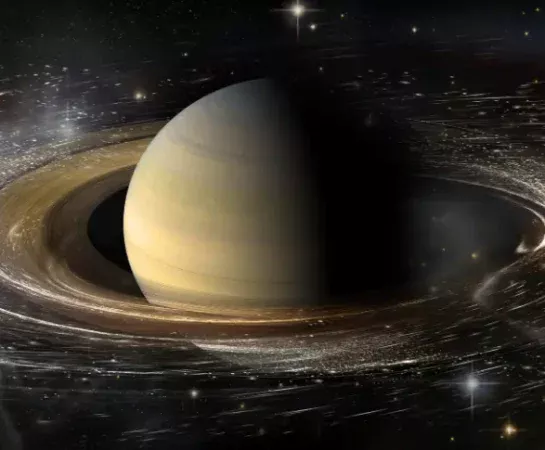
Why Saturn’s Rings Are Disappearing From View in 2025 and 2026
Saturn's rings turned edge-on to Earth on March 23, 2025, at 12:04 p.m. EDT, and for weeks the planet looked like a plain yellow ball through backyard telescopes. This is not decay or destruction. It is a geometric alignment called a ring plane crossing, and
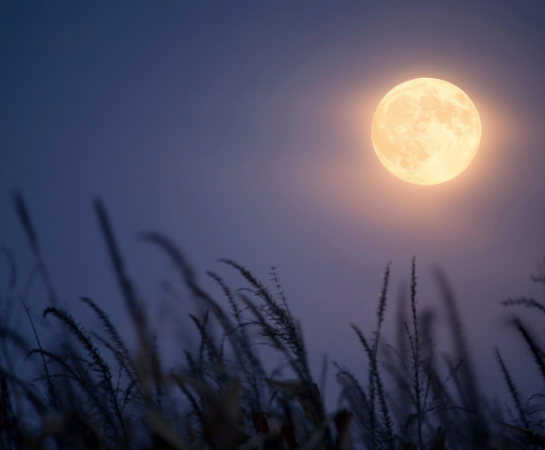
What Is a Harvest Moon and Why It Rises at Almost the Same Time Several Nights Running
On most nights of the year, the Moon rises roughly 50 minutes later than it did the night before. Around the Harvest Moon, that gap collapses to as little as 10 minutes in parts of the UK and Canada, and rarely more than 30 minutes
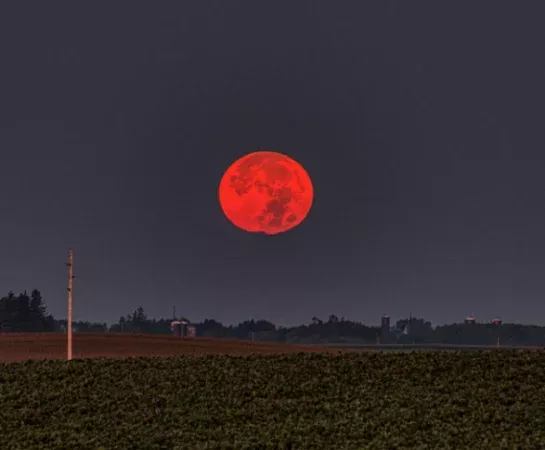
What Is a Blood Moon and Why Does the Moon Turn Red
On the night of August 27, 2026, the Moon came within a hair of disappearing entirely. Earth's shadow covered 96.2% of its surface, a partial eclipse so deep that skywatchers across the Americas, Europe, and Africa watched it turn a rusty, almost total red without

The Planning Fallacy: Why Tasks Take Longer Than You Expect and How to Correct It
In a 1994 study, 37 psychology students estimated how long it would take them to finish their honors theses. Their average answer was 33.9 days. They also gave a best-case estimate, 27.4 days on average, and a worst-case estimate, "if everything went as poorly as

What the Research Actually Says About the “23 Minutes to Refocus” Claim
"It takes 23 minutes and 15 seconds to refocus after an interruption" shows up in productivity apps, management slide decks, and posts about deep work. The figure is real, and it comes from a serious researcher. It does not mean what it is usually taken

Why the 40-Hour Work Week Exists: From 10-Hour Days to Ford’s 1926 Experiment
The 40-hour week looks like a natural unit of work, but the number was never derived from a measurement of how much work is best. It is the product of two separate fights: one over the length of the day, which ended at eight hours,

How Americans Spend Their 24 Hours: What the Time Use Survey Shows
The average American age 15 and over logs about 9 hours of sleep a day, spends just over 5 hours on leisure and works 3 hours. That last number looks wrong until you see how it is built, and nearly every headline figure from the
Time Tools
Quick access to timers, stopwatch, world clock and time zone tools.
Time Guides
Read useful guides about time zones, calendars, finance and astronomy.


