Major Airports in Armenia
- Shirak International Airport (LWN) - 03:17:38
- Zvartnots International Airport (EVN) - 03:17:38
Daylight saving time in Armenia
Armenia has 1 listed IANA time zones. None of them observe daylight saving time in 2026. The UTC offset remains stable throughout the year.
Best Time to Call Armenia
Business hours in Armenia (9 AM–5 PM local time) fall at these local times elsewhere:
- Beijing: 1:00 PM – 9:00 PM ( Partial overlap)
- Paris: 7:00 AM – 3:00 PM ( Partial overlap)
- Toronto: 1:00 AM – 9:00 AM ( Outside normal hours)
- Seoul: 2:00 PM – 10:00 PM ( Partial overlap)
- Mexico City: 11:00 PM (previous day) – 7:00 AM ( Outside normal hours)
- Cairo: 8:00 AM – 4:00 PM ( Convenient)
- Bangkok: 12:00 PM – 8:00 PM ( Partial overlap)
Times shown reflect current UTC offsets and may shift by up to an hour around daylight saving transitions.
Time Difference from Armenia
Compare time in Armenia with other countries.
Countries in the Same Time Zone as Armenia
Most Popular Cities in Armenia
Holidays in Armenia
Official national public holidays. Regional and religious observances may vary by area.
About Time in Armenia
Why Armenia Keeps UTC+4 All Year
Armenia now uses a remarkably simple civil-time system: the entire country remains on UTC+4 throughout the year, with no seasonal clock changes. That arrangement is relatively recent. For decades Armenia followed the Soviet and post-Soviet practice of moving clocks forward for summer time. Historical time-zone records show daylight saving changes from 1981 through 2011, while Armenian government discussions in the early 2010s increasingly questioned whether the twice-yearly shift still made sense.
The decisive change came in 2012. Armenia's National Assembly approved amendments to the law governing the calculation of time in the republic, ending the transition between summer and winter time and keeping the country permanently four hours ahead of Greenwich Mean Time. The final clock change had already taken place on October 30, 2011, when clocks were moved back by one hour. From 2012 onward there was no corresponding spring advance.
The choice of UTC+4 also reflects an older layer of Armenia's timekeeping history. Armenian officials discussing the reform noted that the country had been moved onto a more easterly clock standard during the Soviet period in the 1930s. Before daylight saving was abolished, summer time could therefore place Armenia another hour ahead, effectively producing GMT+5 during part of the year. The 2012 reform did not move Armenia westward to a different base zone. Instead, it retained UTC+4 and removed the seasonal adjustment, turning what had been winter time into the country's permanent civil time.
A Calendar That Slowly Moved Through the Seasons
Long before standardized time zones, Armenians had developed a distinctive system for organizing the year. The traditional Armenian calendar used twelve months of thirty days followed by five additional, or epagomenal, days. That produced a year of exactly 365 days. Unlike the Julian calendar, its original form did not insert a leap day to compensate for the extra fraction of a day in the astronomical solar year.
The consequence was subtle but important. Because the calendar year was slightly shorter than the actual solar year, its dates gradually shifted relative to the seasons. Roughly one calendar day of displacement accumulated every four years. A festival or date associated with one part of the agricultural or solar year could therefore migrate slowly through the seasons over the centuries. This made the old Armenian system a form of wandering solar calendar rather than a calendar permanently locked to the seasonal cycle.
The Armenian era was reckoned from AD 552, and the national calendar became an important chronological framework in medieval Armenian writing. Its structure also preserves evidence of Armenia's connections with neighboring civilizations. Scholars have identified Iranian origins in several traditional Armenian month names, including Nawasard, Tre and Mehekan, showing that the calendar was not simply a mathematical device but also a record of cultural exchange.
Armenian scholars did not ignore the drift problem. In 1084, the scholar Yovhannes Sarkawag introduced a reformed method that fixed the beginning of the Armenian year in relation to the Julian calendar and incorporated an additional day every four years. Medieval Armenian calendrical scholarship became highly sophisticated because determining dates was not merely an administrative task. It was essential for coordinating religious feasts, especially movable celebrations whose timing depended on combinations of solar, lunar and weekly cycles.
Time Written in Stone on Armenian Churches
One of Armenia's most visible links between architecture and timekeeping survives on medieval churches and monasteries. Sundials were carved directly into exterior walls, usually where sunlight could cast a usable shadow across marked hour divisions. These were functional instruments rather than purely decorative symbols. In communities without mechanical public clocks, the movement of a shadow across a church wall provided a practical way to organize the day.
The sundial associated with Zvartnots is among the most important examples. Zvartnots Cathedral was constructed in the seventh century, between 641 and 662, and archaeological work recovered a complete sundial from the site. The original is preserved in the local museum, while a replica can be seen at the monument. Research published by the British Sundial Society identifies it as the earliest Armenian example that can be securely dated as part of a known architectural structure.
Armenian sundials developed a recognizable visual character. Many divided the daylight arc into equal sections and marked the hours with Armenian alphanumeric characters, using letters of the Armenian alphabet as numbers. Examples or traces survive at churches and monasteries including Talin, Haghartsin, Goshavank and other sites across the country. Their survival makes Armenia unusual because a method once needed for everyday timekeeping remains physically embedded in a large number of historic religious buildings.
The relationship between sunlight, calculation and religious life was especially important in the medieval world. Knowing the hour helped regulate services, work and study, while calendrical calculations determined feast days over much longer cycles. Armenian scholarship connected these two scales of time. Seventh-century mathematician and astronomer Anania Shirakatsi worked extensively on calendars and astronomical cycles, and later Armenian scholars continued developing systems for reconciling solar years, lunar phases and ecclesiastical chronology.
Byurakan and Armenia's Move From Solar Shadows to Astrophysical Time
Armenia's long engagement with the sky acquired a modern scientific center in 1946 with the foundation of the Byurakan Astrophysical Observatory on the southern slope of Mount Aragats, northwest of Yerevan. The observatory was established on the initiative of astrophysicist Viktor Ambartsumian, who became its first director. Only a year later, in 1947, Ambartsumian's work at Byurakan led to the identification of stellar associations, groups of young stars that provided important evidence that star formation was an ongoing process rather than something confined to the distant past.
That discovery gave the Armenian observatory an unusual place in the scientific study of cosmic timescales. Human timekeeping measures seconds, days and years, but stellar astronomy reconstructs processes unfolding over millions or billions of years by observing objects at different stages of their evolution. Byurakan became particularly associated with research into stellar formation, galactic activity and rapidly changing or unstable astronomical phenomena.
The observatory later produced the First Byurakan Survey under astronomer Beniamin Markarian. Conducted from 1965 to 1980, it systematically recorded spectra across a large area of the northern sky and became one of the major astronomical survey projects of the twentieth century. In 2011 the survey's documentary material was entered into UNESCO's Memory of the World register. The progression from medieval sundials fixed to stone walls to photographic surveys of distant galaxies gives Armenia an unusually continuous material history of observing change in the sky across very different scales of time.
Frequently Asked Questions
How many time zones does Armenia have?
One. The whole of Armenia follows Asia/Yerevan, so every city shows the same local time as the capital, Yerevan.
Is Armenia ahead of or behind GMT?
Armenia is currently 4 hours ahead of GMT (UTC+4).
Does Armenia use summer time?
No. Armenia does not observe daylight saving time, so its clocks stay at UTC+4 all year. Its time difference with countries that do change their clocks still shifts by an hour in spring and autumn.
How many public holidays does Armenia have in 2026?
Armenia has 13 national public holidays in 2026, when banks and government offices are usually closed. Some regions may also have their own local holidays.
How do I dial a phone number in Armenia from abroad?
From a mobile phone, type +374 and then the local number without the leading 0 used for domestic calls, if it has one. From a landline, replace the plus sign with your exit code: 011 from the US and Canada, or 00 from most of Europe, for example 00 374 followed by the number.
What language is spoken in Armenia?
The main language of Armenia is Armenian.
Beyond the Clock

Why Orthodox Christmas Falls on January 7, Not December 25
Millions of Orthodox Christians open presents and attend Christmas liturgy on January 7. They aren't celebrating a different holiday, and they aren't twelve days behind on purpose. They're marking December 25 on a calendar that stopped syncing with the seasons centuries ago and was never
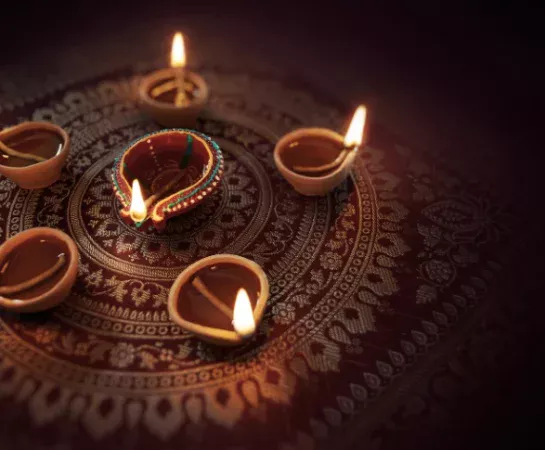
Why Diwali’s Date Changes Every Year
Why Diwali's Date Changes Every Year In October 2025, Diwali split down the middle. Cities where the sun set before 5:30 p.m. lit their lamps on October 21. Everywhere else celebrated a day earlier, on October 20. Same festival, same religious significance, nearly a billion

What Is Lent and Why Does It Last Exactly 40 Days
Count the days on a calendar from Ash Wednesday to Easter Sunday and the number that comes out is 46, not 40. That's not a mistake in how most people describe the season, and it's not a modern miscount either. The gap between the number
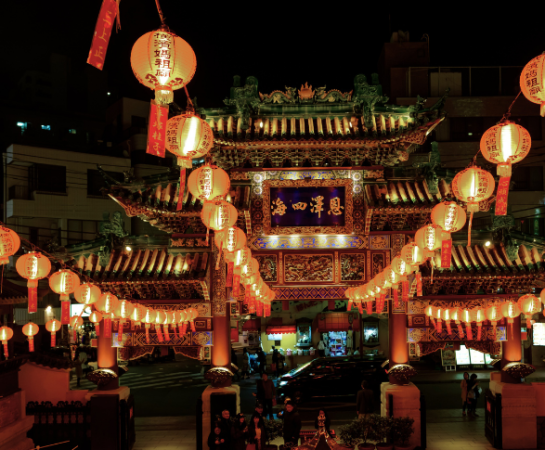
Why Chinese New Year Changes Date Every Year
Chinese New Year fell on January 22 in 2023, February 10 in 2024, January 29 in 2025, and February 17 in 2026. That's a swing of nearly four weeks across four consecutive years, and none of it is random. Every date traces back to a

How Many Weeks Are in a Quarter and How 4-4-5 Fiscal Calendars Work
A quarter is 13 weeks only on paper. A calendar quarter runs 90, 91, or 92 days, which works out to somewhere between 12.86 and 13.14 weeks, and it never starts on the same weekday two years in a row. That small mismatch is why

What Week Number Is It? ISO Week Numbers vs US Week Numbers
Ask a spreadsheet in Chicago and a planner in Stockholm what week Sunday, January 3, 2027 falls in, and you get two different years. Excel's default setting says week 2 of 2027. The ISO standard used across Europe says week 53 of 2026. Both answers

How Many Working Hours Are in a Year: Why 2,080 Isn’t Always Right
The standard answer is 2,080: 40 hours a week times 52 weeks. It sits behind most salary calculators and HR spreadsheets. But 52 weeks cover only 364 days. Every year has one or two days left over, and whether they land on a weekday or

Time Blocking vs Time Boxing vs Task Batching: What’s the Difference
The three names sound alike and are often used interchangeably, and all three promise a more focused day. They are not competing methods. Each one answers a different question. A frequent way for a technique to disappoint is being asked to do another one's job:
Time Tools
Quick access to timers, stopwatch, world clock and time zone tools.
Time Guides
Read useful guides about time zones, calendars, finance and astronomy.


