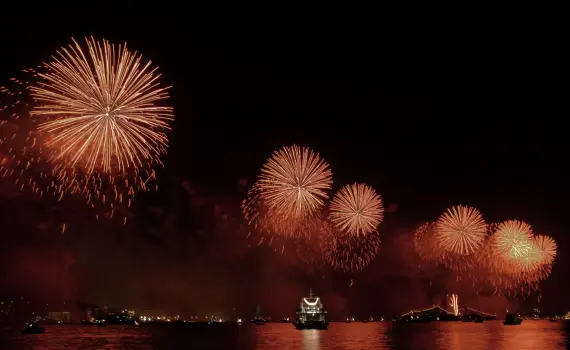
January 1 feels universal because it is the date most countries use for official New Year celebrations, civil calendars, business planning, government records, contracts, and international schedules. But it is not the only New Year in the world.
Across different cultures and religions, the start of the year can fall in winter, spring, autumn, or on a date that moves every year when measured against the modern civil calendar. Lunar New Year, Islamic New Year, Rosh Hashanah, Nowruz, Songkran, and other traditional New Year celebrations all show that “New Year” is not one fixed idea. It depends on which calendar a society uses and what that calendar is trying to measure.
This is why some countries can officially begin the civil year on January 1 while still celebrating another New Year as a major cultural, religious, or national event. The world may share one dominant business calendar, but it has never fully abandoned older systems of time.
Why January 1 Became the Main Civil New Year
Most countries today use January 1 as the start of the official year because the modern civil calendar is based on the Gregorian calendar. It became the dominant international calendar for government, trade, science, travel, finance, education, and digital systems because it offers a standardized way to organize dates across countries.
That standardization matters. International contracts need shared dates. Airlines need consistent schedules. Banks need predictable accounting periods. Governments need a calendar that can work across agencies and borders. The modern world depends on one common civil date system, and January 1 sits at the beginning of that system.
But official use does not erase cultural memory. Many societies adopted the Gregorian calendar for administration while keeping older calendars for religious life, seasonal festivals, family traditions, agricultural cycles, or national identity. This is why a country can use January 1 for passports, taxes, and business records while celebrating another New Year with much deeper cultural meaning.
The background to that civil calendar system is explained in the Gregorian calendar, which became the main global framework for modern datekeeping.
New Year does not always mean the same thing everywhere. In many cultures, it marks not only a date, but a relationship with the Moon, the seasons, religion, memory, and identity. worldtimedata
Why Different Calendars Create Different New Years
Different New Year dates exist because calendars do not all measure the year by the same logic.
A solar calendar follows the Sun and the seasons. A lunar calendar follows the phases of the Moon. A lunisolar calendar combines both systems by tracking lunar months while adding adjustments to keep the year connected to the seasons. Religious calendars can preserve older timekeeping rules that were never designed to match the Gregorian calendar exactly.
Because these systems measure time differently, their New Year dates do not always land on January 1. A lunar or lunisolar New Year may move across the Gregorian calendar from one year to the next. A solar seasonal New Year may stay closer to a fixed point in the year, such as the spring equinox. A religious New Year may follow rules that carry theological meaning rather than civil convenience.
This is the same calendar logic behind many movable holidays. When a celebration is based on lunar months, religious rules, or a calendar other than the Gregorian one, its date may shift when viewed through the modern civil calendar. That pattern is explored more broadly in why some holidays change date every year.
Lunar New Year and the Role of the Moon
Lunar New Year is one of the best-known examples of a New Year that does not begin on January 1. It is celebrated in China and in many other parts of East and Southeast Asia, including communities connected to Korean, Vietnamese, Singaporean, Malaysian, and other cultural traditions.
The date changes because it is connected to lunar or lunisolar calendar rules rather than the Gregorian calendar alone. The Moon does not complete its cycle in a neat 30-day civil month. A lunar month is based on the changing phases of the Moon, and those cycles do not fit perfectly into a 365-day solar year.
That is why Lunar New Year can fall on different Gregorian dates, usually in late January or February. To someone using only the Gregorian calendar, the holiday appears to move. Inside the traditional calendar system, however, it follows its own logic.
This connection is easier to understand through the Moon cycle, because many traditional calendars were shaped by visible lunar phases long before modern international date systems existed.
Lunar New Year also shows why calendar systems are not just mathematical tools. They carry family rituals, ancestral traditions, food culture, travel patterns, economic activity, and national holidays. In many places, it is not a secondary version of January 1, but the most important holiday period of the year.
Why Some New Years Follow the Seasons
Not every alternative New Year is based mainly on the Moon. Some are closely connected to the seasons, especially the arrival of spring.
Nowruz is a strong example. Celebrated in Iran, Central Asia, parts of the Caucasus, and many communities around the world, Nowruz is tied to the spring equinox. Its meaning is not only calendar-based. It is also seasonal, symbolic, and cultural: renewal, light, growth, and the beginning of a new natural cycle.
This makes Nowruz different from a purely civil New Year. January 1 is a legal calendar boundary. Nowruz is connected to the moment when the year visibly turns toward spring in the Northern Hemisphere. That seasonal meaning is one reason it has lasted across centuries and across many cultures.
Other New Year traditions also reflect seasonal logic. Some are linked to harvest cycles, agricultural renewal, monsoon seasons, or religious periods of reflection. These calendars came from societies that watched the sky, land, rain, crops, and seasons more closely than modern office calendars do.
Religious New Years and Sacred Time
Some New Year dates are different because they belong to religious calendars. These calendars are not only systems for counting days. They organize sacred history, worship, fasting, festivals, memory, and community identity.
Rosh Hashanah, the Jewish New Year, follows the Hebrew calendar, which is lunisolar. Its date changes on the Gregorian calendar because the Hebrew calendar uses lunar months while also making adjustments to stay connected to the solar year.
The Islamic New Year follows the Islamic Hijri calendar, which is lunar. Because a lunar year is shorter than a solar year, Islamic dates move earlier through the Gregorian calendar over time. That is why Islamic New Year does not stay in the same Gregorian season.
These examples show why it is misleading to think of January 1 as the only “real” New Year. It is the dominant civil New Year, but religious calendars preserve different ways of marking time. For many communities, the religious year can be just as meaningful as the official calendar year, sometimes more meaningful.
Why Countries Keep More Than One New Year
Many countries and cultures live with more than one New Year because people use calendars for different purposes. A civil calendar organizes administration. A religious calendar organizes worship. A traditional calendar preserves cultural memory. A seasonal calendar connects the year to nature.
These systems often coexist because they answer different needs rather than replacing one another.
A country may use January 1 for legal documents, school years, business contracts, and government planning, while still recognizing Lunar New Year, Nowruz, Rosh Hashanah, Songkran, or another traditional New Year as a major celebration. The official calendar answers one question: how should the state organize dates? Traditional calendars answer another: how does a culture understand the rhythm of the year?
This is why New Year can be both global and local at the same time. January 1 gives the world a shared administrative starting point. Other New Years keep older systems alive, preserving links to the Moon, seasons, religion, ancestry, and community.
Why Different New Year Dates Still Matter Today
Different New Year dates are not just historical leftovers. They still affect travel, business, public holidays, family life, tourism, retail, migration, and international planning.
Lunar New Year can create one of the largest annual travel periods in the world. Nowruz affects public life across several countries and communities. Religious New Years shape worship schedules, family gatherings, and cultural observance. In global cities, several New Year traditions can be visible in the same year, each with its own meaning.
For international businesses, media platforms, schools, airlines, and governments, these dates matter because they affect real behavior. Offices close. Families travel. Markets slow down or surge. Public spaces change. Cultural calendars continue to shape modern economic and social life even when the official civil calendar remains Gregorian.
That is why understanding different New Year dates is not only about trivia. It helps explain how modern societies combine global standardization with local identity.
One World Calendar, Many Ways to Begin the Year
The world uses January 1 because modern life needs a shared civil calendar. But people do not experience time only through administration. They also experience it through religion, memory, seasons, family rituals, food, travel, and cultural belonging.
That is why some countries and communities celebrate New Year on different dates. They are not ignoring the modern calendar. They are preserving older ways of defining when a new cycle begins.
The result is a layered world of timekeeping. One calendar organizes governments and global systems, while another gives meaning to the year inside a culture. January 1 may be the world’s main civil New Year, but it is not the only way societies define renewal, memory, and a new beginning.