Major Airports in Wallis and Futuna
- Hihifo Airport (WLS) - 10:29:03
Daylight saving time in Wallis and Futuna
Wallis and Futuna has 1 listed IANA time zones. None of them observe daylight saving time in 2026. The UTC offset remains stable throughout the year.
Best Time to Call Wallis and Futuna
Business hours in Wallis and Futuna (9 AM–5 PM local time) fall at these local times elsewhere:
- Beijing: 5:00 AM – 1:00 PM ( Outside normal hours)
- Paris: 11:00 PM (previous day) – 7:00 AM ( Outside normal hours)
- Toronto: 5:00 PM (previous day) – 1:00 AM ( Partial overlap)
- Seoul: 6:00 AM – 2:00 PM ( Partial overlap)
- Mexico City: 3:00 PM (previous day) – 11:00 PM (previous day) ( Partial overlap)
- Cairo: 12:00 AM – 8:00 AM ( Outside normal hours)
- Bangkok: 4:00 AM – 12:00 PM ( Outside normal hours)
Times shown reflect current UTC offsets and may shift by up to an hour around daylight saving transitions.
Time Difference from Wallis and Futuna
Compare time in Wallis and Futuna with other countries.
Countries in the Same Time Zone as Wallis and Futuna
Most Popular Cities in Wallis and Futuna
Holidays in Wallis and Futuna
Official national public holidays. Regional and religious observances may vary by area.
About Time in Wallis and Futuna
Mata-Utu's Old Solar Time Is Written as UTC+12:15:20 Even Though the Island Lies at 176°W
Wallis and Futuna sits just east of the 180th meridian in geographic longitude, but its civil calendar belongs to the western, or Asian-Pacific, side of the International Date Line. That combination produces one of the strangest-looking local-mean-time values in the IANA historical data.
The coordinates used by tzdb for Mata-Utu are approximately 13°18′S, 176°10′W. Converting 176°10′ west longitude directly into mean solar time gives about UTC-11:44:40. Yet the optional historical Pacific/Wallis reconstruction records local mean time as UTC+12:15:20. Those values differ by exactly twenty-four hours. The clock face is describing the same solar position; the calendar date is one day different.
The explanation lies in Pacific day reckoning rather than astronomy. Historical research on the region traces the local convention to missionaries who reached Wallis and Futuna from the western side of the Pacific in 1837. Their route carried the Asian-Pacific date with them. Unlike islands that later deleted or repeated a date to move to the opposite side of the date line, Wallis and Futuna retained the western date convention.
That legacy is still visible whenever the territory is compared with American Samoa. Both lie in the same broad region of the South Pacific, but American Samoa uses UTC-11 while Wallis and Futuna uses UTC+12. The numerical difference is twenty-three hours. At one instant, 12:00 Monday in Wallis corresponds to 13:00 Sunday in Pago Pago: the clock readings are only an hour apart, but the calendar dates differ.
The old Pacific/Wallis reconstruction then changes from UTC+12:15:20 to UTC+12 in 1901. Taken numerically, the clock moves back by 15 minutes 20 seconds while staying on the same side of the date line. That 1901 boundary should not be treated as a securely documented territorial decree. It survives in tzdb's backzone material, where early historical entries are explicitly less certain than the database's modern records.
A Deadline Dated Monday in Paris Can Expire on Tuesday in Wallis
France's legal-time system makes the modern relationship precise. Decree No. 2017-292 defines French legal time from UTC and assigns Wallis and Futuna an offset of twelve hours ahead of the base legal time maintained within the French metrology system. Unlike Saint-Pierre-et-Miquelon, the Wallis and Futuna provision contains no seasonal adjustment.
Paris does change seasonally, so the practical gap with metropolitan France is not constant. Wallis and Futuna is eleven hours ahead of Paris when metropolitan France is on UTC+1 and ten hours ahead while Paris observes UTC+2.
French administrative deadlines sometimes remain written in Paris time even when they apply to people in Wallis and Futuna. A 2026 National Police recruitment notice published by the territorial government, for example, set the online registration deadline at 18:00 Paris time on July 27. Paris is on UTC+2 in July, making the actual deadline in Wallis 04:00 on July 28. The official date shown to an applicant and the local calendar date on which the deadline expires are therefore different.
The same issue appears in webinars, national recruitment systems and other services run on metropolitan schedules. Territorial government notices sometimes retain the wording heure de Paris precisely because converting only the hour without checking the date can produce a one-day error.
Banking Cutoffs Show the Time-Zone Gap in Money, Not Just on Clocks
The Institut d'émission d'outre-mer, which provides central-banking services in the French Pacific, has operational rules that expose the time difference in everyday financial processing. Its banking procedures give Wallis and Futuna local cutoffs for outgoing transfers: orders received before 13:00 on Monday, Tuesday and Thursday, or before 12:00 on Wednesday and Friday, can be processed that working day when the other required conditions are satisfied. Later orders move to the following working day.
Incoming transfers through the French TARGET2 system are governed by a different clock. IEOM documentation specifies a 13:00 Paris-time receipt threshold at its Paris headquarters. Because of the time difference, an eligible transfer received before that Paris cutoff is credited to an institution in Wallis and Futuna on the following working day rather than the same working day. If it arrives after 13:00 Paris time, the Wallis and Futuna credit moves to the second following working day.
The rule is explicitly designed around the geographic time gap. A transfer can still be inside the banking day in Paris while Wallis is already deep into the following local date. Settlement procedures therefore cannot rely on a bare label such as “same day” without specifying which jurisdiction's clock defines the cutoff.
Wallis and Futuna's UTC+12 is consequently more than an unusual Pacific offset. Its position across the date boundary from much of the Americas, ten or eleven hours ahead of metropolitan France, affects legal deadlines, national online services and the working-day logic of cross-border payment processing.
Frequently Asked Questions
How many time zones does Wallis and Futuna have?
One. The whole of Wallis and Futuna follows Pacific/Wallis, so every city shows the same local time as the capital, Mata-Utu.
Is Wallis and Futuna ahead of or behind GMT?
Wallis and Futuna is currently 12 hours ahead of GMT (UTC+12).
Does Wallis and Futuna use summer time?
No. Wallis and Futuna does not observe daylight saving time, so its clocks stay at UTC+12 all year. Its time difference with countries that do change their clocks still shifts by an hour in spring and autumn.
How many public holidays does Wallis and Futuna have in 2026?
Wallis and Futuna has 14 national public holidays in 2026, when banks and government offices are usually closed. Some regions may also have their own local holidays.
How do I dial a phone number in Wallis and Futuna from abroad?
From a mobile phone, type +681 and then the local number without the leading 0 used for domestic calls, if it has one. From a landline, replace the plus sign with your exit code: 011 from the US and Canada, or 00 from most of Europe, for example 00 681 followed by the number.
What language is spoken in Wallis and Futuna?
The main language of Wallis and Futuna is French.
Beyond the Clock

Why Scheduled Jobs Break at Daylight Saving Time
On Sunday, November 1, 2026, the local time 1:30 AM happens twice in New York. The first 1:30 AM is 05:30 UTC on Eastern Daylight Time. The second is an hour later, 06:30 UTC on Eastern Standard Time. Four and a half months later, on

When Does a Day Actually Begin? Midnight, Sunrise, and Sunset Across Cultures
Hebcal, the widely used Jewish calendar service, lists Saturday, December 5, 2026 as 25 Kislev 5787, the first day of Hanukkah. The first Hanukkah candle is lit the evening before, on Friday, December 4. This is not an error. The Hebrew date changes at sunset,

Standard Time vs Daylight Time: What’s the Actual Difference
Most people assume "Standard Time" is the normal, default setting and "Daylight Time" is some separate seasonal overlay that temporarily replaces it. That mental model is backwards in a way that federal law makes explicit, and once you see the actual legal language, the whole

How Accurate Are Atomic Clocks: How Much Do They Actually Drift
In 2015, physicists at JILA in Colorado built a strontium clock so stable that, if it had started running 15 billion years ago, before the universe itself existed, it would still be within one second of correct today. That number sounds like marketing. It isn't.

Full Moon Names by Month: Where Beaver Moon and Cold Moon Come From
The November 2026 full moon, the Beaver Moon, peaks at 9:53 AM Eastern Time on Tuesday, November 24. The December full moon, the Cold Moon, follows at 8:28 PM Eastern on Wednesday, December 23. In UTC that moment already falls on December 24, so in
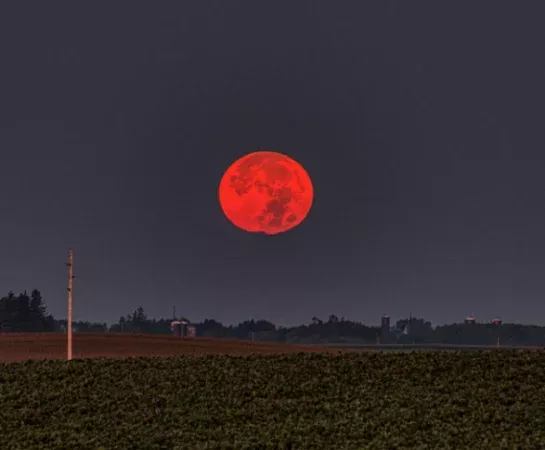
What Is a Blood Moon and Why Does the Moon Turn Red
On the night of August 27, 2026, the Moon came within a hair of disappearing entirely. Earth's shadow covered 96.2% of its surface, a partial eclipse so deep that skywatchers across the Americas, Europe, and Africa watched it turn a rusty, almost total red without
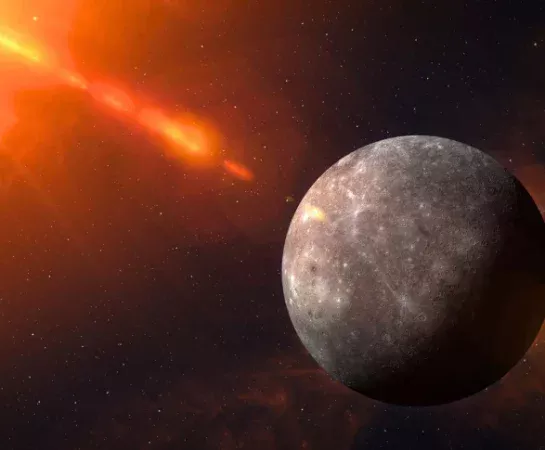
Mercury Retrograde: What’s Astronomically Real vs Astrological Myth
Mercury retrograde generates millions of searches every time it happens, and almost none of that content stops to explain what's actually occurring in space. The phenomenon itself is completely real, observable, and predictable centuries in advance. What isn't real is nearly everything attached to it

What Is Sidereal Time and How It Differs From Solar Time
Ask how long it takes Earth to spin once on its axis and the honest answer depends on what you're measuring the spin against. Measured against the sun, a full rotation takes 24 hours, the day everyone lives by. Measured against the distant stars, that
Time Tools
Quick access to timers, stopwatch, world clock and time zone tools.
Time Guides
Read useful guides about time zones, calendars, finance and astronomy.


