Airport in New Jersey
Newark Liberty International Airport (EWR / KEWR) is a major international airport serving New Jersey directly.
Current local time at the airport is 19:16:43.
Daylight saving time changes in New Jersey, United States
New Jersey uses the IANA time zone identifier America/New_York. The current local offset is UTC-4 / EDT.
Next change: November 1, 2026
Clock moves back from 02:00 to 01:00 local time.
Best Time to Call New Jersey
Business hours in New Jersey (9 AM-5 PM local time) fall at these local times elsewhere:
- Sao Paulo: 10:00 AM - 6:00 PM ( Convenient)
- Frankfurt: 3:00 PM - 11:00 PM ( Partial overlap)
- Johannesburg: 3:00 PM - 11:00 PM ( Partial overlap)
- Singapore: 9:00 PM - 5:00 AM (next day) ( Partial overlap)
- Hong Kong: 9:00 PM - 5:00 AM (next day) ( Partial overlap)
- Istanbul: 4:00 PM - 12:00 AM (next day) ( Partial overlap)
- Auckland: 2:00 AM (next day) - 10:00 AM (next day) ( Outside normal hours)
Times shown reflect current UTC offsets and may shift by up to an hour around daylight saving transitions.
Time Difference from New Jersey
Compare time in New Jersey with major cities worldwide.
Current Time in Cities of New Jersey, United States
About Time in New Jersey
The Minute America Went Dark, One Time Zone at a Time
Thomas Edison died at his Glenmont estate in West Orange, New Jersey on October 18, 1931, and the tribute that followed became one of the most precisely coordinated moments in American history, precisely because it depended entirely on time zones working correctly.
On October 20, President Herbert Hoover issued a formal statement asking Americans nationwide to extinguish their lights for one full minute on the evening of Wednesday, October 21, but rather than naming a single clock time, he specified the moment separately for each zone: seven o'clock Pacific time, eight o'clock Mountain time, nine o'clock Central time, and ten o'clock Eastern time. The instruction meant the exact same nationwide moment, coordinated relative to each region's own local sunset and evening routine, rippled across the continent zone by zone rather than all at once by a single fixed clock reading.
Hoover's statement also addressed a more radical proposal that had been floated: physically shutting down electrical generating plants themselves for the minute. He explained that Thomas Edison Jr. himself had confirmed this would be genuinely dangerous, since hospitals, water systems, sanitation, elevators, and fire protection all depended on continuous power, and interrupting it even briefly could cost lives somewhere in the country. Hoover called the country's total dependence on uninterrupted electrical current "in itself a monument to Mr. Edison's genius." Edison was buried the following day, October 20, 1931, at Rosedale Cemetery in East Orange, New Jersey, not far from the West Orange laboratory where so many of his inventions, electric light included, had first come to life.
Trenton's Own Unfinished Bill
New Jersey has its own history of trying, and so far failing, to end the twice yearly clock change. An earlier version of the effort, Senate Bill S3781, laid out the legal groundwork explicitly, citing the original 1918 federal Standard Time Act that first placed New Jersey in the Eastern time zone and proposing that the state remain on Eastern Daylight Time permanently rather than falling back to Standard Time each November, contingent entirely on Congress amending the federal Uniform Time Act to allow it.
That effort has continued into more recent sessions. Senate Bill S1510 advanced out of the Senate Transportation Committee, again proposing that New Jersey remain on Eastern Daylight Time year round rather than returning to Standard Time for four months of the year, and again waiting on the same federal permission that has stalled nearly identical bills in dozens of other states. Like Edison's own tribute a century earlier, New Jersey's clock remains bound to a schedule set well beyond the state's own borders.
Frequently Asked Questions
What time zone is New Jersey in?
The whole of New Jersey uses the America/New_York time zone (EDT). Local time is 4 hours behind UTC (UTC-4), and all cities in the region show the same time.
Is the time in New Jersey the same as in Washington?
Yes. Newark and most of New Jersey keep the same time as Washington, the capital of United States, so no conversion is needed for calls or meetings between them.
Do clocks change in New Jersey?
Yes. The next clock change in New Jersey is on November 1, 2026, when clocks move back from 02:00 to 01:00 local time.
What is the main city of New Jersey?
Newark is the main city of New Jersey, with a population of about 281,944. The time, sunrise and sunset shown on this page are based on Newark.
Which airport is closest to Newark?
Newark Liberty International Airport (EWR) serves Newark directly. Flight arrival and departure times there are shown in local time.
Beyond the Clock

Friday the 13th: How Often It Happens and Why It Falls on a Friday Most Often
November 13, 2026 is the third Friday the 13th of the year, after February 13 and March 13. That won't happen again until 2037. The next one after November comes on August 13, 2027, and then the calendar produces the longest possible drought: 14 months

When Is Eid al-Fitr and How Its Date Depends on Ramadan’s Final Moon Sighting
Eid al-Fitr never sits on a fixed date, and it isn't confirmed until the night before it happens. Unlike Christmas or New Year's Day, locked to the Gregorian calendar months in advance, the first day of Shawwal depends on whether a sliver of crescent moon

What Is Nowruz and Why It Always Falls on the Spring Equinox
Nowruz is the Persian New Year, celebrated by more than 300 million people across Iran, Afghanistan, Central Asia, the Caucasus, and Kurdish communities, and it begins at the exact astronomical instant of the March equinox rather than on a fixed date on any calendar grid.
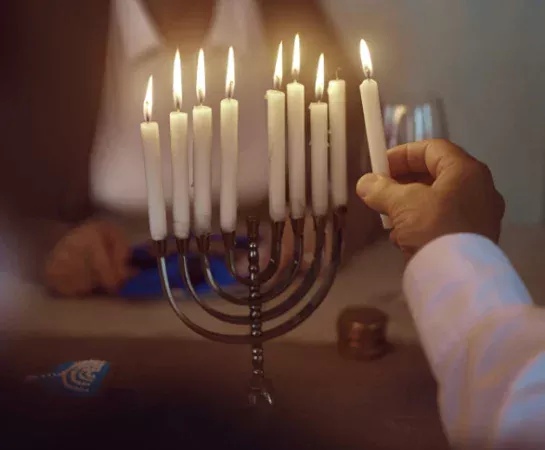
Why Hanukkah’s Date Moves Every Year on the Solar Calendar
In 2013, the first candle of Hanukkah was lit on the night before Thanksgiving, a coincidence rare enough that it won't happen again until 2070. Eleven years later, in 2024, the first candle fell on the evening of December 25 itself, the same alignment that

Why the Moon’s Phases Don’t Actually Change Its Size
A thin crescent looks small enough to disappear. A full moon looks like it's swelling on the horizon. Neither impression is true. The Moon's diameter is 3,474 kilometers on every night of the month, whether it's a sliver or a full disc, and nothing in
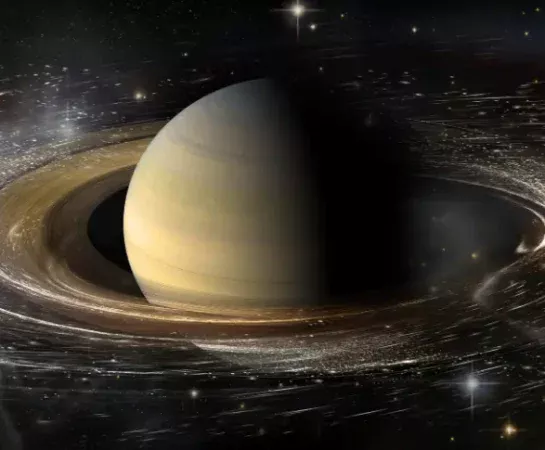
Why Saturn’s Rings Are Disappearing From View in 2025 and 2026
Saturn's rings turned edge-on to Earth on March 23, 2025, at 12:04 p.m. EDT, and for weeks the planet looked like a plain yellow ball through backyard telescopes. This is not decay or destruction. It is a geometric alignment called a ring plane crossing, and
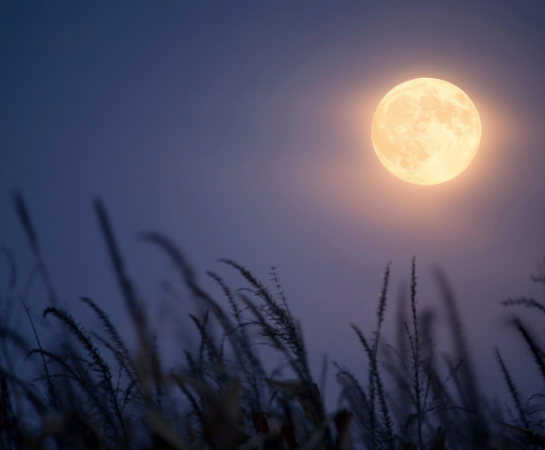
What Is a Harvest Moon and Why It Rises at Almost the Same Time Several Nights Running
On most nights of the year, the Moon rises roughly 50 minutes later than it did the night before. Around the Harvest Moon, that gap collapses to as little as 10 minutes in parts of the UK and Canada, and rarely more than 30 minutes
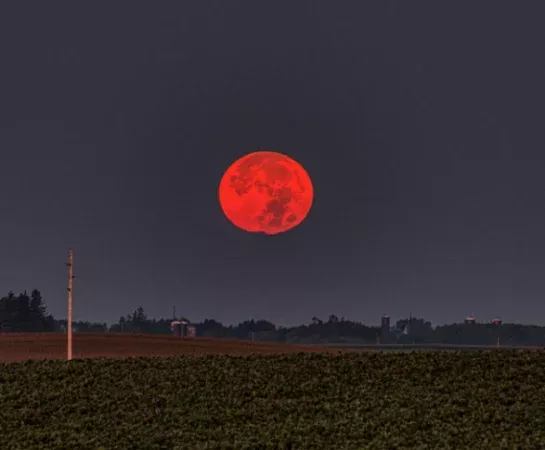
What Is a Blood Moon and Why Does the Moon Turn Red
On the night of August 27, 2026, the Moon came within a hair of disappearing entirely. Earth's shadow covered 96.2% of its surface, a partial eclipse so deep that skywatchers across the Americas, Europe, and Africa watched it turn a rusty, almost total red without
Time Tools
Quick access to timers, stopwatch, world clock and time zone tools.
Time Guides
Read useful guides about time zones, calendars, finance and astronomy.


