Major Airports in Nepal
- Gautam Buddha International Airport (BWA) - 05:26:01
- Pokhara International Airport (PHH) - 05:26:01
- Tribhuvan International Airport (KTM) - 05:26:01
Daylight saving time in Nepal
Nepal has 1 listed IANA time zones. None of them observe daylight saving time in 2026. The UTC offset remains stable throughout the year.
Best Time to Call Nepal
Business hours in Nepal (9 AM–5 PM local time) fall at these local times elsewhere:
- Beijing: 11:15 AM – 7:15 PM ( Partial overlap)
- Paris: 5:15 AM – 1:15 PM ( Partial overlap)
- Toronto: 11:15 PM (previous day) – 7:15 AM ( Outside normal hours)
- Seoul: 12:15 PM – 8:15 PM ( Partial overlap)
- Mexico City: 9:15 PM (previous day) – 5:15 AM ( Partial overlap)
- Cairo: 6:15 AM – 2:15 PM ( Partial overlap)
- Bangkok: 10:15 AM – 6:15 PM ( Convenient)
Times shown reflect current UTC offsets and may shift by up to an hour around daylight saving transitions.
Time Difference from Nepal
Compare time in Nepal with other countries.
Countries in the Same Time Zone as Nepal
Most Popular Cities in Nepal
Holidays in Nepal
Official national public holidays. Regional and religious observances may vary by area.
About Time in Nepal
The Pond That Told Time Before the Clock Did
Before Nepal kept any standardised clock, the residents of Kathmandu told time by watching a small vessel sink in a pond near Hanuman Dhoka. Each container, called a pala, had a tiny hole drilled through it and took exactly twenty-four minutes to fill with water and disappear beneath the surface; an official stationed at the pond would count how many pala had submerged since dawn and announce the hour to anyone who asked. The system worked well enough for a city that had never needed anything more precise, until foreign travellers and, eventually, telegraph lines began arriving with their own fixed expectations of the hour.
Nepal's modern relationship with clock time has been almost as idiosyncratic as the pala pond. Until 1920, the country simply used Kathmandu's own local solar time, 5 hours, 41 minutes and 16 seconds ahead of Greenwich. That year it adopted Indian Standard Time instead, aligning with British India for practical administrative reasons. Then, at midnight on 1 January 1986, Nepal advanced its clocks by a further fifteen minutes, arriving at the now-famous offset of UTC+5:45, one of only a handful of 45-minute time zones anywhere on Earth. The new reference meridian runs through Gaurishankar, a sacred peak roughly 100 kilometres east of Kathmandu, and the change is widely understood in Nepal as a small, deliberate act of distinguishing the country's own clock from that of its much larger southern neighbour.
Three Years for the Price of One
Ask what year it is in Nepal and the honest answer depends on which calendar is asking. The country's official calendar, Bikram Sambat, is used on citizenship documents, government paperwork and most daily transactions, and it runs roughly fifty-six to fifty-seven years ahead of the Gregorian calendar, with its New Year falling in mid-April at the start of the month of Baisakh rather than in January. Because it is lunisolar, its months vary in length from year to year, so unlike the fixed Gregorian calendar, no two Nepali years look quite the same on paper.
Alongside it, the Newar community of the Kathmandu Valley keeps an entirely separate calendar, Nepal Sambat, whose own New Year falls a few months later, right after the festival of Tihar. According to tradition, Nepal Sambat began in 879 CE when a merchant named Sankhadhar Sakhwa paid off the collective debts of the valley's residents, and the era was founded to commemorate the occasion, a calendar whose very starting point marks a moment of financial relief rather than a conquest or a birth. Layered on top of both is the ordinary Gregorian calendar, still used for international business and travel, leaving many Nepalis fluent in switching between three different ways of naming the same day depending on the context.
A Goddess on the Clock
In Kathmandu's Durbar Square stands the Kumari Ghar, home to a living tradition dating to the Malla dynasty of the twelfth through eighteenth centuries: a young girl, selected from the Shakya or Bajracharya families of the Newar community, worshipped as the living embodiment of the goddess Taleju Bhawani. Candidates, typically between four and seven years old, are screened against thirty-two traditional physical attributes and tested for composure, historically including a ritual in which the child is placed in a darkened room surrounded by masks or severed buffalo heads to see whether fear breaks her calm.
What makes the role distinctive as an institution is that its length is fixed not by years but by biology. Once installed, a Kumari lives in the temple-palace, appears publicly mainly during the Indra Jatra festival, and holds her divine status only until her first menstruation or a significant loss of blood from illness or injury, at which point she returns to ordinary life and a new search begins for her successor. The practice, still observed today, has drawn modern criticism over its effect on the girls' education and childhood, even as it remains one of the most visible living traditions in Nepal, a form of religious office whose entire tenure is defined in advance by the arrival of puberty rather than by any calendar date.
Fifteen Minutes on Top of the World
At 11:30 in the morning on 29 May 1953, Edmund Hillary of New Zealand and Tenzing Norgay, a Sherpa mountaineer, became the first climbers confirmed to reach the summit of Mount Everest, arriving there as part of the ninth British expedition to attempt the mountain, led by Colonel John Hunt. The pair had woken at four that morning, spent two hours thawing Hillary's frozen boots, and set out at 6:30, timing their final push against a monsoon season that expedition planners knew was no more than about a week from closing the mountain's brief annual weather window entirely.
Once at the summit, Hillary and Norgay allowed themselves just fifteen minutes there, limited by their dwindling oxygen supply, before beginning the descent. News of the achievement reached London on 2 June, precisely the morning of Queen Elizabeth II's coronation, a timing coincidence the British press seized on as a good omen for the new reign. Both men were later honoured for the climb, Hillary knighted and Norgay awarded the George Medal, and the narrow seasonal window they raced against in 1953 remains, to this day, the same one every Everest expedition still plans its entire ascent around.
Frequently Asked Questions
How many time zones does Nepal have?
One. The whole of Nepal follows Asia/Kathmandu, so every city shows the same local time as the capital, Kathmandu.
Is Nepal ahead of or behind GMT?
Nepal is currently 5 hours 45 minutes ahead of GMT (UTC+5:45).
Does Nepal use summer time?
No. Nepal does not observe daylight saving time, so its clocks stay at UTC+5:45 all year. Its time difference with countries that do change their clocks still shifts by an hour in spring and autumn.
How many public holidays does Nepal have in 2026?
Nepal has 32 national public holidays in 2026, when banks and government offices are usually closed. Some regions may also have their own local holidays.
How do I dial a phone number in Nepal from abroad?
From a mobile phone, type +977 and then the local number without the leading 0 used for domestic calls, if it has one. From a landline, replace the plus sign with your exit code: 011 from the US and Canada, or 00 from most of Europe, for example 00 977 followed by the number.
What language is spoken in Nepal?
The main languages of Nepal are Nepali and English.
Beyond the Clock

IST, CST, BST: Why the Same Time Zone Abbreviation Means Different Things
A meeting invite that says "10:00 IST" looks precise. It isn't. IST is India Standard Time (UTC+05:30), Irish Standard Time (UTC+01:00) and Israel Standard Time (UTC+02:00). In July, the first two are four and a half hours apart. CST can mean Chicago or Shanghai, 14

Why Nevada and Utah Sit in Different Time Zones Despite Sharing a Border
Nevada runs on Pacific Time. Utah runs on Mountain Time. The two states share a long, mostly straight desert border, yet anyone driving east from Ely, Nevada, toward Delta, Utah, loses an hour the moment they cross the line. This is not an accident of

Why Brazil Has Four Time Zones Despite Its Massive Size
Brazil covers 8,514,877 square kilometers, the fifth largest country on Earth, and its territory stretches 4,319 kilometers from its Atlantic tip near João Pessoa to the Peruvian border, a span of roughly 39 degrees of longitude. Despite that scale, Brazil runs on only four time

What Time Zone Is Kiribati In: The Country Furthest Ahead in Time
For most of the 20th century, Kiribati wasn't ahead of anyone. Parts of it were among the last places on Earth to see each new day, not the first. That changed in 1995 through a single, deliberate act of redrawing the map, and the country

Why the Year Starts on January 1
Nothing happens in the sky on January 1. The winter solstice comes about ten days earlier, Earth's closest approach to the Sun a few days later, and no lunar phase is tied to the date. January 1 is not an astronomical boundary. It is an

What Is Nowruz and Why It Always Falls on the Spring Equinox
Nowruz is the Persian New Year, celebrated by more than 300 million people across Iran, Afghanistan, Central Asia, the Caucasus, and Kurdish communities, and it begins at the exact astronomical instant of the March equinox rather than on a fixed date on any calendar grid.

When Is Yom Kippur and Why It Always Falls 10 Days After Rosh Hashanah
Yom Kippur is the tenth day of Tishrei, and Rosh Hashanah is the first, so the ten-day gap between them looks like simple arithmetic. It isn't. The Hebrew calendar has a set of centuries-old rules that quietly forbid Rosh Hashanah from landing on three specific
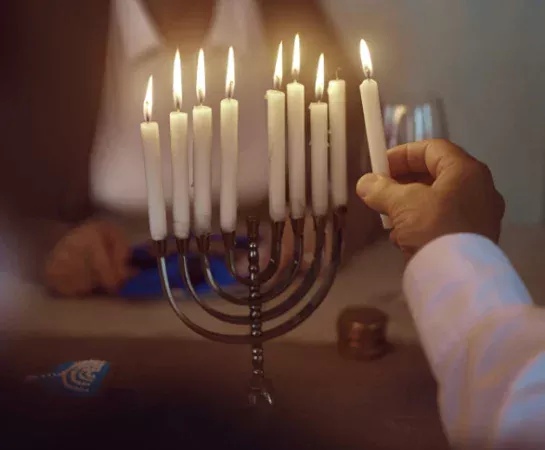
Why Hanukkah’s Date Moves Every Year on the Solar Calendar
In 2013, the first candle of Hanukkah was lit on the night before Thanksgiving, a coincidence rare enough that it won't happen again until 2070. Eleven years later, in 2024, the first candle fell on the evening of December 25 itself, the same alignment that
Time Tools
Quick access to timers, stopwatch, world clock and time zone tools.
Time Guides
Read useful guides about time zones, calendars, finance and astronomy.


