Major Airports in Marshall Islands
- Marshall Islands International Airport (MAJ) - 10:27:20
Daylight saving time in Marshall Islands
Marshall Islands has 1 listed IANA time zones. None of them observe daylight saving time in 2026. The UTC offset remains stable throughout the year.
Best Time to Call Marshall Islands
Business hours in Marshall Islands (9 AM–5 PM local time) fall at these local times elsewhere:
- Beijing: 5:00 AM – 1:00 PM ( Outside normal hours)
- Paris: 11:00 PM (previous day) – 7:00 AM ( Outside normal hours)
- Toronto: 5:00 PM (previous day) – 1:00 AM ( Partial overlap)
- Seoul: 6:00 AM – 2:00 PM ( Partial overlap)
- Mexico City: 3:00 PM (previous day) – 11:00 PM (previous day) ( Partial overlap)
- Cairo: 12:00 AM – 8:00 AM ( Outside normal hours)
- Bangkok: 4:00 AM – 12:00 PM ( Outside normal hours)
Times shown reflect current UTC offsets and may shift by up to an hour around daylight saving transitions.
Time Difference from Marshall Islands
Compare time in Marshall Islands with other countries.
Countries in the Same Time Zone as Marshall Islands
Most Popular Cities in Marshall Islands
Holidays in Marshall Islands
Official national public holidays. Regional and religious observances may vary by area.
About Time in Marshall Islands
The Explosion That Was Three Times Bigger Than Planned
On 1 July 1946, the United States detonated the first of 23 nuclear devices it would eventually test at Bikini Atoll, part of a Cold War-era program that ultimately ran to 67 tests across the Marshall Islands by 1958. The atoll's 167 residents had been relocated the previous March after being told their sacrifice would serve "the good of mankind," a phrase that would echo uncomfortably against everything that followed.
The single most consequential moment came on 1 March 1954, when the United States detonated Castle Bravo, a thermonuclear device intended to yield roughly five megatons. A miscalculation of how one of the bomb's components, lithium-7, would react during the blast instead produced a fifteen-megaton explosion, roughly a thousand times more powerful than the bomb dropped on Hiroshima and three times larger than scientists had planned for, carving a crater more than a mile wide into the reef. Radioactive fallout, a mixture of pulverised coral and fission products that observers described as falling like ashy snow, drifted over inhabited atolls that had not been evacuated in advance; on nearby Rongerik, American weather personnel were told to stay indoors within a day of the blast, but the Marshallese living there were not evacuated until two days after that. Bikini's contamination proved severe enough that a resettlement attempt in the 1970s had to be abandoned when residents' bodies showed rising radiation levels, and the atoll remains uninhabited today, seven decades after its residents were first asked to leave what they had been told would be a temporary absence.
A Navigation Tradition Nearly Two Thousand Years Old, Held Entirely in Memory
Long before satellite positioning or even the compass reached the Pacific, Marshallese navigators learned to read the ocean itself, sensing how swells generated by distant trade winds bent, reflected and interfered with one another as they passed near low-lying atolls that, at sea level, might only become visible from a few miles away. Training traditionally began with a young apprentice blindfolded in a canoe, learning to feel the sea's motion through the hull alone before ever being allowed to navigate by sight, a technique researchers trace back more than two thousand years to the islands' first settlers.
To teach this knowledge, navigators built stick charts, intricate frameworks of coconut-frond midribs bound together with fibre, with curved sticks representing wave patterns and small cowrie shells marking island positions. Crucially, the charts were never carried to sea; they existed purely as memorisation aids, studied on land and then set aside, since a navigator at sea relied entirely on sensation and memory rather than any physical reference. One of the last apprentices trained in this way, Korent Joel, began his instruction in the 1950s, only for it to be interrupted when nuclear fallout from the Bikini tests reached his home island and brought radiation sickness with it, forcing his family's displacement. Decades later, he returned to finish the voyage that would formally make him a master navigator, going on to train a new generation before his death in 2017, a rare case of a single life connecting the islands' oldest surviving knowledge system directly to their most devastating modern rupture.
Frequently Asked Questions
How many time zones does Marshall Islands have?
One. The whole of Marshall Islands follows Pacific/Majuro, so every city shows the same local time as the capital, Majuro.
Is Marshall Islands ahead of or behind GMT?
Marshall Islands is currently 12 hours ahead of GMT (UTC+12).
Does Marshall Islands use summer time?
No. Marshall Islands does not observe daylight saving time, so its clocks stay at UTC+12 all year. Its time difference with countries that do change their clocks still shifts by an hour in spring and autumn.
How many public holidays does Marshall Islands have in 2026?
Marshall Islands has 11 national public holidays in 2026, when banks and government offices are usually closed. Some regions may also have their own local holidays.
How do I dial a phone number in Marshall Islands from abroad?
From a mobile phone, type +692 and then the local number without the leading 0 used for domestic calls, if it has one. From a landline, replace the plus sign with your exit code: 011 from the US and Canada, or 00 from most of Europe, for example 00 692 followed by the number.
What language is spoken in Marshall Islands?
The main languages of Marshall Islands are Marshallese and English.
Beyond the Clock

Why Clocks Change at 2 AM on a Sunday
In the United States, the clock change is written into federal law to the hour. Daylight saving time begins "at 2 o'clock antemeridian" on the second Sunday of March and ends at the same hour on the first Sunday of November (15 U.S.C. 260a). In
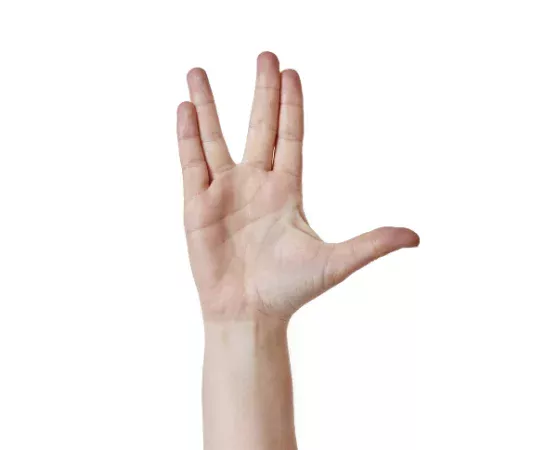
What Is Stardate and How Star Trek Invented Its Own Fictional Time System
A stardate is the fictional timekeeping system Star Trek's Starfleet uses instead of the Gregorian calendar, heard from the show's very first broadcast episode in September 1966, "Captain's log, star date 1513.1," and reworked at least three separate times since, in ways the franchise's own
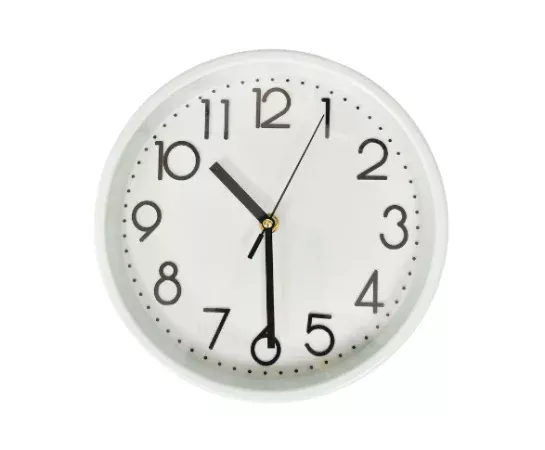
Why We Say “Quarter Past” and “Half Past” Instead of Just Saying the Minutes
By the year 1500, the clock at Wells Cathedral in England was already striking the quarter-hours for the whole town to hear. What it could not do was show a minute. There was no minute hand on any clock anywhere, because no clock mechanism was

What Is Swatch Internet Time and Why It Failed
On October 23, 1998, at a ceremony called the Junior Summit '98, a Swiss watch executive and the then-director of the MIT Media Lab stood together and announced that time zones were unnecessary. The proposal was called Swatch Internet Time. It replaced hours, minutes, and

Why the Earliest Sunset Comes Before the Winter Solstice
In New York, the Sun sets earliest on Monday, December 7, 2026, at about 4:28 PM. The shortest day comes two weeks later. The solstice falls at 20:50 UTC on December 21 (3:50 PM EST), and on that day New York gets roughly 9 hours

When Does Winter Start: Meteorological vs Astronomical Seasons
Winter 2026 starts twice in the Northern Hemisphere. Meteorological winter begins on Tuesday, December 1, 2026. Astronomical winter begins at the December solstice, on Monday, December 21, 2026 at 20:50 UTC, which is 3:50 p.m. Eastern and 12:50 p.m. Pacific. Both answers are correct. They
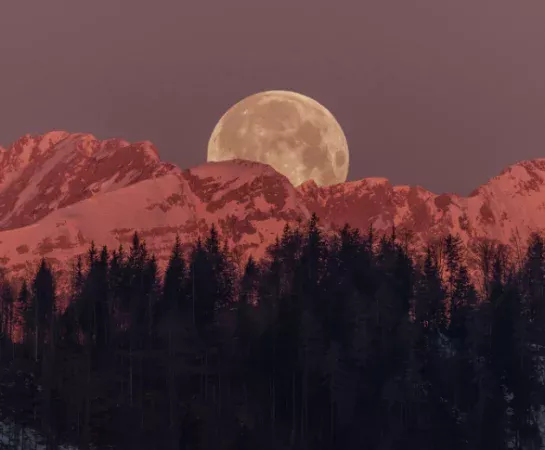
What Is a Supermoon and When Is the Next One
Every time a supermoon rises, the same statistic gets repeated: 14% bigger, 30% brighter. It's in almost every news segment and nearly every listicle, and it's also a comparison almost nobody in the audience will ever actually witness, because it measures the single closest possible
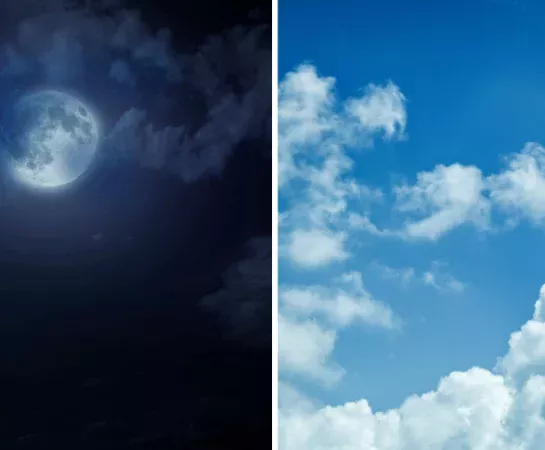
Why the Sky Is Blue During the Day and Black at Night
Sunlight is white. Air is, as far as anyone can tell by looking through a window, colorless. And yet every clear afternoon the same 400,000-kilometer column of gas above your head reads as a specific, saturated blue, then goes black within an hour of sunset.
Time Tools
Quick access to timers, stopwatch, world clock and time zone tools.
Time Guides
Read useful guides about time zones, calendars, finance and astronomy.


