Major Airports in Guam
- Antonio B. Won Pat International Airport (GUM) - 08:19:51
Daylight saving time in Guam
Guam has 1 listed IANA time zones. None of them observe daylight saving time in 2026. The UTC offset remains stable throughout the year.
Best Time to Call Guam
Business hours in Guam (9 AM–5 PM local time) fall at these local times elsewhere:
- Beijing: 7:00 AM – 3:00 PM ( Partial overlap)
- Paris: 1:00 AM – 9:00 AM ( Outside normal hours)
- Toronto: 7:00 PM (previous day) – 3:00 AM ( Partial overlap)
- Seoul: 8:00 AM – 4:00 PM ( Convenient)
- Mexico City: 5:00 PM (previous day) – 1:00 AM ( Partial overlap)
- Cairo: 2:00 AM – 10:00 AM ( Outside normal hours)
- Bangkok: 6:00 AM – 2:00 PM ( Partial overlap)
Times shown reflect current UTC offsets and may shift by up to an hour around daylight saving transitions.
Time Difference from Guam
Compare time in Guam with other countries.
Countries in the Same Time Zone as Guam
Most Popular Cities in Guam
Holidays in Guam
Official national public holidays. Regional and religious observances may vary by area.
About Time in Guam
Guam Entered 1845 Without Ever Having a 31 December 1844
One of the strangest dates in Guam's history is a date that never happened. Monday, 30 December 1844 was followed directly by Wednesday, 1 January 1845. Tuesday, 31 December was removed from the calendar.
The change was part of a wider Pacific calendar reform. For centuries, Guam and several neighboring islands had inherited a date reckoning that placed them on the American side of the date boundary even though geographically they lay in the western Pacific. That arrangement had developed from old trans-Pacific administrative and trading connections.
By the nineteenth century, the mismatch had become increasingly inconvenient as regional commerce focused more heavily on nearby Asian markets. The solution was unusually direct: instead of slowly altering clock time, the calendar itself was advanced by one whole day.
IANA's historical reconstruction preserves the effect in the Pacific/Guam time-zone record. Before the transition, Guam's reconstructed local mean time carried an offset of about UTC-14:21. After the skipped date, the corresponding local clock was on the opposite side of the date boundary at approximately UTC+9:39. The time of day was essentially preserved while the calendar date jumped forward.
This is fundamentally different from daylight saving. No one merely lost an hour of sleep. An entire civil date disappeared. A document could be dated 30 December 1844 and another 1 January 1845 without any possible local document dated 31 December between them.
The event also exposes an important feature of the International Date Line: it is not a physical line fixed by astronomy. Earth rotates continuously, but societies decide where one calendar day becomes the next. Guam's 1844 reform changed that decision administratively and moved the island from one side of the global date count to the other.
The Traditional CHamoru Year Had Thirteen Lunar Months Named for What the Island Was Doing
Long before modern wall calendars, CHamoru timekeeping connected the phases of the Moon with recurring changes in weather, fishing and cultivation. University of Guam Press documents a traditional system containing thirteen lunar months rather than twelve fixed Gregorian months.
The names were not simply numbered positions. They preserved information about seasonal conditions and useful activities. Umatålaf was associated with the time for catching gatafe fish. Tenhos referred to a stormy or angry season. Lumåmlam was connected with lightning. Fangguålo' marked planting time, while Sumongsong referred to a period associated with repairing nets and remaining in the village.
The calendar therefore worked partly as ecological memory. Knowing which lunar period had arrived also carried expectations about the sea, weather, plants and food resources. Time was not detached from the environment; the environment helped define what the time meant.
The thirteen-month structure follows naturally from lunar observation. A synodic month lasts about 29.5 days, so twelve lunar cycles total only about 354 days, shorter than the solar year. Thirteen lunations can therefore occur between corresponding seasonal points, which is why lunar systems often need additional adjustments if they are to remain aligned with the seasons.
Historical knowledge of the CHamoru calendar survived partly through accounts recorded after European contact. Guampedia cites information collected during Louis Claude de Freycinet's 1819 visit to Guam, when CHamoru informants described the older month names and their meanings.
The system is not only an archival curiosity. The University of Guam has revived the calendar in educational work, including 13 Months in Malesso', which connects lunar months with modern village life, fishing, harvesting and seasonal foods. Contemporary UOG grower calendars likewise combine lunar information with practical planting guidance.
The result is a different way to read a year. A Gregorian month answers where a date sits inside a numbered calendar. The older CHamoru month names also answered what the island was expected to be doing at that stage of the lunar and seasonal cycle.
Guam's Drinking Water Rises and Falls with the Ocean Tide Beneath the Ground
Northern Guam obtains most of its freshwater from a lens floating above salt water inside highly permeable limestone. The system is hidden underground, but it responds continuously to several clocks operating above and around it.
USGS research reports that groundwater supplies roughly 80 percent of Guam's drinking water. In the northern limestone aquifer, the water table lies only a few feet above sea level across large areas because the rock allows water to move quickly toward the coast.
The ocean tide does not stop at the shoreline. Its changing pressure propagates into the aquifer and produces measurable groundwater fluctuations. USGS observations show daily water-level variations associated with the tide, superimposed on much slower changes caused by rainfall and pumping.
Rainfall provides another rhythm. The freshwater lens expands when recharge increases and shrinks during dry periods when recharge weakens or stops. Because fresh water floats above denser seawater, a thinner lens also means the freshwater-saltwater transition moves closer to drinking-water wells.
Pumping creates a third timescale. Groundwater withdrawals rose from about 15 million gallons per day in the early 1970s to around 45 million gallons per day by 2010. If too much water is withdrawn from one area or from wells drilled too deeply, saltier water can move upward toward the pump intake.
That means a well does not simply tap a fixed underground reservoir. Its water quality reflects what happened during recent tides, weeks of rainfall, longer drought periods and years of extraction. A chloride reading today can therefore contain the hydrological memory of several different intervals.
The aquifer is effectively a moving boundary rather than a tank. The ocean changes it over hours, rain over days and seasons, and human withdrawals over years. Guam's freshwater supply depends on all three clocks staying within workable limits.
Brown Treesnakes Become Most Active Just After Sunset, Then Quiet Down Toward Sunrise
One of Guam's most damaging invasive species follows a remarkably consistent nightly schedule. Brown treesnakes are nocturnal, and USGS telemetry has shown that their activity is highest during the hours immediately after sunset.
Researchers fitted juvenile snakes with radio transmitters capable of revealing not only position but movement. Activity rose after darkness began, declined gradually through the night and then dropped sharply around sunrise.
The Moon appears to modify that schedule. The same study found tendencies toward greater activity during waning lunar phases and when the Moon was below the horizon. Movements tended to be shorter on nights immediately following a full moon. Rain also mattered, with activity generally higher on wet nights than on dry ones.
Those patterns are operationally important because Guam spends substantial effort trapping and controlling the species. A trap or bait cannot catch a snake that is inactive in a refuge. Understanding which hours and environmental conditions produce the greatest movement helps researchers interpret capture rates and design control programs.
Feeding creates another clock. Field experiments found that after consuming a meal equal to roughly one third of body mass, brown treesnakes dramatically reduced movement and detectability. The depressed activity lasted approximately five to seven days, broadly matching digestion time.
A snake can therefore pass through several distinct temporal states: highly active after sunset on a favorable night, progressively less active toward dawn, then comparatively hidden for almost a week after a large meal.
The nocturnal pattern is part of the reason the invasion remained difficult to recognize while it was spreading across Guam during the decades after its introduction. A predator capable of transforming an island's bird community was doing most of its moving when people were asleep.
At 15:08, Pongsona Produced Guam's Highest Recorded Gust of the Storm
Typhoon Pongsona crossed Guam on 8 December 2002 slowly enough that the island remained inside destructive conditions for hours. NOAA's event record preserves the storm almost like an operational log.
The eye crossed the northern end of Guam while the cyclone was moving at only about 10 miles per hour. That slow translation meant locations could remain under the eyewall much longer than they would during a faster-moving storm.
At 15:08 local time, the highest reported gust in the official event record reached 115 miles per hour from the north. At 18:26, the National Weather Service office measured its highest sustained wind, 105 miles per hour from the west.
The changing wind direction records the passage of the cyclone itself. Before the eye and center moved through the region, wind approached from one side. As the circulation progressed, the strongest winds returned from another direction.
The hours mattered because infrastructure was being damaged continuously while the storm remained nearby. Electrical systems, buildings, communications and vegetation were exposed repeatedly rather than to one brief burst of wind.
Pongsona also demonstrates why the category assigned to a cyclone does not fully describe the experience at one location. Maximum wind speed matters, but so do translation speed, the path of the eye and how long a site remains inside the eyewall.
For Guam, the defining unit of Pongsona was therefore not only miles per hour. It was hours under extreme wind.
Guam's Daylight-Saving Rules Once Changed in December, May and Even at 02:01
Modern Guam keeps Chamorro Standard Time, UTC+10, throughout the year. No seasonal clock change is used. The island's daylight-saving history from the mid-twentieth century was far less regular.
IANA's time-zone data records Guam beginning daylight saving on 27 June 1959. At 02:00, clocks advanced directly to 03:00, creating UTC+11 during the seasonal adjustment.
The rules changed repeatedly rather than settling into one permanent pattern. Guam observed seasonal changes during parts of the 1960s and early 1970s, skipped them in some years and then introduced daylight saving again on 16 December 1973, an unusual month for beginning an advanced clock.
That December transition reflected the wider energy-policy environment of the period, but Guam did not simply copy one unchanging mainland rule. Local executive orders controlled several of the island's later transitions.
The 1976 sequence is especially distinctive. Executive Order 76-13 introduced daylight saving on 26 May at 02:00. Executive Order 76-25 revoked it on 22 August, with IANA recording the return to standard time at 02:01 rather than exactly 02:00.
In 1977, clocks advanced again on 24 April. The final daylight-saving transition in Guam occurred on 28 August 1977: when the clock reached 02:00 daylight time, it moved backward to 01:00 standard time. The hour from 01:00 to 01:59 therefore occurred twice.
Guam has remained on UTC+10 without daylight saving since then. The modern simplicity hides a period when local time rules could begin in June, December, May or April and could be cancelled at a minute that looks almost like a typographical error but is explicitly preserved in the historical rule set.
Frequently Asked Questions
How many time zones does Guam have?
One. The whole of Guam follows Pacific/Guam, so every city shows the same local time as the capital, Hagåtña.
Is Guam ahead of or behind GMT?
Guam is currently 10 hours ahead of GMT (UTC+10).
Does Guam use summer time?
No. Guam does not observe daylight saving time, so its clocks stay at UTC+10 all year. Its time difference with countries that do change their clocks still shifts by an hour in spring and autumn.
How many public holidays does Guam have in 2026?
Guam has 16 national public holidays in 2026, when banks and government offices are usually closed. Some regions may also have their own local holidays.
How do I dial a phone number in Guam from abroad?
From a mobile phone, type +1-671 and then the 10-digit number, without the 1 that is dialed first for long-distance calls inside the country. From a landline in the US or Canada, dial 1 and the 10-digit number; from most of Europe, dial 00 1-671 followed by the number.
What language is spoken in Guam?
The main languages of Guam are English and Chamorro.
Beyond the Clock

Why Orthodox Christmas Falls on January 7, Not December 25
Millions of Orthodox Christians open presents and attend Christmas liturgy on January 7. They aren't celebrating a different holiday, and they aren't twelve days behind on purpose. They're marking December 25 on a calendar that stopped syncing with the seasons centuries ago and was never

Why Diwali’s Date Changes Every Year
Why Diwali's Date Changes Every Year In October 2025, Diwali split down the middle. Cities where the sun set before 5:30 p.m. lit their lamps on October 21. Everywhere else celebrated a day earlier, on October 20. Same festival, same religious significance, nearly a billion

What Is Lent and Why Does It Last Exactly 40 Days
Count the days on a calendar from Ash Wednesday to Easter Sunday and the number that comes out is 46, not 40. That's not a mistake in how most people describe the season, and it's not a modern miscount either. The gap between the number
Why Chinese New Year Changes Date Every Year
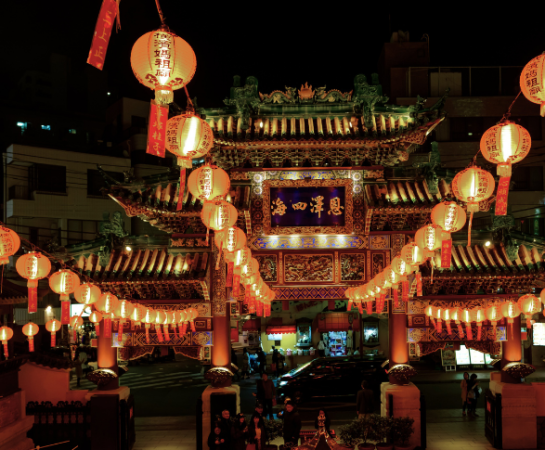
Chinese New Year fell on January 22 in 2023, February 10 in 2024, January 29 in 2025, and February 17 in 2026. That's a swing of nearly four weeks across four consecutive years, and none of it is random. Every date traces back to a

When Does the Fed Announce Interest Rates: Exact Time and Why It Moves Markets
The Federal Reserve announces its interest rate decision at 2:00 p.m. Eastern Time on the final day of each scheduled Federal Open Market Committee (FOMC) meeting, and the Chair's press conference follows at 2:30 p.m. Those times have been fixed since March 2013. The rest

Why Bitcoin ETFs Close at 4 PM While Bitcoin Never Stops Trading
Bitcoin trades every minute of the year. The ETFs that hold it do not. A US spot bitcoin ETF follows a stock exchange schedule: regular trading from 9:30 AM to 4:00 PM ET on weekdays, thinner extended sessions on either side, and no trading at

What Is the Closing Auction and Why the Last 10 Minutes Move the Market
The 4:00 p.m. bell on the New York Stock Exchange does not simply end the trading day. It triggers the closing auction, a one-time match of buyers and sellers at a single price that becomes each stock's official close, and which NYSE describes as the

Jobs Report Day: Why the First Friday of the Month Moves Every Market at Once
Once a month, at 8:30 a.m. Eastern, currency pairs jump, bond yields snap, and equity futures swing before most traders have settled at their desks. Everyone calls it "the first Friday of the month." Almost everyone is wrong about why it lands there. The date
Time Tools
Quick access to timers, stopwatch, world clock and time zone tools.
Time Guides
Read useful guides about time zones, calendars, finance and astronomy.


