Major Airports in Solomon Islands
- Honiara International Airport (HIR) - 10:30:45
Daylight saving time in Solomon Islands
Solomon Islands has 1 listed IANA time zones. None of them observe daylight saving time in 2026. The UTC offset remains stable throughout the year.
Best Time to Call Solomon Islands
Business hours in Solomon Islands (9 AM–5 PM local time) fall at these local times elsewhere:
- Beijing: 6:00 AM – 2:00 PM ( Partial overlap)
- Paris: 12:00 AM – 8:00 AM ( Outside normal hours)
- Toronto: 6:00 PM (previous day) – 2:00 AM ( Partial overlap)
- Seoul: 7:00 AM – 3:00 PM ( Partial overlap)
- Mexico City: 4:00 PM (previous day) – 12:00 AM ( Partial overlap)
- Cairo: 1:00 AM – 9:00 AM ( Outside normal hours)
- Bangkok: 5:00 AM – 1:00 PM ( Outside normal hours)
Times shown reflect current UTC offsets and may shift by up to an hour around daylight saving transitions.
Time Difference from Solomon Islands
Compare time in Solomon Islands with other countries.
Countries in the Same Time Zone as Solomon Islands
Holidays in Solomon Islands
Official national public holidays. Regional and religious observances may vary by area.
About Time in Solomon Islands
The 1912 Clock Change Is a Reconstruction, Not a Record of Every Island Clock
For the territory that is now Solomon Islands, the IANA time-zone database reconstructs a change from local mean time to an eleven-hour standard offset in October 1912. Its Pacific/Guadalcanal record currently places the transition on October 1 and assigns the preceding representative local mean time an offset of UTC+10:39:48. Moving from that reconstructed value to UTC+11:00 produces a forward discontinuity of 20 minutes 12 seconds.
That number needs more caution than a normal statutory offset. The pre-standard value is a representative-city reconstruction derived from longitude, not evidence that every government office, plantation, mission station, harbor, or village across the British Solomon Islands Protectorate kept UTC+10:39:48 to the second. The protectorate was geographically dispersed, and local solar time was inherently place-specific.
There is another historical mismatch hidden inside the database label. Modern tzdb uses Pacific/Guadalcanal and associates the zone with Honiara, but Honiara was not the protectorate capital in 1912. Tulagi had been proclaimed the capital in 1896, while Honiara became the official capital only in 1952 after the destruction and disruption of the Second World War. A modern zone identifier therefore provides a convenient geographic anchor for historical timestamps without implying that the 1912 transition was administered from the later capital.
The safest reading is precise but limited: modern tzdb reconstruction assigns the Guadalcanal representative record a 20-minute-12-second forward shift into UTC+11 in October 1912. It should not be expanded into a claim that the entire protectorate previously observed one uniform Honiara-based local time.
A 1968 Notice Put UTC+11 Into the Legal Record
The strongest documentary basis for the national clock is much later and much clearer. Legal material preserved by the Solomon Islands government includes L.N. 80 of 1968, the Declaration of Standard Time, which states that the standard time for Solomon Islands is eleven hours in advance of Greenwich Mean Time.
The wording survived the constitutional transition to independence through legal continuity rather than through a dramatic new clock reform. The declaration had originally been made under the Interpretation and General Clauses legislation then in force. After that legislation was repealed and replaced, the notice was deemed to continue under the corresponding provision of the later Act. The independence constitutional arrangements likewise preserved existing laws unless altered or brought into conflict with the new constitutional order.
That continuity matters more than a generic statement that the country uses UTC+11. The present clock regime is connected to a specific inherited legal instrument, and independence in 1978 did not require a fresh one-hour or date-line shift. Political sovereignty changed while the standard-time offset remained in place.
Wartime Weather Records Reveal a Different Kind of Clock Discipline
Second World War records add an unusual timekeeping detail without implying that Solomon Islands adopted civilian daylight saving. Australian Bureau of Meteorology documentation on wartime observing practice notes that upper-air observations in several areas were shifted one hour relative to normal UTC schedules, but the British Solomon Islands Province was listed among the exceptions.
The same documentation says that autographic instruments at sites in the British Solomon Islands Province were to have their charts changed at the usual times and marked LST, meaning local standard time. This was an operational rule for meteorological observations and instrument records, not a national daylight-saving statute. Its significance lies in synchronization: during a period when military and scientific services elsewhere were modifying observation schedules around wartime clock practice, Solomon Islands records retained a local-standard-time reference for these procedures.
That distinction prevents two different histories from being mixed together. Civil standard time, meteorological observation time, and wartime operational schedules could interact, but they were not automatically the same thing. For Solomon Islands, the surviving evidence supports a long UTC+11 civil standard alongside specialized wartime timing instructions rather than a documented sequence of civilian summer-time changes.
Frequently Asked Questions
How many time zones does Solomon Islands have?
One. The whole of Solomon Islands follows Pacific/Guadalcanal, so every city shows the same local time as the capital, Honiara.
Is Solomon Islands ahead of or behind GMT?
Solomon Islands is currently 11 hours ahead of GMT (UTC+11).
Does Solomon Islands use summer time?
No. Solomon Islands does not observe daylight saving time, so its clocks stay at UTC+11 all year. Its time difference with countries that do change their clocks still shifts by an hour in spring and autumn.
How many public holidays does Solomon Islands have in 2026?
Solomon Islands has 10 national public holidays in 2026, when banks and government offices are usually closed. Some regions may also have their own local holidays.
How do I dial a phone number in Solomon Islands from abroad?
From a mobile phone, type +677 and then the local number without the leading 0 used for domestic calls, if it has one. From a landline, replace the plus sign with your exit code: 011 from the US and Canada, or 00 from most of Europe, for example 00 677 followed by the number.
What language is spoken in Solomon Islands?
The main languages of Solomon Islands are English and Tok Pisin.
Beyond the Clock

How Many Weeks Are in a Quarter and How 4-4-5 Fiscal Calendars Work
A quarter is 13 weeks only on paper. A calendar quarter runs 90, 91, or 92 days, which works out to somewhere between 12.86 and 13.14 weeks, and it never starts on the same weekday two years in a row. That small mismatch is why

Social Jet Lag: How Uneven Sleep Schedules Cost You a Time Zone Every Weekend
If you go to bed at 11 p.m. and wake at 6:30 a.m. on workdays, then sleep from 12:30 a.m. to 9 a.m. on weekends, your body spends every weekend about two hours west of where you live. On Monday morning, the alarm drags it

What Week Number Is It? ISO Week Numbers vs US Week Numbers
Ask a spreadsheet in Chicago and a planner in Stockholm what week Sunday, January 3, 2027 falls in, and you get two different years. Excel's default setting says week 2 of 2027. The ISO standard used across Europe says week 53 of 2026. Both answers

Time Blocking vs Time Boxing vs Task Batching: What’s the Difference
The three names sound alike and are often used interchangeably, and all three promise a more focused day. They are not competing methods. Each one answers a different question. A frequent way for a technique to disappoint is being asked to do another one's job:

When Does a Day Actually Begin? Midnight, Sunrise, and Sunset Across Cultures
Hebcal, the widely used Jewish calendar service, lists Saturday, December 5, 2026 as 25 Kislev 5787, the first day of Hanukkah. The first Hanukkah candle is lit the evening before, on Friday, December 4. This is not an error. The Hebrew date changes at sunset,

The Hour That Happens Twice: What Actually Occurs at 1:30 AM When Clocks Fall Back
At 1:59:59 a.m. on Sunday, November 1, 2026, clocks in New York will not tick over to 2:00. They will jump back to 1:00:00 a.m., and the next 60 minutes will replay. Every time from 1:00 to 1:59 happens twice that night, once on Eastern
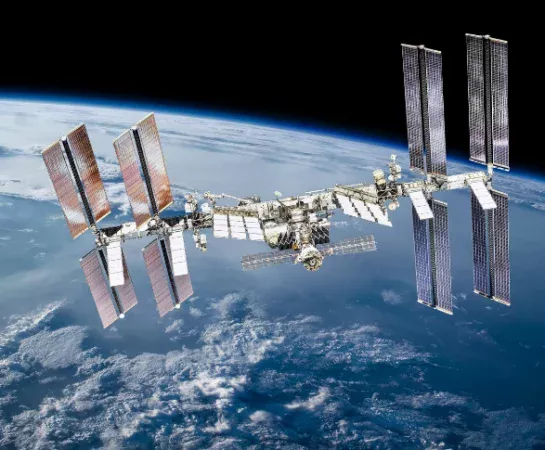
Why the International Space Station Runs on UTC Instead of Local Time
Astronauts aboard the International Space Station see the sun rise and set 16 times in a 24-hour period, once every 90 to 93 minutes, as the station circles Earth at roughly 28,000 kilometers per hour. No conventional time zone survives contact with that kind of
Standard Time vs Daylight Time: What’s the Actual Difference
Most people assume "Standard Time" is the normal, default setting and "Daylight Time" is some separate seasonal overlay that temporarily replaces it. That mental model is backwards in a way that federal law makes explicit, and once you see the actual legal language, the whole
Time Tools
Quick access to timers, stopwatch, world clock and time zone tools.
Time Guides
Read useful guides about time zones, calendars, finance and astronomy.


