Major Airports in Samoa
- Faleolo International Airport (APW) - 11:03:05
Daylight saving time in Samoa
Samoa has 1 listed IANA time zones. None of them observe daylight saving time in 2026. The UTC offset remains stable throughout the year.
Best Time to Call Samoa
Business hours in Samoa (9 AM–5 PM local time) fall at these local times elsewhere:
- Beijing: 4:00 AM – 12:00 PM ( Outside normal hours)
- Paris: 10:00 PM (previous day) – 6:00 AM ( Outside normal hours)
- Toronto: 4:00 PM (previous day) – 12:00 AM ( Partial overlap)
- Seoul: 5:00 AM – 1:00 PM ( Outside normal hours)
- Mexico City: 2:00 PM (previous day) – 10:00 PM (previous day) ( Partial overlap)
- Cairo: 11:00 PM (previous day) – 7:00 AM ( Outside normal hours)
- Bangkok: 3:00 AM – 11:00 AM ( Outside normal hours)
Times shown reflect current UTC offsets and may shift by up to an hour around daylight saving transitions.
Time Difference from Samoa
Compare time in Samoa with other countries.
Countries in the Same Time Zone as Samoa
Most Popular Cities in Samoa
Holidays in Samoa
Official national public holidays. Regional and religious observances may vary by area.
About Time in Samoa
Samoa Had Two Mondays Named July 4 in 1892
Samoa has crossed the International Date Line twice, and the first change worked in the opposite direction from the famous 2011 jump. In 1892 the islands changed from the Australasian date reckoning to the American side of the calendar. Instead of deleting a date, Samoa repeated one.
Monday, July 4, 1892 was followed by another Monday, July 4. A report published in Nature later that year recorded that Tuesday, July 5 was reckoned a second time as Monday, July 4 under an order of King Malietoa. The date was particularly conspicuous because it was also American Independence Day.
The change was much larger than an ordinary time-zone adjustment. Modern IANA reconstruction represents Apia before it with local mean time at UTC+12:33:04 and afterward at UTC−11:26:56. Those two offsets differ by exactly 24 hours. The local clock could therefore keep essentially the same time of day while the calendar moved back one full date.
Contemporary accounts explain why the choice of date side mattered. Samoa had previously aligned its calendar with Australia, but increasing shipping and commercial links with the United States made the American date more convenient. Geography had not changed. The economic direction of the calendar had.
Apia Kept an Offset of UTC−11:26:56 Until 1911, Then the Seconds Disappeared
Repeating July 4 solved the date-line problem, but it did not immediately give Samoa a neat hourly time zone. Apia continued on reconstructed local mean time at UTC−11:26:56 until the beginning of 1911.
On January 1, 1911, IANA history places the change to UTC−11:30. The adjustment was only 3 minutes and 4 seconds, but conceptually it marked a move away from a longitude-derived local clock toward standardized civil time.
That half-hour offset lasted for decades. At the start of 1950 Samoa changed again, this time from UTC−11:30 to UTC−11:00. The 30-minute advance established the base standard that remained in use until the country's much larger reform in 2011.
The sequence is unusually clean: a solar-derived offset measured to the second, then a half-hour standard, then a whole-hour standard. Samoa's clock had already been simplified twice before daylight saving or the modern Date Line reform entered the picture.
Friday, December 30, 2011 Never Existed in Samoa
The International Date Line Act 2011 reversed the direction chosen in 1892. The law defined Samoa standard time as UTC+13 and moved the Date Line from the west of Samoa to the east for legal purposes.
The transition was explicit. Thursday, December 29, 2011 reached 23:59:59 and the next second became Saturday, December 31 at 00:00:00. Friday, December 30 was omitted completely from the Samoan civil calendar.
Technically, standard time jumped from UTC−11 to UTC+13. That is a 24-hour change in offset, not a normal clock advance. The time displayed on the clock face remained continuous around midnight, while the date advanced by two calendar days.
The law went beyond simply telling residents to change their calendars. It redefined Samoa standard time in legislation, required official maps and charts to reflect the Date Line on the new side of the country, and amended earlier statutory definitions of time. It also stated that the government would not be liable for losses arising from the change.
The practical motive was commercial. Samoa had spent more than a century using the American side of the date system, but by 2011 its economic links with Australia and New Zealand made that increasingly inconvenient. Moving west of the Date Line brought Samoan working days much closer to those markets.
The Date Line Now Separates Samoa and American Samoa by a Full Calendar Day
The 2011 reform created one of the sharpest civil-time boundaries anywhere in the inhabited Pacific. Samoa moved to UTC+13, while nearby American Samoa remained at UTC−11.
The numerical difference is 24 hours. At standard time, the two places can show the same hour and minute while carrying different calendar dates. Noon on Tuesday in Samoa corresponds to noon on Monday in American Samoa.
The effect became even more extreme while Samoa observed daylight saving. At UTC+14, Samoa was 25 hours ahead of American Samoa. A local time of 1:00 p.m. Tuesday in Apia could correspond to noon Monday in Pago Pago.
This is why describing the International Date Line as simply the 180th meridian is misleading in practice. Around the Samoan archipelago, the legal and civil date boundary bends so that two neighboring island jurisdictions can occupy almost identical clock hours but different days.
Samoa Introduced Daylight Saving in 2010, Just Before Rebuilding Its Entire Time System
Daylight saving was a very recent addition to Samoan timekeeping. The Daylight Saving Act 2009 gave the Head of State, acting on Cabinet advice, authority to declare a daylight-saving period and specify an advance of up to two hours, including fractions of an hour. The legislation was therefore broader than a simple permanent rule requiring a one-hour seasonal shift.
The first actual DST period began in September 2010. Samoa advanced one hour from its UTC−11 standard, then returned in April 2011. Another daylight-saving period began in September 2011, so the country was already one hour ahead of standard time when the Date Line change occurred that December.
That produced an unusual sequence of offsets. Immediately before the skipped date, Samoa was effectively on UTC−10 because daylight saving was active. After the 24-hour Date Line jump, daylight time became UTC+14. When DST ended in April 2012, clocks returned to the new UTC+13 standard.
The Ministry of Commerce, Industry and Labour described energy conservation as one of the objectives of the original policy, along with creating more usable evening daylight for recreation and productive activity. Seasonal changes continued through the 2010s.
The final backward transition occurred on April 4, 2021, when clocks moved from UTC+14 to UTC+13. A Cabinet decision later that year ended the policy, and the scheduled September 2021 advance did not take place. Samoa has remained on UTC+13 year-round since then.
Pacific/Apia Encodes Two Date-Line Crossings, Not Just a Modern UTC Offset
For present-day software, Samoa can look deceptively simple: one country, one standard time, UTC+13 and no seasonal clock change. Historical timestamps tell a very different story.
The IANA zone Pacific/Apia has to represent the 1892 repetition of a date, the old UTC−11:26:56 local mean time, the 1911 move to UTC−11:30, the 1950 shift to UTC−11:00, the introduction of daylight saving in 2010, the deletion of December 30 in 2011, several years of UTC+14 summer time and the end of DST in 2021.
A fixed offset cannot reproduce that history. Even knowing that modern Samoa uses UTC+13 is insufficient for converting an old legal document, ship record or historical timestamp. Depending on the year, the same place has occupied opposite sides of the Date Line and offsets separated by an entire day.
Frequently Asked Questions
How many time zones does Samoa have?
One. The whole of Samoa follows Pacific/Apia, so every city shows the same local time as the capital, Apia.
Is Samoa ahead of or behind GMT?
Samoa is currently 13 hours ahead of GMT (UTC+13).
Does Samoa use summer time?
No. Samoa does not observe daylight saving time, so its clocks stay at UTC+13 all year. Its time difference with countries that do change their clocks still shifts by an hour in spring and autumn.
How many public holidays does Samoa have in 2026?
Samoa has 11 national public holidays in 2026, when banks and government offices are usually closed. Some regions may also have their own local holidays.
How do I dial a phone number in Samoa from abroad?
From a mobile phone, type +685 and then the local number without the leading 0 used for domestic calls, if it has one. From a landline, replace the plus sign with your exit code: 011 from the US and Canada, or 00 from most of Europe, for example 00 685 followed by the number.
What language is spoken in Samoa?
The main languages of Samoa are Samoan and English.
Beyond the Clock

How Many Weeks Are in a Quarter and How 4-4-5 Fiscal Calendars Work
A quarter is 13 weeks only on paper. A calendar quarter runs 90, 91, or 92 days, which works out to somewhere between 12.86 and 13.14 weeks, and it never starts on the same weekday two years in a row. That small mismatch is why

Social Jet Lag: How Uneven Sleep Schedules Cost You a Time Zone Every Weekend
If you go to bed at 11 p.m. and wake at 6:30 a.m. on workdays, then sleep from 12:30 a.m. to 9 a.m. on weekends, your body spends every weekend about two hours west of where you live. On Monday morning, the alarm drags it

How Many Working Hours Are in a Year: Why 2,080 Isn’t Always Right
The standard answer is 2,080: 40 hours a week times 52 weeks. It sits behind most salary calculators and HR spreadsheets. But 52 weeks cover only 364 days. Every year has one or two days left over, and whether they land on a weekday or

Time Blocking vs Time Boxing vs Task Batching: What’s the Difference
The three names sound alike and are often used interchangeably, and all three promise a more focused day. They are not competing methods. Each one answers a different question. A frequent way for a technique to disappoint is being asked to do another one's job:

Why the Earliest Sunset Comes Before the Winter Solstice
In New York, the Sun sets earliest on Monday, December 7, 2026, at about 4:28 PM. The shortest day comes two weeks later. The solstice falls at 20:50 UTC on December 21 (3:50 PM EST), and on that day New York gets roughly 9 hours

When Does Winter Start: Meteorological vs Astronomical Seasons
Winter 2026 starts twice in the Northern Hemisphere. Meteorological winter begins on Tuesday, December 1, 2026. Astronomical winter begins at the December solstice, on Monday, December 21, 2026 at 20:50 UTC, which is 3:50 p.m. Eastern and 12:50 p.m. Pacific. Both answers are correct. They
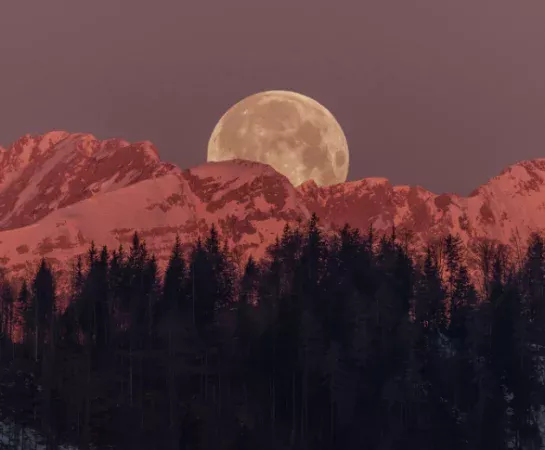
What Is a Supermoon and When Is the Next One
Every time a supermoon rises, the same statistic gets repeated: 14% bigger, 30% brighter. It's in almost every news segment and nearly every listicle, and it's also a comparison almost nobody in the audience will ever actually witness, because it measures the single closest possible
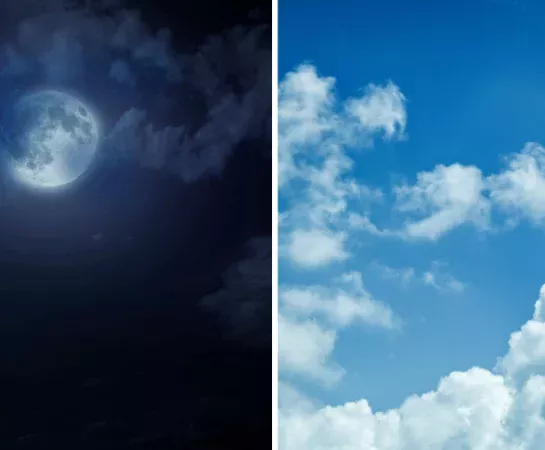
Why the Sky Is Blue During the Day and Black at Night
Sunlight is white. Air is, as far as anyone can tell by looking through a window, colorless. And yet every clear afternoon the same 400,000-kilometer column of gas above your head reads as a specific, saturated blue, then goes black within an hour of sunset.
Time Tools
Quick access to timers, stopwatch, world clock and time zone tools.
Time Guides
Read useful guides about time zones, calendars, finance and astronomy.


